CAS 138-52-3
:Salicina
Descrição:
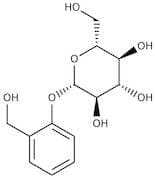
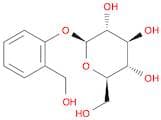
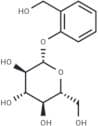
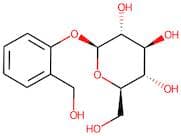
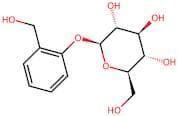
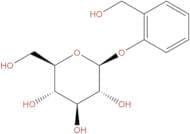
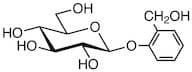
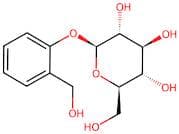
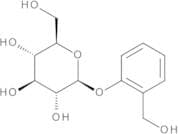
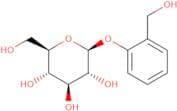
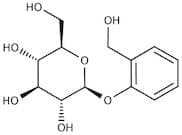
Salicina é um composto que ocorre naturalmente classificado como um glicosídeo fenólico, encontrado principalmente na casca de salgueiros e outras plantas. Sua estrutura química consiste em uma molécula de glicose ligada ao álcool salicílico, o que contribui para suas propriedades medicinais. Salicina é conhecido por seus efeitos analgésicos e anti-inflamatórios, tornando-se um precursor para a síntese do ácido salicílico, um ingrediente chave na aspirina. A substância é tipicamente um pó branco e cristalino que é solúvel em água e álcool, com um sabor ligeiramente amargo. Salicina é frequentemente utilizado na medicina herbal e tem sido estudado por seus potenciais benefícios no tratamento de condições como dor e febre. Além disso, possui propriedades antioxidantes, que podem contribuir para seus efeitos terapêuticos. Embora geralmente considerado seguro em quantidades moderadas, o consumo excessivo pode levar a efeitos colaterais semelhantes aos dos salicilatos, incluindo desconforto gastrointestinal. No geral, Salicina representa um composto importante tanto na farmacologia tradicional quanto na moderna.
Fórmula:C13H18O7
InChI:InChI=1S/C13H18O7/c14-5-7-3-1-2-4-8(7)19-13-12(18)11(17)10(16)9(6-15)20-13/h1-4,9-18H,5-6H2/t9-,10-,11+,12-,13-/m1/s1
Chave InChI:InChIKey=NGFMICBWJRZIBI-UJPOAAIJSA-N
SMILES:O([C@@H]1O[C@H](CO)[C@@H](O)[C@H](O)[C@H]1O)C2=C(CO)C=CC=C2
Sinónimos:- 1-β-<span class="text-smallcaps">D</span>-Glucosyloxy-2-hydroxymethylbenzene
- 1-β-D-Glucosyloxy-2-hydroxymethylbenzene
- 2-(Hydroxymethyl)Phenyl Hexopyranoside
- 2-(Hydroxymethyl)phenyl β-<span class="text-smallcaps">D</span>-glucopyranoside
- 2-(Hydroxymethyl)phenyl-β-D-glucopyranoside
- 2-(hydroxymethyl)phenyl beta-D-altropyranoside
- 2-(hydroxymethyl)phenyl beta-D-glucopyranoside
- 2-(hydroxymethyl)phenyl beta-L-glucopyranoside
- <span class="text-smallcaps">D</span>-Salicin
- D-Salicin (1.05055)
- Nsc 5751
- Salicin
- Salicine
- Salicoside
- Salicyl alcohol glucoside
- Saligenin β-<span class="text-smallcaps">D</span>-glucopyranoside
- Saligenin β-D-glucopyranoside
- White Willow Bark Extract
- White Willow Bark P.E.
- alpha-hydroxy-o-tolyl beta-D-glucopyranoside
- o-(Hydroxymethyl)phenyl β-<span class="text-smallcaps">D</span>-glucopyranoside
- o-(Hydroxymethyl)phenyl β-D-glucopyranoside
- α-Hydroxy-o-tolyl-β-D-glucopyranosid
- α-hydroxy-o-tolyl β-D-glucopyranoside
- β-<span class="text-smallcaps">D</span>-Glucopyranoside, 2-(hydroxymethyl)phenyl
- β-D-Glucopyranoside d'α-hydroxy-o-tolyle
- β-D-Glucopyranoside, 2-(hydroxymethyl)phenyl
- β-D-glucopiranosido de α-hidroxi-o-tolilo
- Ver mais sinónimos
Ordenar por
Pureza (%)
0
100
|
0
|
50
|
90
|
95
|
100
20 produtos.
D-(-)-Salicin, 99%
CAS:Salicin is used as an analgesic and antipyretic. It is also used as a substrate for beta-glucosidase and an inhibitor of Cox. It finds application as an anti-inflammatory agent. It is involved in antipyretic action without causing gastric injury. This Thermo Scientific Chemicals brand product was orFórmula:C13H18O7Pureza:99%Cor e Forma:Crystals or powder or crystalline powder, White to pale creamPeso molecular:286.28D-(-)-Salicin
CAS:D-(-)-Salicin analytical standard provided with w/w absolute assay, to be used for quantitative titration.Fórmula:C13H18O7Pureza:(HPLC) ≥99%Cor e Forma:PowderPeso molecular:286.28SALICIN CRS
CAS:SALICIN CRSFórmula:C13H18O7Cor e Forma:Crystalline Powder. White. Powder.Peso molecular:286.2778D-Salicin
CAS:Other glycosides, natural or reproduced by synthesis, and their salts, ethers, esters and other derivativesFórmula:C13H18O7Cor e Forma:White Off-White PowderPeso molecular:286.10525β-D-Glucopyranoside, 2-(hydroxymethyl)phenyl
CAS:Fórmula:C13H18O7Pureza:98%Cor e Forma:SolidPeso molecular:286.2778Salicin
CAS:Salicin (Salicine), a phenol β-glycoside produced from willow bark, shows anti-inflammatory functions.Fórmula:C13H18O7Pureza:98.2% - 99.86%Cor e Forma:White Crystals Or PowderPeso molecular:286.28D-Salicin
CAS:Fórmula:C13H18O7Pureza:≥ 98.0%Cor e Forma:White to off-white powder or crystalsPeso molecular:286.28Salicin
CAS:Fórmula:C13H18O7Pureza:>98.0%(HPLC)Cor e Forma:White to Almost white powder to crystalPeso molecular:286.28Salicin
CAS:Natural glycosideFórmula:C13H18O7Pureza:≥ 98.0 % (HPLC)Cor e Forma:PowderPeso molecular:286.28D-Salicin
CAS:Applications Salicin is an anti-inflammatory agent produced by the bark of a willow tree. Analgesic.
References Schmid, B. et al.: Eur J Pharmacol., 57, 387 (2001);Fórmula:C13H18O7Cor e Forma:WhitePeso molecular:286.28D-Salicin
CAS:D-Salicin is a naturally occurring compound, classified as a biologically active glycoside. It is acquired from the bark of willow trees, primarily species within the genus Salix. The primary mode of action of D-Salicin involves its metabolic conversion into salicylic acid within the human body. This conversion occurs in the gastrointestinal tract and bloodstream, ultimately displaying effects similar to non-steroidal anti-inflammatory drugs (NSAIDs).Fórmula:C13H18O7Pureza:Min. 98 Area-%Cor e Forma:White Off-White PowderPeso molecular:286.28 g/molD-Salicin, natural
CAS:D-Salicin is a naturally occurring anti-inflammatory compound, which is derived from the bark of willow trees, primarily of the genus Salix. As a prodrug, D-Salicin is metabolized into salicylic acid in the body, where it acts by inhibiting the cyclooxygenase (COX) enzymes. This inhibition leads to a reduction in the synthesis of pro-inflammatory prostaglandins and thromboxanes, thereby exerting its anti-inflammatory and analgesic effects.
Fórmula:C13H18O7Pureza:Min. 90.0 Area-%Peso molecular:286.28 g/molRef: 3D-S-1498
-Unit-kgkgA consultar1kgA consultar5kgA consultar250gA consultar500gA consultar2500gA consultarD-(-)-Salicin extrapure
CAS:Fórmula:C13H18O7Cor e Forma:White, Crystalline powder, Clear, ColourlessPeso molecular:286.28(2R,3S,4S,5R,6S)-2-(Hydroxymethyl)-6-(2-(hydroxymethyl)phenoxy)tetrahydro-2H-pyran-3,4,5-triol
CAS:Fórmula:C13H18O7Pureza:95.0%Cor e Forma:Solid, White to grey powderPeso molecular:286.28