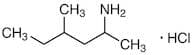
CAS 13803-74-2
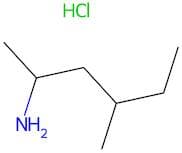
:Cloridrato de 4-metil-2-hexanamina
Descrição:
Cloridrato de 4-metil-2-hexanamina, também conhecido como 1,3-dimetilamilamina (DMAA) cloridrato, é um composto orgânico caracterizado pelo seu grupo funcional amina. É um sólido cristalino incolor a amarelo pálido que é solúvel em água e solventes orgânicos polares. O composto apresenta uma estrutura de cadeia ramificada, o que contribui para suas propriedades químicas únicas. Como estimulante, tem sido usado em suplementos dietéticos e formulações pré-treino, principalmente por seu potencial de aumentar a energia e o foco. No entanto, sua segurança e eficácia têm sido objeto de escrutínio regulatório, levando a restrições em algumas regiões. A forma de sal cloridrato melhora sua estabilidade e solubilidade, tornando-o mais adequado para várias aplicações. Em termos de reatividade, a 4-Metil-2-hexanamina pode participar de reações típicas de aminas, incluindo alquilação e acilação. É importante manusear este composto com cuidado, pois pode apresentar riscos à saúde, incluindo efeitos cardiovasculares, particularmente quando consumido em altas doses ou combinado com outros estimulantes.
Fórmula:C7H17NHCl
Sinónimos:- 1,3-Dimethylpentylamine hydrochloride
- 2-Amino-4-methylhexane hydrochloride
- 1,3-Dimethylamylamine HCl
- 1,3-Dmaa
Ordenar por
Pureza (%)
0
100
|
0
|
50
|
90
|
95
|
100
9 produtos.
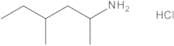
4-Methyl-2-hexylamine Hydrochloride
CAS:Fórmula:C7H17N·HClPureza:>98.0%(T)Cor e Forma:White to Almost white powder to crystalPeso molecular:151.68Methylhexanamine hydrochloride
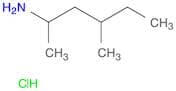
CAS:Methylhexanamine hydrochloride is a fatty amine and vasoconstrictor that functions as a nasal decongestant when inhaled through the nasal mucosa.Fórmula:C7H18ClNCor e Forma:SolidPeso molecular:151.681,3-Dimethylpentylamine hydrochloride
CAS:1,3-Dimethylpentylamine hydrochlorideFórmula:C7H17N·ClHPureza:95%Cor e Forma: white to off white to faint yellow solidPeso molecular:151.68g/mol1,3-Dimethylpentylamine Hydrochloride
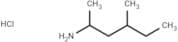
CAS:Applications 1,3-Dimethylpentylamine is useful in composition in treating hypertrophied and hyperplastic gums which showed a significant reduction in swelling.
References Kosti, C. M. U.S., 1971Fórmula:C7H17N·ClHCor e Forma:NeatPeso molecular:151.684-Methyl-2-hexanamine hydrochloride
CAS:Produto Controlado4-Methyl-2-hexanamine hydrochloride is a synthetic amide that is used as a solvent in laboratories. It is a psychoactive substance and has been found to be an inhibitor of serotonin uptake, which may be related to its ability to inhibit the function of the serotonin transporter. The amount of 4-methyl-2-hexanamine hydrochloride absorbed by the body varies depending on how it is taken. When taken orally, 4-methyl-2-hexanamine hydrochloride enters through the digestive tract and reaches high levels in the blood stream. When taken intravenously, it enters the bloodstream directly and can reach higher concentrations in the blood. When inhaled, 4-methyl-2-hexanamine hydrochloride can enter into the lungs at high concentrations and then is absorbed into the bloodstream. 4-Methyl-2-hexanamine hydrochloride also degrades quickly in natural environments due to its biodegradable properties.Fórmula:C7H18ClNPureza:Min. 95%Cor e Forma:PowderPeso molecular:151.68 g/mol