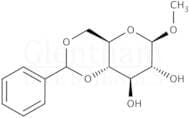
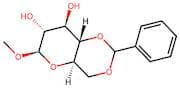
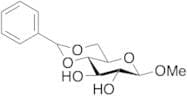
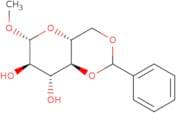
CAS 14155-23-8
:Metil 4,6-O-benzilideno-beta-D-glucopiranosídeo
- Methyl 4,6-O-Benzylidene-B-D-Glucopyranoside
- Methyl-4,6-Benzylidene-Beta-D-Glucopyranoside
- Methyl-4,6-O-Benzyliden-Beta-D-Glucopyranoside
- 4,6-O-Benzylidene-1-O-Methyl-Beta-D-Glucoside
- methyl 4,6-O-benzylidenehexopyranoside
- methyl 4,6-O-(phenylmethylidene)-β-D-glucopyranoside
Methyl 4,6-O-benzylidene-β-D-glucopyranoside
CAS:Methyl 4,6-O-benzylidene-β-D-glucopyranosidePureza:>98%Peso molecular:282.29g/molMethyl 4,6-O-Benzylidene-beta-D-glucopyranoside
CAS:Produto ControladoApplications Methyl 4,6-O-Benzylidene-β-D-glucopyranoside is used in the selective α-D-glucosylation of methyl 4,6-O-benzylidene-α- and -β-D-glucopyranosides.
References Takeo, K., et al.: Carbohydrate Res., 145, 307 (1986),Fórmula:C14H18O6Cor e Forma:NeatPeso molecular:282.28Methyl 4,6-O-benzylidene-β-D-glucopyranoside
CAS:Methyl 4,6-O-benzylidene-b-D-glucopyranoside is a nitro derivative of methyl b-D-glucopyranoside. The anomeric proton and the nitro group are in the same plane and on opposite sides of the molecule. This compound has been shown to be both a receptor binding agent and a gelation agent. It is used to study biological membranes because it binds to phospholipids in the cell membrane, which alters its physical properties. Methyl 4,6-O-benzylidene-b-D-glucopyranoside is also known for its ability to form hydrogen bonds with water molecules. This is due to its cavity that can accommodate one water molecule per monomer unit. The crystal structure of this compound has been determined by x ray crystallography and shows that it forms dimers through hydrogen bonding between two molecules in each dimer. These interactions are
Fórmula:C14H18O6Pureza:Min. 95%Cor e Forma:PowderPeso molecular:282.29 g/mol