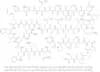
CAS 141732-76-5
:Acetato de exenatida
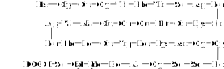
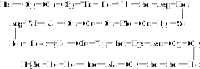
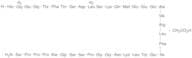
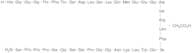
- His-Gly-Gly-Gly-Thr-Phe-Thr-Ser-Asp-Leu-Ser-Lys-Gln-Met-Glu-Glu-Glu-Ala-Val-Arg-Leu-Phe-Ile-Glu-Trp-Leu-Lys-Asn-Gly-Gly-Pro-Ser-Gly-Ala-Pro-Pro-Pro-Ser-NH{2}
- ExenatideAcetate
- Exenatide
- EXENATIDE ACETATE
- ENFUVIRTIDE ACETATE
- EXENATIDE ACETATE(EXENDIN-4)
Exenatide Acetate
CAS:Fórmula:C186H286N50O62SPureza:95%~99%Cor e Forma:White to Off-white PowderPeso molecular:4262.67Exenatide
CAS:Exenatide (Extendin-4) is a glucagon-like protein-1 (GLP-1) receptor agonist.Fórmula:C186H286N50O62SPureza:99.42%Cor e Forma:SolidPeso molecular:4247Exenatide-d5 Acetate
CAS:Produto ControladoApplications Exenatide-d5 Acetate is labelled Exenatide Acetate (E957300) which causes an increase in acinar cAMP without stimulating amylase release. Exenatide has found use as a medication of diabetes II.
References Pugazhenthi, U. et al.: Diabetol., 53, 2357 (2010); Li, C. et al.: Bioche,. Biophys. Res. Comm., 400, 563 (2010); Lupi, R. et al.: Diab. Obes. Metab., 10, 515 (2008); Kim, T.H. et al.: Bioconj. Chem., 22, 625 (2011);Fórmula:C186H281D5N50O62SCor e Forma:NeatPeso molecular:4251.71Exenatide Acetate
CAS:Produto ControladoApplications A 39-amino acid peptide originally isolated from the salivary glands of the Gila monster (Heloderma suspectum), differs from exendin-3 only in two positions close to the N-terminus. Application of exenatide causes an increase in acinar cAMP without stimulating amylase release. As an incretin mimetic, exenatide acts as agonist of the glucagon-like peptide-1 (GLP-1) receptor. As GLP-1, though with prolonged activity, exenatide augments the postprandial production of insulin and suppresses secretion of glucagon. For this reason, exenatide has found use as a medication of diabetes II.
References Pugazhenthi, U. et al.: Diabetol., 53, 2357 (2010); Li, C. et al.: Bioche,. Biophys. Res. Comm., 400, 563 (2010); Lupi, R. et al.: Diab. Obes. Metab., 10, 515 (2008); Kim, T.H. et al.: Bioconj. Chem., 22, 625 (2011);Fórmula:C186H286N50O62SCor e Forma:NeatPeso molecular:4246.62Exenatide acetate
CAS:Agonist of glucagon-like peptide GLP1 which is used for treatment of type 2 diabetes mellitus. Exenatide is more resistant to degradation by dipeptidyl peptidase IV than GLP1 and possesses GLP1-like glucoregulatory activities such as stimulation of insulin production by pancreatic β cells and lowering of serum glucagon levels during hyperglycaemia. In a mouse model for type 2 diabetes, exenatide was shown to reverse neuropathy and to possess anxiolytic and anti-depressant-like effects.
Fórmula:C184H282N50O60S·C2H4O2Pureza:Min. 95%Cor e Forma:White PowderPeso molecular:4246.63Exenatide Acetate (1 to 12)
CAS:Custom research peptide; min purity 95%. For different specs please use the Peptide Quote Tool
Fórmula:C54H83N15O21Peso molecular:1,278.4 g/mol