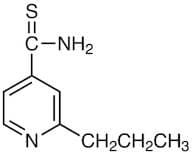
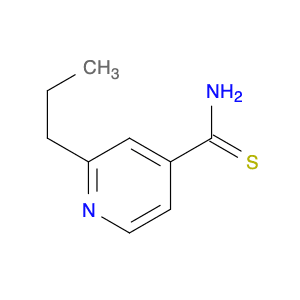
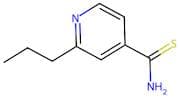
CAS 14222-60-7
:Protionamida
- 1321Th
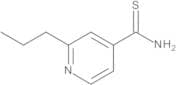
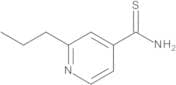
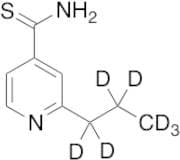
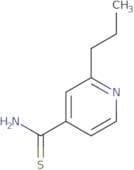
- 2-Propyl-4-pyridinecarbothioamide
- 2-Propylisonicotinylthioamide
- 2-Propylpyridine-4-Carbothioamide
- 2-Propylpyridine-4-carboimidothioic acid
- 2-Propylpyridine-4-thiocarboxamide
- 2-Propylthioisonicotinamide
- 4-Pyridinecarbothioamide, 2-propyl-
- 9778 R. P.
- Ektebin
- Isonicotinamide, 2-propylthio-
- Isothionicotinamide
- Peteha
- Protion
- Protionamid
- Protionamide
- Protionizina
- Rp 9778
- Tebeform
- Th 1321
- Trevintix
- Tuberamin
- Tuberex
- Prothionamide
- 2-propylthio-isonicotinamid
- 2-PROPYL-THIOISONICOTINAMIDE
- 9778r.p.
- 2-propyl-4-pyridinecarbothioamid
- Prothionamide (BP88)Prothionamide
- 2-Propylpyridine-4-carbothionamide
- Ver mais sinónimos
Prothionamide
CAS:Fórmula:C9H12N2SPureza:>98.0%(T)(HPLC)Cor e Forma:Light yellow to Yellow to Orange powder to crystalPeso molecular:180.274-Pyridinecarbothioamide, 2-propyl-
CAS:Fórmula:C9H12N2SPureza:98%Cor e Forma:SolidPeso molecular:180.2700Prothionamide
CAS:Prothionamide (1321-TH)is a thioamide derivative with antitubercular activity.Fórmula:C9H12N2SPureza:99.34%Cor e Forma:SolidPeso molecular:180.27Prothionamide
CAS:Fórmula:C9H12N2SPureza:≥ 98.0%Cor e Forma:Pale yellow to yellow-orange powder or crystalsPeso molecular:180.27Protionamide
CAS:Produto ControladoApplications An anti-tuberculosis agent. It has also been used to treat Leprosy. Antibacterial (tuberculostatic).
References Gohil, V., et al.: Nat. Biotechnol., 28, 249 (2010), van Ingen, J., et al.: Int. J. Antimicrob. Agents, 35, 169 (2010), Fourches, D., et al.: Chem. Res. Toxicol., 23, 171 (2010),Fórmula:C9H12N2SCor e Forma:Yellow SolidPeso molecular:180.27Prothionamide
CAS:Prothionamide is a drug that belongs to the group of drugs called sulfonamides. It is used to treat bowel disease by inhibiting the growth of bacteria and fungi. Prothionamide inhibits bacterial growth by binding to bacterial DNA and preventing it from synthesizing new proteins. This drug also has a matrix effect, which means that it binds to the inside of the bacterial cell wall and prevents the production of new cells, leading to cell death. Prothionamide has been shown to be effective against tuberculosis in mice, although there are few data on its use in humans. The most common side effects associated with prothionamide are nausea and vomiting.
Fórmula:C9H12N2SPureza:Min. 99 Area-%Cor e Forma:Yellow PowderPeso molecular:180.27 g/mol