CAS 144-62-7
:Ácido oxálico
Descrição:
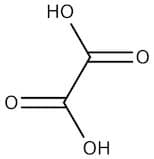
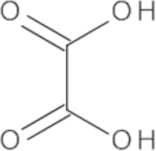
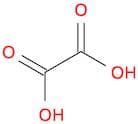
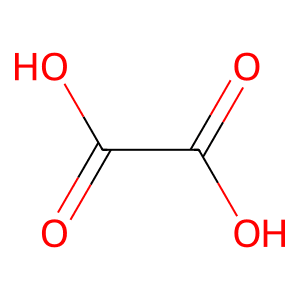
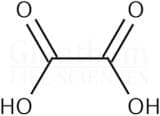
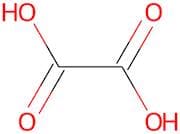
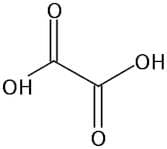
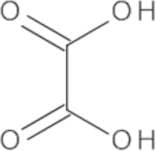
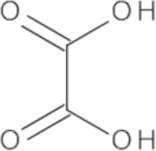
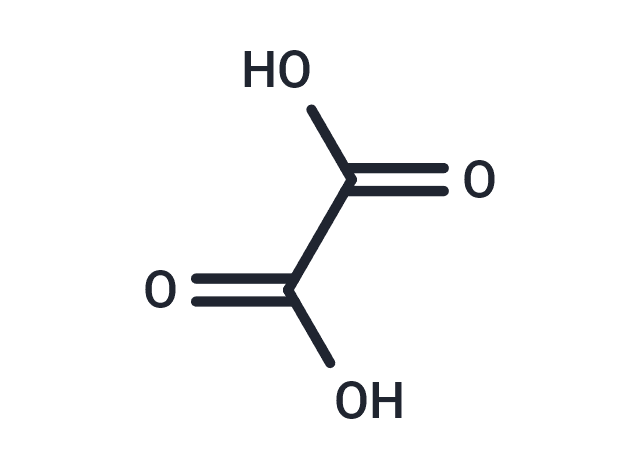
Ácido oxálico, com o número CAS 144-62-7, é um composto orgânico cristalino e incoloro que é classificado como um ácido dicarboxílico. Tem uma fórmula molecular de C2H2O4 e é conhecido por suas fortes propriedades ácidas, sendo significativamente mais ácido do que muitos outros ácidos carboxílicos. Ácido oxálico é altamente solúvel em água e pode formar várias sais, conhecidos como oxalatos, quando reage com bases. Ocorre naturalmente em muitas plantas, incluindo ruibarbo e espinafre, e é frequentemente utilizado em várias aplicações industriais, como limpeza de metais, branqueamento e como agente redutor em reações químicas. Além de seus usos industriais, Ácido oxálico também é utilizado em laboratórios para fins analíticos. No entanto, é importante manusear Ácido oxálico com cuidado, pois pode ser tóxico e corrosivo, apresentando riscos à saúde ao ser ingerido ou em contato com a pele. Sua capacidade de quelar íons metálicos o torna valioso em vários processos químicos, mas precauções de segurança são essenciais devido aos seus potenciais perigos.
Fórmula:C2H2O4
InChI:InChI=1S/C2H2O4/c3-1(4)2(5)6/h(H,3,4)(H,5,6)
Chave InChI:InChIKey=MUBZPKHOEPUJKR-UHFFFAOYSA-N
SMILES:C(C(O)=O)(O)=O
Sinónimos:- ACIDO OSSALICO (s)
- Acide oxalique
- Acide(S) Oxalique(S)
- Acido Ossalico
- Acido Oxalico
- Aktisal
- Anhydrous Oxalic Acid
- Aquisal
- ÁCido(S) OxáLico(S)
- DeerClean
- Ethanedioate
- Ethanedioic Acid
- Ethanedioic acid, conjugate acid (1:2)
- Ethanedionic acid
- Nsc 132055
- Nsc 151956
- Nsc 62774
- Nsc 76990
- OA
- OXAALZUUR (s)
- OXALSÄURE(n)
- Oxaalzuur
- Oxagel
- Oxalic Acid (Crystal) C.P. (1LB/BT)
- Oxalic acid anhydrous
- Oxalsaeure
- Oxalsaure
- Refined Oxalic Acid
- Ultraplast Activate S 52
- シュウ酸
- Ver mais sinónimos
Ordenar por
Pureza (%)
0
100
|
0
|
50
|
90
|
95
|
100
17 produtos.
Oxalic acid, anhydrous, 98%
CAS:Oxalic acid is used as reducing agent for photographic films, as mordant in dyeing process, as bleaching agent for removal of rust through complex formation, and as grinding agent during polishing of marble. It is used in waste water treatment to remove calcium. The conjugate base of oxalic acid aFórmula:C2H2O4Pureza:98%Cor e Forma:White to pale cream, Crystals or powder or crystalline powderPeso molecular:90.03Oxalic acid, anhydrous
CAS:Fórmula:C2H2O4Pureza:98.0 - 102.0 %Cor e Forma:White crystalline powderPeso molecular:90.04Oxalic acid
CAS:Oxalic acid (Ethanedioic acid) is a strong dicarboxylic acid occurring in many plants and vegetables, produced in the body by metabolism of glyoxylic acid.Fórmula:C2H2O4Pureza:98.51% - 99.39%Cor e Forma:White Solid CrystallinePeso molecular:90.03Oxalic Acid
CAS:Applications An impurity of oxaliplatin which is a coordination complex that is used in cancer chemotherapy.A reducing agent and its conjugate base, known as oxalate (C2O42−), is a useful chelating agent for metal cations.
References Wheate, N., et al.: Dalton Trans., 39, 8113 (2010),Fórmula:C2H2O4Cor e Forma:White To Off-WhitePeso molecular:90.03Oxalic acid
CAS:Oxalic acid is an organic compound that is a dicarboxylic acid. It is found in many plants, including the leaves of rhubarb and spinach. Oxalic acid exists in two forms: the anhydrous form (known as calcium oxalate) and the hydrated form (known as calcium oxalate dihydrate). The detection sensitivity of this compound can be increased by using a matrix effect. When light emission is detected, it can be used to detect oxalic acid in a solution. Sodium citrate has been shown to increase the sensitivity of the reaction solution for detecting oxalic acid. This reaction creates a particle with sodium carbonate that can be measured by kinetic data.Fórmula:C2H2O4Pureza:Min. 95%Cor e Forma:White Off-White PowderPeso molecular:90.03 g/molRef: 4Z-A-129036
Produto descontinuado