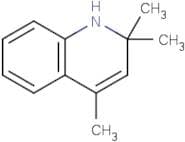
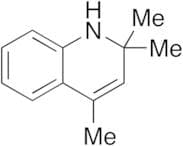
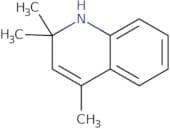
CAS 147-47-7
:1,2-diidro-2,2,4-trimetilquinolina
- 1,2-Dihydro-2,2,4-4trimethylchinolin
- 1,2-Dihydro-2,2,4-trimethylquinolene
- 2,2,4-Trimethyl-1,2-Dihydroquinoline
- 2,2,4-Trimethyl-1,2-dihydroquinone
- 2,2,4-Trimethyl-1H-quinoline
- Acetone anil
- Acetone anil (quinoline derivative)
- Antioxidant DQ
- Antioxidant FR-SB
- Asm-Tmq
- Good-rite 3140
- Hydroquin
- NSC 4175
- Polnox R
- Quinoline, 1,2-dihydro-2,2,4-trimethyl-
- RALOX TMQ Monomer
- 1,2-Dihydro-2,2,4-trimethylquinoline
- Trimethyl dihydroquinoline
- 1,2-hydro-2,2,4-trimethylquinoline
- 2,2,4-Arimethyl-1H-quinoline
- Ver mais sinónimos
2,2,4-Trimethyl-1,2-dihydroquinoline
CAS:Fórmula:C12H15NPureza:95%Cor e Forma:LiquidPeso molecular:173.25422,2,4-Trimethyl-1,2-dihydroquinoline
CAS:2,2,4-Trimethyl-1,2-dihydroquinolineFórmula:C12H15NPureza:98%Cor e Forma: brown oilPeso molecular:173.25g/mol1,2-Dihydro-2,2,4-trimethylquinoline (>85%)
CAS:Produto ControladoStability Light Sensitive
Applications 1,2-Dihydro-2,2,4-trimethylquinoline is used as an antioxidant in styrene-butadiene and nitrile-butadiene rubbers and latexes. It was selected for evaluation because it is a derivative of quinoline, a known rodent carcinogen, and was regarded as having potential carcinogenic activity.
References Sun, H.M., et al.: J. Chem. Info. Comp. Sci., 44, 1506 (2004); Tan, N. X., et al.: SAR. QSAR. Enviro. Rsch., 20, 27 (2009); Sitarek, K., et al.: Develop. Reprod. Toxicol., 68, 375 (2003);Fórmula:C12H15NPureza:>85%Cor e Forma:Brown To Dark BrownPeso molecular:173.252,2,4-Trimethyl-1,2-dihydroquinoline
CAS:2,2,4-Trimethyl-1,2-dihydroquinoline is a chemical compound with the formula C8H10N2. It is a white solid that is insoluble in water but soluble in nonpolar solvents such as benzene, toluene and hexane. 2,2,4-Trimethyl-1,2-dihydroquinoline has been shown to induce liver lesions in rats at doses of 1.25 g/kg/day. It also reacts with hydrogen fluoride to form calcium stearate. This compound is also used as a precursor for the synthesis of diazonium salts and has been shown to be carcinogenic in animal studies.
Fórmula:C12H15NPureza:Min. 95%Cor e Forma:Clear Viscous LiquidPeso molecular:173.25 g/mol