CAS 149-74-6
:Diclorometilfenilsilano
Descrição:
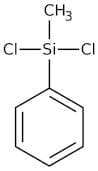
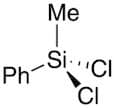
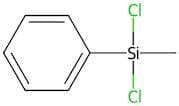
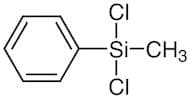
Diclorometilfenilsilano, com o número CAS 149-74-6, é um composto organossilícico caracterizado pela presença de um átomo de silício ligado a um grupo fenila, um grupo metila e dois átomos de cloro. Este composto geralmente aparece como um líquido incolor a amarelo pálido e é conhecido por sua reatividade, particularmente em reações de substituição nucleofílica devido à presença dos grupos funcionais clorados. É frequentemente utilizado como um agente de acoplamento de silano, melhorando a adesão entre materiais inorgânicos e polímeros orgânicos. Além disso, Diclorometilfenilsilano pode servir como um intermediário na síntese de vários compostos que contêm silício. Suas propriedades químicas incluem um ponto de ebulição relativamente baixo e solubilidade moderada em solventes orgânicos, tornando-o adequado para várias aplicações em ciência dos materiais e síntese orgânica. No entanto, deve ser manuseado com cuidado devido à sua potencial toxicidade e reatividade, particularmente na presença de umidade, o que pode levar à hidrólise e à liberação de ácido clorídrico. Medidas e protocolos de segurança adequados são essenciais ao trabalhar com este composto.
Fórmula:C7H8Cl2Si
InChI:InChI=1S/C7H8Cl2Si/c1-10(8,9)7-5-3-2-4-6-7/h2-6H,1H3
Chave InChI:InChIKey=GNEPOXWQWFSSOU-UHFFFAOYSA-N
SMILES:[Si](C)(Cl)(Cl)C1=CC=CC=C1
Sinónimos:- (Dichloromethylsilyl)benzene
- Benzene, (dichloromethylsilyl)-
- Benzyl(Dichloro)Silane
- Dichlor(methyl)(phenyl)silan
- Dichloro(methyl)(phenyl)silane
- Dichlorophenylmethylsilane
- Dicloro(Fenil)(Metil)Silano
- Ls 1490
- Methylphenyldichlorosilane
- Nsc 96621
- Phenyldichloro(methyl)silane
- Phenylmethyldichlorosilane
- Silane, Methylphenyldichloro-
- Silane, dichloromethylphenyl-
- Tsl 8067
- [(Dichloro)methylsilyl]benzene
- Ver mais sinónimos
Ordenar por
Pureza (%)
0
100
|
0
|
50
|
90
|
95
|
100
Foram encontrados 4 produtos.
Dichloromethylphenylsilane, 98%
CAS:Dichloromethylphenylsilane is used as a monomer (‘building block’) in the production of silicone polymers or silicone resins. Silicone polymers may be oils, greases and rubbers. It is also used as an intermediate (starting material) in the production of other organosilicon substances. It is a bifuncFórmula:C7H8Cl2SiPureza:98%Cor e Forma:Liquid, Clear colorless to pale pinkPeso molecular:191.13Methylphenyldichlorosilane, min. 97%
CAS:Methylphenyldichlorosilane, min. 97%
Fórmula:(CH3)(C6H5)SiCl2Pureza:min. 97%Cor e Forma:colorless liq.Peso molecular:191.11Dichloro(methyl)phenylsilane
CAS:Fórmula:C7H8Cl2SiPureza:>98.0%(GC)Cor e Forma:Colorless to Almost colorless clear liquidPeso molecular:191.13