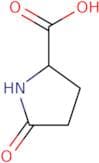
CAS 149-87-1
:DL-Ácido pirrolidona carboxílico
Descrição:
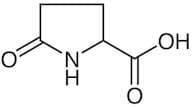
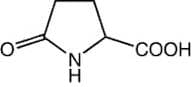
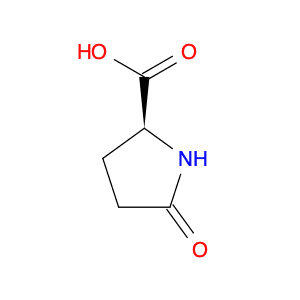
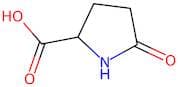
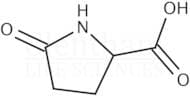
DL-Ácido pirrolidona carboxílico, também conhecido como 5-oxoprolina, é um derivado cíclico do aminoácido ácido glutâmico. É caracterizado por sua aparência cristalina branca e é solúvel em água, tornando-se prontamente disponível para várias aplicações bioquímicas. O composto apresenta um anel de lactama de cinco membros, que contribui para suas propriedades e reatividade únicas. DL-Ácido pirrolidona carboxílico desempenha um papel significativo na síntese de proteínas e está envolvido em várias vias metabólicas, particularmente no contexto do metabolismo de aminoácidos. É frequentemente utilizado nas indústrias farmacêutica e cosmética devido às suas potenciais propriedades antioxidantes e seu papel como precursor na síntese de outros compostos biologicamente ativos. Além disso, foi estudado por seus efeitos neuroprotetores e seu potencial papel na função cognitiva. Assim como muitas substâncias químicas, devem ser observadas precauções de segurança e manuseio, pois pode causar irritação ao contato com a pele ou os olhos.
Fórmula:C5H7NO3
InChI:InChI=1/C5H7NO3/c7-4-2-1-3(6-4)5(8)9/h3H,1-2H2,(H,6,7)(H,8,9)/t3-/m0/s1
Chave InChI:InChIKey=ODHCTXKNWHHXJC-UHFFFAOYSA-N
SMILES:C(O)(=O)C1NC(=O)CC1
Sinónimos:- (+/-)-2-Pyrrolidinone-5-Carboxylic Acid
- (+/-)-2-Pyrrolidone-5-Carboxylic Acid
- (±)-Pyroglutamic acid
- 5-Oxo-<span class="text-smallcaps">DL</span>-proline
- 5-Oxo-Dl-Proline
- 5-Oxoproline
- 5-Oxopyrrolidine-2-carboxylic acid
- 5-oxo-L-proline
- <span class="text-smallcaps">DL</span>-2-Pyrrolidinone-5-carboxylic acid
- <span class="text-smallcaps">DL</span>-2-Pyrrolidone-5-carboxylic acid
- <span class="text-smallcaps">DL</span>-Proline, 5-oxo-
- <span class="text-smallcaps">DL</span>-Pyroglutamate
- <span class="text-smallcaps">DL</span>-Pyroglutamic acid
- <span class="text-smallcaps">DL</span>-Pyrrolidonecarboxylic acid
- DL-2-Pyrrolidone-5-Carboxylic Acid
- Dl-5-Oxoproline
- Dl-A-Pyroglutamic Acid
- Dl-Glutamic Acid Lactam
- Dl-Proline, 5-Oxo-
- H-Dl-Pyr-Oh
- NSC 40887
- Proline, 5-oxo-
- Proline, 5-oxo-, <span class="text-smallcaps">DL</span>-
- DL-Pyrrolidonecarboxylic acid
- Proline, 5-oxo-, DL-
- DL-pGlu-OH
- DL-2-PYRROLIDINONE-5-CARBOXYLIC ACID
- Pyroglutamic acid and esters
- D,L-2-PYRROLIDONE-5-CARBOXYLIC ACID
- (n)-2-pyrrolidinone-5-carboxylic acid
- DL-5-OXO-2-PYRROLIDINECARBOXYLIC ACID
- DL-5-PYRROLIDONE-2-CARBOXYLIC ACID
- LABOTEST-BB LT00005913
- 5-OXO-PYRROLIDINE-2-CARBOXYLIC ACID
- DL-Pyroglutamic
- Ver mais sinónimos
Ordenar por
Pureza (%)
0
100
|
0
|
50
|
90
|
95
|
100
12 produtos.
DL-Pyroglutamic Acid
CAS:Fórmula:C5H7NO3Pureza:>99.0%(T)Cor e Forma:White powder to crystalPeso molecular:129.12(+/-)-2-Pyrrolidinone-5-carboxylic acid, 99%
CAS:It is an important raw material and intermediate used in organic synthesis, pharmaceuticals, agrochemicals and dyestuffs. This Thermo Scientific Chemicals brand product was originally part of the Alfa Aesar product portfolio. Some documentation and label information may refer to the legacy brand. ThFórmula:C5H7NO3Pureza:99%Cor e Forma:Pale cream, Crystals or powder or crystalline powderPeso molecular:129.12DL-Pyroglutamic acid, 10mM (in DMSO)
CAS:DL-Pyroglutamic acid, 10mM (in DMSO)Pureza:≥98%Peso molecular:129.11g/mol2-Pyrrolidone-5-carboxylic acid
CAS:Fórmula:C5H7NO3Pureza:≥ 98.0%Cor e Forma:White to off-white powderPeso molecular:129.12DL-Pyroglutamic acid
CAS:DL-Pyroglutamic acid exhibited a strong inactivating effect on hepatitis B surface antigen.Fórmula:C5H7NO3Pureza:99.88%Cor e Forma:White PowderPeso molecular:129.115-Oxopyrrolidine-2-carboxylic acid
CAS:Fórmula:C5H7NO3Pureza:98%Cor e Forma:SolidPeso molecular:129.115DL-2-Pyrrolidone-5-carboxylic Acid
CAS:Produto ControladoApplications DL-2-Pyrrolidone-5-carboxylic Acid is used in the preparation of AZT steroid conjugates as potent anti-HIV agents.
References You, Z. et al.: Nucleos. Nucleot. Nucl. Acids, 25, 37 (2006);Fórmula:C5H7NO3Cor e Forma:NeatPeso molecular:129.11DL-Pyroglutamic acid
CAS:DL-Pyroglutamic acid is an antibiotic that has been shown to inhibit the growth of bacteria by binding to a bacterial pyrophosphate-binding site. It also inhibits the production of cyclase and its activity in mice with bowel disease. DL-Pyroglutamic acid has been shown to be effective against a variety of bacterial types, including Gram-positive and Gram-negative bacteria. The compound binds to ferrous iron (Fe2+) with high affinity and forms stable metal complexes that are insoluble in water. This property makes it a useful tool for chromatographic analysis. DL-Pyroglutamic acid has also been shown to have anti-tumor activity in mouse models, although it is not effective at treating human cancer cells.Fórmula:C5H7NO3Pureza:Min. 95%Cor e Forma:White PowderPeso molecular:129.11 g/mol