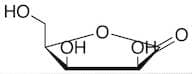
CAS 15384-34-6
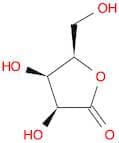
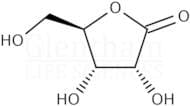
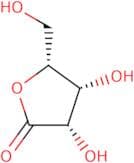
:(3R,5R)-3,4-diidroxi-5-(hidroximetil)tetraidrofurano-2-ona
Descrição:
A substância química conhecida como (3R,5R)-3,4-diidroxi-5-(hidroximetil)tetraidrofurano-2-ona, com o número CAS 15384-34-6, é um derivado de açúcar cíclico caracterizado por sua estrutura de anel de tetrahidrofurano. Este composto apresenta múltiplos grupos hidroxila, que contribuem para sua natureza hidrofílica e potencial para ligações de hidrogênio, influenciando sua solubilidade em água e outros solventes polares. A presença de estereocentros nas posições 3 e 5 confere quiralidade, levando a uma atividade óptica específica. Este composto é frequentemente estudado por sua atividade biológica, particularmente em relação ao seu papel em vias metabólicas ou como um potencial precursor na química orgânica sintética. Suas características estruturais sugerem que pode participar de várias reações químicas, incluindo oxidação e esterificação, tornando-o de interesse tanto na pesquisa farmacêutica quanto bioquímica. No geral, suas características estruturais únicas e grupos funcionais o posicionam como um composto valioso no estudo da química dos carboidratos e campos relacionados.
Fórmula:C5H8O5
InChI:InChI=1/C5H8O5/c6-1-2-3(7)4(8)5(9)10-2/h2-4,6-8H,1H2/t2-,3?,4-/m1/s1
SMILES:C([C@@H]1C([C@H](C(=O)O1)O)O)O
Ordenar por
Pureza (%)
0
100
|
0
|
50
|
90
|
95
|
100
7 produtos.
D-Lyxono-1,4-lactone
CAS:D-Lyxono-1,4-lactone is a 4-deoxy-l-fucose derivative that is a potent inhibitor of bacterial growth. It is a highly effective antibiotic with a broad spectrum of activity against Gram-positive and Gram-negative bacteria. D-Lyxono-1,4-lactone has been shown to be active against multivorans, including Escherichia coli and Salmonella enterica serovar Typhimurium. This compound was found to be more active than antibiotics such as penicillin and streptomycin. The structure of D-Lyxono-1,4-lactone includes two hydroxamic acid groups that are connected by an acetal linkage to form the benzylidene acetal moiety. The optical enantiomers of this molecule have been characterized using high resolution NMR spectroscopy and magnetic resonance spectroscopy techniques.BR> Dosis: 250Fórmula:C5H8O5Pureza:Min. 95.0 Area-%Peso molecular:148.11 g/molRef: 3D-W-201380
-Unit-ggA consultar5gA consultar10gA consultar25gA consultar50gA consultar2500mgA consultarD-Lyxono-1,4-lactone
CAS:D-Lyxono-1,4-lactone is an inhibitor of the enzyme fucosidase. It competitively inhibits the enzyme, but does not inhibit other hydroxamic acids such as enantiomers of D-lyxono-1,4-lactone. D-Lyxono-1,4-lactone has been used to treat HIV and AIDS because it prevents viral replication by blocking the synthesis of glycoproteins in the virus's envelope. It also has inhibitory effects on tumor cells that are not dependent on fucosidase activity. Magnetic resonance spectroscopy (NMR) studies have shown that d-lyxono-1,4-lactone binds to human liver cells and blocks the binding site for cytotoxic molecules in these cells. The molecular modelling study has demonstrated that d-lyxono 1,4 lactone binds to a specific site on human HLA class II molecule and reduces itsFórmula:C5H8O5Pureza:(%) Min. 97%Cor e Forma:PowderPeso molecular:148.11 g/mol(3S,4R,5R)-3,4-Dihydroxy-5-(hydroxymethyl)dihydrofuran-2(3H)-one
CAS:Fórmula:C5H8O5Pureza:95%Peso molecular:148.114D-Lyxono-1,4-lactone
CAS:Produto ControladoApplications D-Lyxono-1,4-lactone is used for synthesis of 1,4-dideoxy-1,4-imino-L-arabinitol, a glucosidase inhibitor with in vitro antiviral activity.
References Mitrakou, A., et al.: Diab. Med., 15, 657 (1998), Scott, L., et al.: Drugs, 59, 521 (2000), Vasella, A., et al.: Curr. Opin. Chem. Biol., 6, 619 (2002), Kato, A., et al.: J. Med. Chem., 48, 2036 (2005),Fórmula:C5H8O5Cor e Forma:NeatPeso molecular:148.11