CAS 1592-20-7
:4-Cloreto de vinilbenzeno
Descrição:
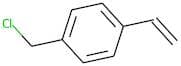
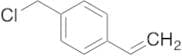
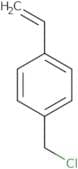
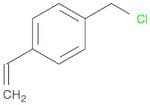
4-Cloreto de vinilbenzeno, com o número CAS 1592-20-7, é um composto orgânico caracterizado por seus grupos funcionais vinílico e benzílico. Aparece como um líquido incolor a amarelo pálido e é conhecido por sua reatividade devido à presença de ambos os grupos, o grupo vinílico, que pode sofrer polimerização, e a parte de cloreto de benzila, que é um bom grupo de saída em reações de substituição nucleofílica. Este composto é utilizado principalmente como um intermediário na síntese de vários polímeros e resinas, particularmente na produção de materiais reticulados. Também é utilizado na preparação de superfícies funcionalizadas e como um bloco de construção na síntese orgânica. 4-Cloreto de vinilbenzeno é sensível à umidade e deve ser manuseado com cuidado, pois pode liberar ácido clorídrico durante a hidrólise. Precauções de segurança são necessárias ao trabalhar com este composto, pois pode causar irritação na pele e nos olhos e apresenta potenciais riscos à saúde se inalado ou ingerido. Protocolos adequados de armazenamento e manuseio devem ser seguidos para mitigar os riscos associados ao seu uso.
Fórmula:C9H9Cl
InChI:InChI=1S/C9H9Cl/c1-2-8-3-5-9(7-10)6-4-8/h2-6H,1,7H2
Chave InChI:InChIKey=ZRZHXNCATOYMJH-UHFFFAOYSA-N
SMILES:C(=C)C1=CC=C(CCl)C=C1
Sinónimos:- 1-(Chlormethyl)-4-vinylbenzol
- 1-(Chloromethyl)-3-Ethenylbenzene-1-(Chloromethyl)-4-Ethenylbenzene (1:1)
- 1-(Chloromethyl)-4-Ethenyl-Benzen
- 1-(Chloromethyl)-4-ethenyl-Benzene
- 1-(Chloromethyl)-4-vinylbenzene
- 1-(Clorometil)-4-Vinilbenceno
- 4-Chloromethyl styrene
- 4-Chloromethylstyrene
- 4-Vinylbenzyl chloride
- 4-Vinylbenzylchloride
- Benzene, 1-(chloromethyl)-4-ethenyl-
- Benzyl Chloride, 4-Vinyl-
- Chloromethyl styrene
- Chloromethylstyrene
- Chloromethylstyrene (m- and p-mixture) (stabilized with TBC)
- Cms 14
- Styrene, p-(chloromethyl)-
- VBC
- Vinylbenzyl Chloride, Mixture Of Isomers
- p-(Chloromethyl)styrene
- p-Vinylbenzyl chloride
- Ver mais sinónimos
Ordenar por
Pureza (%)
0
100
|
0
|
50
|
90
|
95
|
100
7 produtos.
4-Vinylbenzyl chloride
CAS:4-Vinylbenzyl chlorideFórmula:C9H9ClPureza:98%Cor e Forma: light yellow to yellow to yellow-green liquidPeso molecular:152.62g/mol4-(Chloromethyl)styrene (~0.1% TBC stabilizer)
CAS:Produto ControladoStability Light Sensitive
Applications 4-(Chloromethyl)styrene, 90%, stabilized (cas# 1592-20-7) is a useful research chemical.
Not a dangerous good if item is equal to or less than 1g/ml and there is less than 100g/ml in the packageFórmula:C9H9ClCor e Forma:NeatPeso molecular:152.621-(Chloromethyl)-4-vinylbenzene, 500 ppm t-Butylcatechol inhibitor
CAS:Fórmula:C9H9ClPureza:98% (stabilized with TBC)Cor e Forma:Clear yellow liquidPeso molecular:152.624-(Chloromethyl)styrene (stabilized with TBC + ONP + 2-Nitro-p-cresol)
CAS:Fórmula:C9H9ClPureza:>90.0%(GC)Cor e Forma:Light yellow to Yellow to Orange clear liquidPeso molecular:152.624-Vinylbenzyl chloride
CAS:4-Vinylbenzyl chloride is a vinyl monomer that reacts with divinylbenzene to form polyvinyl chloride. The reaction is carried out in the presence of potassium hexafluorophosphate and water. 4-Vinylbenzyl chloride has an average molecular weight of 168.98 g/mol and a melting point of -97°C. It is soluble in water, but not in organic solvents such as alcohols, ethers, or chlorinated hydrocarbons. 4-Vinylbenzyl chloride can be used as a precursor for other compounds. For example, it can be reacted with hydrogen fluoride to yield 4-vinylphenol, which can then be converted into phenol using sodium hydroxide or trifluoromethanesulfonic acid.Fórmula:C9H9ClPureza:Min. 95%Cor e Forma:Clear LiquidPeso molecular:152.62 g/mol