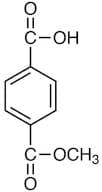
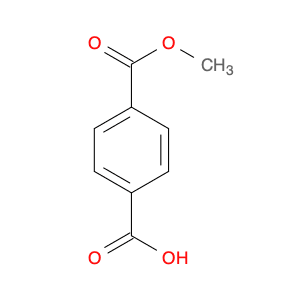
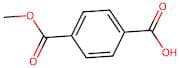
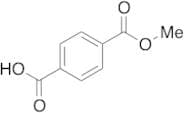
CAS 1679-64-7
:Tereftalato de monometilo
- 1,4-Benzenedicarboxylic acid, 1-methyl ester
- 1,4-Benzenedicarboxylic acid, monomethyl ester
- 4-(Carbomethoxy)benzoic acid
- 4-(Methoxycarbonyl)Benzoate
- 4-(Methoxycarbonyl)benzoic acid
- 4-[(Methyloxy)carbonyl]benzoic acid
- Hydrogen methyl terephthalate
- Methyl 4-carboxybenzoate
- Methyl Hydrogen Terephthalate
- Methyl p-carboxybenzoate
- Methyl p-phthalate
- Monomethyl Terephthalate
- NSC 210838
- Terephthalic Acid Monomethyl Ester
- mono-Methyl terephthalate
- p-(Methoxycarbonyl)benzoic acid
- Ver mais sinónimos
Monomethyl Terephthalate
CAS:Fórmula:C9H8O4Pureza:>98.0%(GC)(T)Cor e Forma:White to Almost white powder to crystalPeso molecular:180.16Methyl hydrogen terephthalate, 99+%
CAS:Methyl hydrogen terephthalate is used in the synthesis of Hepatitis C antiviral activity. It is also used in the design and preparation of benzamide derivatives as BRAFV600E inhibitors. This Thermo Scientific Chemicals brand product was originally part of the Alfa Aesar product portfolio. Some docum
Fórmula:C9H8O4Pureza:99+%Peso molecular:180.16mono-Methyl terephthalate
CAS:Fórmula:C9H8O4Pureza:≥ 99.0%Cor e Forma:White powderPeso molecular:180.16012mono-Methyl terephthalate
CAS:mono-Methyl terephthalateFórmula:C9H8O4Pureza:98%Cor e Forma: white solidPeso molecular:180.16g/mol4-(Methoxycarbonyl)benzoic acid
CAS:Fórmula:C9H8O4Pureza:97%Cor e Forma:Solid, Chunks or Crystalline PowderPeso molecular:180.159mono-Methyl Terephthalate
CAS:Applications: mono-Methyl Terephthalate is used in the synthesis of Hepatits C antiviral activity. Also used in the design and preparation of benzamide derivatives as BRAFV600E inhibitors, which if mutated, can influence malignancies and melanomas.
References Shi, J. et al.: ChemMedChem., 8, 722 (2013); Xie, Y. et al.: Bioorg. Med. Chem. Lett., 23, 1396Fórmula:C9H8O4Cor e Forma:NeatPeso molecular:180.16mono-Methyl terephthalate
CAS:Mono-methyl terephthalate (MMT) is a monomer used in the manufacturing of polyester and other types of plastic. It is produced from terephthalic acid, which is derived from crude oil or natural gas. The oxidation catalyst used in this process is usually manganese dioxide. MMT has been shown to inhibit bacterial growth by binding to DNA-dependent RNA polymerase, thereby preventing transcription and replication. This active form is metabolized through a number of metabolic transformations, including hydrolysis by esterases or glucuronidases, oxidation by cytochrome P450 enzymes, reduction by glutathione reductase, or conjugation with glucuronic acid. MMT also specifically binds to markers expressed at high levels in Mycobacterium tuberculosis strains (e.g., ESX-1 secretion system protein) and inhibits cell growth in culture.
Fórmula:C9H8O4Pureza:Min. 95%Cor e Forma:PowderPeso molecular:180.16 g/mol