CAS 1716-07-0
:Triglicerídeo OPO
Descrição:
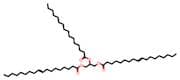
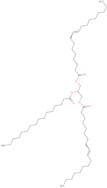
Triglicerídeo OPO, com o número CAS 1716-07-0, é um tipo específico de triglicerídeo que se caracteriza por sua composição única de ácidos graxos. Geralmente consiste em uma estrutura de glicerol esterificado com três ácidos graxos, onde um dos ácidos graxos é frequentemente ácido oleico, enquanto os outros dois podem variar, incluindo comumente ácidos palmítico e esteárico. Essa estrutura particular contribui para suas propriedades físicas, como ponto de fusão e solubilidade, que podem influenciar seu comportamento em aplicações alimentares e farmacêuticas. Triglicerídeo OPO é conhecido por seus potenciais benefícios à saúde, particularmente na nutrição infantil, pois se assemelha de perto à gordura do leite materno humano. Também é reconhecido por suas características de digestibilidade e absorção, tornando-se um ingrediente valioso em formulações dietéticas especializadas. Além disso, triglicerídeos como OPO são importantes no armazenamento de energia e no metabolismo em organismos vivos. No geral, a composição e propriedades únicas de Triglicerídeo OPO fazem dele uma substância significativa tanto na ciência nutricional quanto em aplicações industriais.
Fórmula:C55H102O6
InChI:InChI=1S/C55H102O6/c1-4-7-10-13-16-19-22-25-27-30-32-35-38-41-44-47-53(56)59-50-52(61-55(58)49-46-43-40-37-34-29-24-21-18-15-12-9-6-3)51-60-54(57)48-45-42-39-36-33-31-28-26-23-20-17-14-11-8-5-2/h25-28,52H,4-24,29-51H2,1-3H3/b27-25-,28-26-
Chave InChI:InChIKey=PPTGNVIVNZLPPS-LBXGSASVSA-N
SMILES:C(COC(CCCCCCC/C=C\CCCCCCCC)=O)(COC(CCCCCCC/C=C\CCCCCCCC)=O)OC(CCCCCCCCCCCCCCC)=O
Sinónimos:- (9Z)-9-Octadecenoic Acid 1,1[2-[(1-Oxohexadecyl)oxy]-1,3-propanediyl] Ester
- 1,3-Di-(9Z-octadecenoyl)-2-hexadecanoyl-sn-glycerol
- 1,3-Di[Cis-9-Octadecenoyl]-2-Hexadecanoylglycerol
- 1,3-Dioleo-2-palmitin
- 1,3-Dioleoyl-2-Palmitoylglycerol
- 1,3-Dioleyl-2-palmitoylglycerol
- 1-Oleo-2-palmito-3-olein
- 2-Palmito-1,3-diolein
- 2-Palmityl-1,3-diolein
- 9-Octadecenoic acid (9Z)-, 1,1′-[2-[(1-oxohexadecyl)oxy]-1,3-propanediyl] ester
- 9-Octadecenoic acid (9Z)-, 2-[(1-oxohexadecyl)oxy]-1,3-propanediyl ester
- 9-Octadecenoic acid (Z)-, 2-[(1-oxohexadecyl)oxy]-1,3-propanediyl ester
- Glycerol dioleate monopalmitate
- Glyceryl 1,3-dioleate 2-palmitate
- Glyceryl 2-palmitate-1,3-dioleate
- Olein, 2-palmito-1,3-di-
- Palmitin, 1,3-dioleo-2-
- Triglyceride OPO
- Triglyceride OPO,sn
- Ver mais sinónimos
Ordenar por
Pureza (%)
0
100
|
0
|
50
|
90
|
95
|
100
Foram encontrados 7 produtos.
1,3-Dioleoyl-2-palmitoylglycerol
CAS:1,3-Dioleoyl-2-palmitoylglycerolFórmula:C55H102O6Pureza:98%Peso molecular:859.391,3-Dioleoyl-2-palmitoylglycerol
CAS:1,3-Dioleoyl-2-palmitoylglycerol is a significant triacylglycerol incorporated in infant formulas [1].Fórmula:C55H102O6Cor e Forma:SolidPeso molecular:859.391,3-Dioleoyl-2-palmitoylglycerol
CAS:Produto ControladoApplications A triglyceride for use in making human milk replacements.
References Nakaya, H., et al.: Biotechnology Techniques, 12, 881 (1998), Chen, M., et al.: J. Am. Oil Chemists’ Society, 91, 525 (2004),Fórmula:C55H102O6Cor e Forma:NeatPeso molecular:859.391,3-Dioleoyl-2-palmitoylglycerol-d5
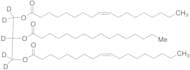
CAS:Produto ControladoFórmula:C55D5H97O6Cor e Forma:NeatPeso molecular:864.4261,3-Dioleoyl-2-palmitoylglycerol
CAS:Dipalmitoylglycerol is a fatty acid that is naturally found in catfish. The optimal conditions for the synthesis of dipalmitoylglycerol from tripalmitin have been determined by surface methodology to be at pH 5 and at 0°C. Dipalmitoylglycerol has been shown to bind to the enzyme acetyl-CoA carboxylase, which is involved in the synthesis of fatty acids, and prevent its activation. As a result, there is no production of malonyl CoA, which is an important precursor in the synthesis of fatty acids. This may be beneficial for infants because it prevents them from developing allergies and asthma.Fórmula:C55H102O6Pureza:Min. 95%Peso molecular:859.39 g/mol