CymitQuimica logo

CAS 18132-63-3

:

Di-n-butil-dimetoxisilano

Descrição:
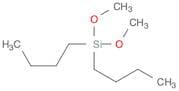
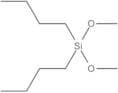
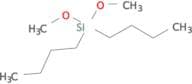
Di-n-butil-dimetoxisilano, com o número CAS 18132-63-3, é um composto organossilícico caracterizado por sua estrutura de silano, que inclui dois grupos n-butilo e dois grupos metóxi ligados a um átomo de silício. Este composto é tipicamente um líquido incolor a amarelo pálido com uma viscosidade relativamente baixa. É conhecido por sua capacidade de atuar como um agente de acoplamento e modificador de superfície, melhorando a adesão entre materiais orgânicos e substratos inorgânicos. Di-n-butil-dimetoxisilano exibe boa estabilidade térmica e é solúvel em solventes orgânicos, tornando-o útil em várias aplicações, incluindo revestimentos, selantes e adesivos. Além disso, pode participar de reações de hidrólise, levando à formação de grupos silanol, que podem polimerizar ainda mais para formar redes de siloxano. As considerações de segurança incluem manuseá-lo em áreas bem ventiladas e usar equipamentos de proteção individual adequados, pois pode causar irritação ao contato com a pele ou os olhos. No geral, suas propriedades químicas únicas o tornam valioso em aplicações industriais e de pesquisa.
Fórmula:C10H24O2Si
InChI:InChI=1/C10H24O2Si/c1-5-7-9-13(11-3,12-4)10-8-6-2/h5-10H2,1-4H3
SMILES:CCCC[Si](CCCC)(OC)OC
Sinónimos:
  • Dibutyl(Dimethoxy)Silane
Ordenar por

Pureza (%)
0
100
|
0
|
50
|
90
|
95
|
100
4 produtos.
  • Silane, dibutyldimethoxy-

    CAS:
    Fórmula:C10H24O2Si
    Pureza:98%
    Cor e Forma:Liquid
    Peso molecular:204.3819

    Ref: IN-DA0022U5

    1g
    53,00€
    5g
    112,00€
    10g
    163,00€
    25g
    276,00€
    250mg
    25,00€
  • Dibutyldimethoxysilane

    CAS:
    Dibutyldimethoxysilane
    Pureza:98%
    Peso molecular:204.38g/mol

    Ref: 54-OR1012835

    1g
    79,00€
    5g
    159,00€
    10g
    A consultar
    25g
    504,00€
    250mg
    A consultar
  • DI-n-BUTYLDIMETHOXYSILANE

    CAS:
    <p>Alkyl Silane - Conventional Surface Bonding<br>Aliphatic, fluorinated aliphatic or substituted aromatic hydrocarbon substituents are the hydrophobic entities which enable silanes to induce surface hydrophobicity. The organic substitution of the silane must be non-polar. The hydrophobic effect of the organic substitution can be related to the free energy of transfer of hydrocarbon molecules from an aqueous phase to a homogeneous hydrocarbon phase. A successful hydrophobic coating must eliminate or mitigate hydrogen bonding and shield polar surfaces from interaction with water by creating a non-polar interphase. Although silane and silicone derived coatings are in general the most hydrophobic, they maintain a high degree of permeability to water vapor. This allows coatings to breathe and reduce deterioration at the coating interface associated with entrapped water. Since ions are not transported through non-polar silane and silicone coatings, they offer protection to composite structures ranging from pigmented coatings to rebar reinforced concrete. A selection guide for hydrophobic silanes can be found on pages 22-31 of the Hydrophobicity, Hydrophilicity and Silane Surface Modification brochure.<br>Di-n-butyldimethoxysilane; Dimethoxydi-n-butylsilane<br>Dialkoxy silane<br></p>
    Fórmula:C10H24O2Si
    Pureza:97%
    Cor e Forma:Straw Liquid
    Peso molecular:204.39

    Ref: 3H-SID3214.0

    2kg
    A consultar
  • Di-n-butyldimethoxysilane

    CAS:
    Fórmula:C10H24O2Si
    Pureza:98%
    Peso molecular:204.385

    Ref: 10-S05840

    100g
    1.436,00€