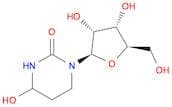
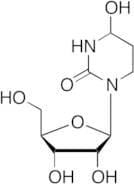
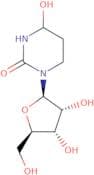
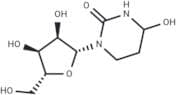
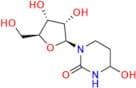
CAS 18771-50-1
:Tetraidrouridina
Descrição:
Tetraidrouridina (THU) é um análogo de nucleosídeo que funciona principalmente como um inibidor da enzima citidina deaminase, que está envolvida no metabolismo dos nucleosídeos. Sua estrutura química apresenta um anel de pirimidina com um moiety de tetrahidrofurano, contribuindo para suas propriedades únicas. O THU é conhecido por sua capacidade de aumentar a biodisponibilidade de certos análogos de nucleosídeos, prevenindo sua degradação, aumentando assim sua eficácia terapêutica. É frequentemente estudado no contexto de terapias antivirais e anticancerígenas, particularmente em combinação com outros análogos de nucleosídeos. O THU é tipicamente administrado em uma forma farmacêutica, e sua solubilidade e estabilidade são fatores importantes em sua aplicação. Além disso, tem sido investigado por seu potencial papel na modulação de respostas imunológicas e em várias aplicações de pesquisa bioquímica. Perfis de segurança e toxicidade são considerações essenciais em seu uso, e a pesquisa em andamento continua a explorar seu amplo espectro de atividades biológicas e potencial terapêutico.
Fórmula:C9H16N2O6
InChI:InChI=1S/C9H16N2O6/c12-3-4-6(14)7(15)8(17-4)11-2-1-5(13)10-9(11)16/h4-8,12-15H,1-3H2,(H,10,16)/t4-,5?,6-,7-,8-/m1/s1
Chave InChI:InChIKey=UCKYOOZPSJFJIZ-XVKVHKPRSA-N
SMILES:O[C@H]1[C@@H](O[C@H](CO)[C@H]1O)N2C(=O)NC(O)CC2
Sinónimos:- 1-(β-<span class="text-smallcaps">D</span>-Ribofuranosyl)-4-hydroxytetrahydro-1(1H)-pyrimidinone
- 2(1H)-Pyrimidinone, tetrahydro-4-hydroxy-1-β-<span class="text-smallcaps">D</span>-ribofuranosyl-
- 2(1H)-pyrimidinone, tetrahydro-4-hydroxy-1-beta-D-ribofuranosyl-
- 3,4,5,6-Tetrahydrouridine
- 4-hydroxy-1-(beta-D-ribofuranosyl)tetrahydropyrimidin-2(1H)-one
- 4-hydroxy-1-pentofuranosyltetrahydropyrimidin-2(1H)-one
- 5,6-Dihydrouridine
- Brn 0752319
- Nsc 112907
- Nsc-112907-D
- U 23284
- Uridine, 3,4,5,6-tetrahydro-
- Tetrahydrouridine
- 2(1H)-Pyrimidinone, tetrahydro-4-hydroxy-1-β-D-ribofuranosyl-
- Ver mais sinónimos
Ordenar por
Pureza (%)
0
100
|
0
|
50
|
90
|
95
|
100
6 produtos.
3,4,5,6-Tetrahydrouridine (>80%)
CAS:Stability Light Sensitive
Applications 3,4,5,6-Tetrahydrouridine, is a derivative of Uridine (U829910). Tetrahydrouridine (THU), is a potent inhibitor of cytidine. It inhibits cell proliferation through cell cycle regulation regardless of cytidine deaminase expression levels deaminase (CDA), and thus can be used as a potential and promising treatment for tumors with highly expressed CDA.
References Lorine, P., et al.: J. Biol. Chem., 178, 439 (1949); Funamizu, N., PLoS One, 37424 (2012);Fórmula:C9H16N2O6Pureza:>80%Cor e Forma:NeatPeso molecular:248.23Tetrahydrouridine
CAS:Tetrahydrouridine is a pyrimidine nucleoside that has been shown to have inhibitory properties in clinical pathology. Tetrahydrouridine is a natural product derived from the amino acid histidine and is found in the cells of many living organisms. It is believed that tetrahydrouridine may be useful as an adjuvant to radiation therapy, and it has been shown to reduce the toxicity of chemotherapy drugs, such as decitabine and Ara-C. Tetrahydrouridine inhibits enzymes involved in DNA methylation, which can lead to cancer cell death.br> Tetrahydrouridine also has inhibitory effects on enzymes that produce cytidine from uracil, which can help prevent the formation of cancerous cells.br> Tetrahydrouridine inhibits deaminase activity, which produces uracil from cytosine. This inhibition prevents the production of uracil-cytosineFórmula:C9H16N2O6Pureza:Min. 95%Cor e Forma:White Off-White PowderPeso molecular:248.23 g/molTetrahydrouridine
CAS:Tetrahydrouridine (NSC-112907; THU) is a multidrug resistance modulator.Fórmula:C9H16N2O6Pureza:98%Cor e Forma:SolidPeso molecular:248.23