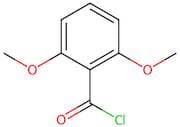
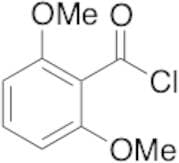
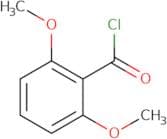
CAS 1989-53-3
:Cloreto de 2,6-dimetoxibenzoílo
- 2,6-Dimethoxybenzoic acid chloride
- Benzoyl chloride, 2,6-dimethoxy-
- 2,6-Dimethoxybenzoyl chloride
2,6-Dimethoxybenzoyl Chloride
CAS:Produto ControladoApplications 2,6-Dimethoxybenzoyl Chloride is used in the synthesis of penicillins and cephalosporins.
Not a dangerous good if item is equal to or less than 1g/ml and there is less than 100g/ml in the package
References Newall, C. et al.: Comp. Med. Chem., 2, 609 (1990); Kanao, M. et al.: J. Med. Chem., 25, 1358 (1982);Fórmula:C9H9ClO3Cor e Forma:NeatPeso molecular:200.622,6-Dimethoxybenzoyl Chloride
CAS:2,6-Dimethoxybenzoyl chloride is a halide that is used in the synthesis of other compounds. It can be synthesized by the reaction of methoxy groups with demethylation and regiospecific chlorination. This compound has been used to synthesize other substances, such as 2-chloro-2′,6′-diethoxybenzophenone. 2,6-Dimethoxybenzoyl chloride also has enzymatic activity that can be catalyzed by chromatographic science. The chloride ion is the most common anion found in living cells and it is involved in a variety of reactions. Dimethoxybenzamido and tribromide are two types of organic compounds that contain chlorine.
Fórmula:C9H9ClO3Pureza:Min. 95%Peso molecular:200.62 g/mol