CAS 2138-48-9
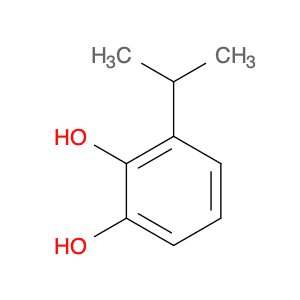
:3-(1-Metiletil)-1,2-benzenodiol
Descrição:
3-(1-Metiletil)-1,2-benzenodiol, comumente conhecido como 2,6-Di-tert-butilo-4-metilfenol (DTBMP), é um composto orgânico caracterizado por sua estrutura fenólica. Apresenta um anel de benzeno substituído por dois grupos tert-butilo e um grupo hidroxila, que contribui para suas propriedades antioxidantes. Este composto é tipicamente um sólido branco a amarelo pálido à temperatura ambiente e é solúvel em solventes orgânicos. O DTBMP é usado principalmente como estabilizador em várias aplicações industriais, incluindo plásticos, borracha e combustíveis, devido à sua capacidade de inibir a degradação oxidativa. Sua estrutura molecular permite que ele elimine eficazmente os radicais livres, tornando-o valioso para prolongar a vida útil dos materiais. Além disso, apresenta baixa toxicidade, o que o torna adequado para uso em produtos de consumo. No entanto, assim como muitas substâncias químicas, devem ser observadas medidas adequadas de manuseio e segurança para mitigar quaisquer riscos potenciais associados à exposição.
Fórmula:C9H12O2
InChI:InChI=1S/C9H12O2/c1-6(2)7-4-3-5-8(10)9(7)11/h3-6,10-11H,1-2H3
Chave InChI:InChIKey=XLZHGKDRKSKCAU-UHFFFAOYSA-N
SMILES:C(C)(C)C1=C(O)C(O)=CC=C1
Sinónimos:- 1,2-Benzendiol, (1-methylethyl)-
- 1,2-Benzenediol, 3-(1-Methylethyl)-
- 1,2-Dihydroxy-3-isopropylbenzene
- 218-385-0
- 3-(1-Methylethyl)-1,2-benzenediol
- 3-Isopropyl-1,2-dihydroxybenzene
- 3-Isopropylbenzene-1,2-diol
- 3-Isopropylcatechol
- 3-Isopropylpyrocatechol
- 3-Propan-2-ylbenzene-1,2-diol
- Isopropyl catechol
- NSC 62675
- Ver mais sinónimos
Ordenar por
Pureza (%)
0
100
|
0
|
50
|
90
|
95
|
100
5 produtos.
3-Isopropylcatechol
CAS:3-Isopropylcatechol is a chemical compound that belongs to the group of catechols. It is a subunit of the catecholamine neurotransmitters dopamine, norepinephrine, and epinephrine. 3-Isopropylcatechol is oxidized to form 3-hydroxycatechol and 3,4-dihydroxybenzoic acid by hydroxy groups in the presence of oxygen. The oxidation products can be used as carbon sources for growth by bacteria. The bacterium Escherichia coli expresses 3-isopropylcatechol from its DNA sequences, which is then converted into extradiol (a precursor) and then into the final product. Escherichia coli requires an organic solvent such as methanol or ethanol to grow on this substrate.Fórmula:C9H12O2Pureza:Min. 95%Cor e Forma:PowderPeso molecular:152.19 g/mol3-Isopropylcatechol
CAS:Produto ControladoApplications 3-Isopropylcatechol is an intermediate formed in the synthesis of Miltirone (M344500), an active component in Salvia miltiorrhiza that has been shown to inhibit the increase in the abundance of the mRNA for the α4 subunit of the GABAA receptor induced by ethanol withdrawal in cultured hippocampal neurons. A potential phytotherapeutic agent in the treatment of alcohol dependence.
References Mostallino, M. et al.: Eur. J. Pharmacol., 494, 83 (2004); Abenavoli, L. et al.: Rec. Prog. Med. Plants, 29, 19 (2010); Colombo, G. et al.: Alcohol. Clin. Exp. Res., 30, 754 (2006)Fórmula:C9H12O2Cor e Forma:NeatPeso molecular:152.19