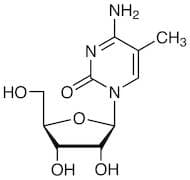
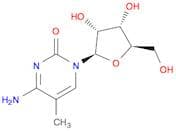
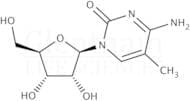
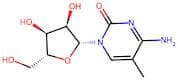
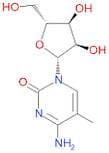
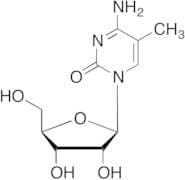
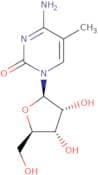
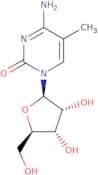
CAS 2140-61-6
:5-Metilcitidina
- 4-amino-5-methyl-1-pentofuranosylpyrimidin-2(1H)-one
- Cytidine, 5-methyl-
- Nsc 363933
- 5-Methylcytidine
- 3: PN: US20060035254 PAGE: 63 claimed sequence
5-Methylcytidine
CAS:Fórmula:C10H15N3O5Pureza:>98.0%(T)(HPLC)Cor e Forma:White to Almost white powder to crystalPeso molecular:257.255-Methylcytidine
CAS:Fórmula:C10H15N3O5Pureza:(HPLC) ≥ 98.0%Cor e Forma:White to almost white powderPeso molecular:257.245-Methylcytidine
CAS:5-Methylcytidine is a modified nucleoside derived from 5-methylcytosine and is a minor constituent of RNA as well as DNA for certain organisms.Fórmula:C10H15N3O5Pureza:99.02% - 99.88%Cor e Forma:SolidPeso molecular:257.245-Methylcytidine
CAS:Produto ControladoStability Hygroscopic
Applications 5-Methylcytidine is a derivative of Cytidine (C998300), found in ribonucleic acids of animals, plants and bacteria. 5-Methylcytidine is a nucleoside found in liver emulsion that can inhibit the growth of spontaneous tumors of mammary gland origin in mice. 5-Methylcytidine is one of many nucleosides that can be used as biomedical marker using liquid chromatography and ion trap mass spectrometry coupling.
References Kammerer, B., et al.: Anal. Biol. Chem., 382, 1017 (2005); Strong, L. and Matsunaga, H.: J. Surg. Oncol., 4, 528 (1972)Fórmula:C10H15N3O5Cor e Forma:NeatPeso molecular:257.245-Methylcytidine
CAS:5-Methylcytidine is a nucleoside that is found in DNA and RNA. It is used in structural biology to probe the structure of DNA. 5-Methylcytidine binds to the enzyme methyl transferase, which catalyzes the transfer of a methyl group from S-adenosylmethionine to produce 5-methyluridine. This reaction occurs in long-term toxicity studies using primary cells, such as lymphocytes and fibroblasts. 5-Methylcytidine has been shown to inhibit tumour growth in mice by binding to nuclear dna polymerase and blocking transcription. The binding site for this drug on the polymerase is located at the same site as that for nucleoside analogues like azidothymidine (AZT) and zidovudine (AZT).
Fórmula:C10H15N3O5Pureza:Min. 95%Cor e Forma:White PowderPeso molecular:257.24 g/mol5-Methylcytidine
CAS:M02111 - 5-Methylcytidine
Fórmula:C10H15N3O5Pureza:97%Cor e Forma:Solid, White - Very pale yellow powderPeso molecular:257.2465-Methylcytidine
CAS:5-Methylcytidine is a methyltransferase enzyme that catalyzes the transfer of a methyl group from S-adenosylmethionine to 5-methylcytosine. This reaction is essential for DNA replication and repair. 5-Methylcytidine has been shown to be an important factor in the regulation of mitochondrial functions, as well as other cellular processes such as protein synthesis, nuclear DNA replication, and tumor suppression. It also has been shown to inhibit the replication of murine sarcoma virus and Toll-like receptor. 5-Methylcytidine can be used in chemotherapy treatment against mouse tumors and murine sarcoma virus by preventing viral RNA synthesis with monoclonal antibodies.Fórmula:C10H15N3O5Peso molecular:257.24 g/molRef: 3D-W-201877
-Unit-ggA consultar25gA consultar50gA consultar100gA consultar250gA consultar500gA consultar