


CAS 218-01-9
:Criseno
Descrição:
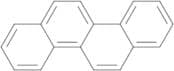
Criseno é um hidrocarboneto aromático policíclico (PAH) caracterizado por seus quatro anéis de benzeno fundidos, resultando em uma estrutura plana e aromática. Aparece como um sólido cristalino amarelado à temperatura ambiente e é insolúvel em água, mas solúvel em solventes orgânicos como benzeno e clorofórmio. Criseno tem uma fórmula molecular de C18H12 e um peso molecular de aproximadamente 228,3 g/mol. É conhecido por suas propriedades de fluorescência, tornando-o útil em várias aplicações, incluindo eletrônica orgânica e como sonda fluorescente em estudos bioquímicos. Criseno também é um componente do alcatrão de carvão e pode ser encontrado em combustíveis fósseis, levando à sua presença em amostras ambientais. No entanto, é importante notar que Criseno é considerado um potencial carcinógeno, e a exposição a ele deve ser minimizada. Sua estabilidade sob calor e luz o torna um objeto de estudo em química ambiental, particularmente em relação à sua persistência e transformação no meio ambiente.
Fórmula:C18H12
InChI:InChI=1S/C18H12/c1-3-7-15-13(5-1)9-11-18-16-8-4-2-6-14(16)10-12-17(15)18/h1-12H
Chave InChI:InChIKey=WDECIBYCCFPHNR-UHFFFAOYSA-N
SMILES:C12=C(C=3C(C=C1)=CC=CC3)C=CC=4C2=CC=CC4
Sinónimos:- 1,2-Benzophenanthrene
- 1,2-Benzphenanthrene
- Benzo(a)phenanthrene
- Chrysen
- Chrysene (purity)
- Coaltarpitchvolatiles
- Criseno
- Nsc 6175
- [4]Phenacene
- Chrysene
Ordenar por
Pureza (%)
0
100
|
0
|
50
|
90
|
95
|
100
PAH Mixture 390 1000 µg/mL in Dichloromethane
CAS:Produto Controlado- 120-12-7
- 129-00-0
- 191-24-2
- 192-97-2
- 193-39-5
- 198-55-0
- 205-82-3
- 205-99-2
- 206-44-0
- 207-08-9
- 208-96-8
- 218-01-9
- 260-94-6
- 50-32-8
- 53-70-3
- 56-55-3
- 83-32-9
- 85-01-8
- 86-73-7
- 90-12-0
- 90-13-1
- 91-20-3
- 91-22-5
- 91-57-6
- 91-58-7
Fórmula:C10H7ClCor e Forma:MixturePeso molecular:162.62Chrysene
CAS:<p>Applications Occurs in coal tar. Is formed during distillation of coal, in very small amount during distillation or pyrolysis of many fats and oils. Chrysene is one of the basic polycyclic aromatic hydrocarbon (PAH) which is toxic environmental pollutant and consistently exposed to sunlight. However, little information is available on its photogenotoxicity. The objective of the present study was to analyze the effects of Chrysene, under environmental intensity of UVB (0.6 mW/cm2) in human skin epidermal cell line (HaCaT).<br> Not a dangerous good if item is equal to or less than 1g/ml and there is less than 100g/ml in the package<br>References Anderson, D., et al.: Mutat. Res., 307, 261 (1994), Diamond, S., et al.: Environ. Toxicol. Chem., 25, 3015 (2006), Fotakis, G., et al.: Toxicol. Lett., 160, 171 (2006),<br></p>Fórmula:C18H12Cor e Forma:White To GreyPeso molecular:228.29Benzo[a]phenanthrene
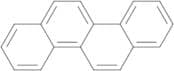
CAS:Benzo[a]phenanthrene is a polycyclic aromatic hydrocarbon that is found in petroleum and coal tar. It has been shown to be a potent inducer of enzymes involved in the detoxification of xenobiotics, such as chrysene-inducible cytochrome P450 1A1 (CYP1A1), s-phenylmercapturic acid-inducible cytochrome P450 2E1 (CYP2E1), and benzo[a]pyrene-inducible glutathione S-transferase (GST). The optimum concentration for benzo[a]phenanthrene is determined by measuring the amount of enzyme activity in rat liver microsomes following the addition of benzo[a]phenanthrene. A fluorescence detector can be used to measure the fluorescence emission from benzo[a]phenanthrene at an excitation wavelength of 300 nm and an emission wavelength of 400 nm.Fórmula:C18H12Pureza:Min. 95%Cor e Forma:White PowderPeso molecular:228.29 g/molEPA Method 8270 B/N Mixture 2 1000 µg/ml in Benz:MeCl2:ACCN 4:4:2
CAS:Produto Controlado- 101-55-3
- 103-33-3
- 106-46-7
- 108-60-1
- 111-44-4
- 111-91-1
- 117-81-7
- 117-84-0
- 118-74-1
- 120-12-7
- 120-82-1
- 121-14-2
- 129-00-0
- 131-11-3
- 191-24-2
- 193-39-5
- 205-99-2
- 206-44-0
- 207-08-9
- 208-96-8
- 218-01-9
- 50-32-8
- 53-70-3
- 541-73-1
- 56-55-3
- 606-20-2
- 62-75-9
- 621-64-7
- 67-72-1
- 7005-72-3
- 77-47-4
- 78-59-1
- 83-32-9
- 84-66-2
- 84-74-2
- 85-01-8
- 85-68-7
- 86-30-6
- 86-73-7
- 87-68-3
- 91-20-3
- 91-58-7
- 95-50-1
- 98-95-3
Fórmula:C6H3Cl3Cor e Forma:MixturePeso molecular:181.45EPA Method 8270 Calibration Mixture 500-1000 µg/mL in Dichloromethane
CAS:Produto Controlado- 100-01-6
- 100-02-7
- 100-25-4
- 100-51-6
- 101-55-3
- 103-23-1
- 103-33-3
- 105-67-9
- 106-44-5
- 106-46-7
- 106-47-8
- 108-39-4
- 108-60-1
- 108-95-2
- 110-86-1
- 111-44-4
- 111-91-1
- 117-81-7
- 117-84-0
- 118-74-1
- 120-12-7
- 120-82-1
- 120-83-2
- 121-14-2
- 122-39-4
- 129-00-0
- 131-11-3
- 132-64-9
- 191-24-2
- 193-39-5
- 205-99-2
- 206-44-0
- 207-08-9
- 208-96-8
- 218-01-9
- 50-32-8
- 51-28-5
- 528-29-0
- 53-70-3
- 534-52-1
- 541-73-1
- 56-55-3
- 58-90-2
- 59-50-7
- 606-20-2
- 62-53-3
- 62-75-9
- 621-64-7
- 67-72-1
- 7005-72-3
- 77-47-4
- 78-59-1
- 83-32-9
- 84-66-2
- 84-74-2
- 85-01-8
- 85-68-7
- 86-73-7
- 86-74-8
- 87-68-3
- 87-86-5
- 88-06-2
- 88-74-4
- 88-75-5
- 90-12-0
- 91-20-3
- 91-57-6
- 91-58-7
- 935-95-5
- 95-48-7
- 95-50-1
- 95-57-8
- 95-95-4
- 98-95-3
- 99-09-2
- 99-65-0
Fórmula:C6H3Cl3Cor e Forma:MixturePeso molecular:181.45



![Benzo[a]phenanthrene](/_next/image/?url=https%3A%2Fstatic.cymitquimica.com%2Fproducts%2F3D%2Fthumb%2FFB15612.jpg&w=3840&q=75)
