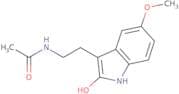
CAS 229018-17-1
:2-Hidroxymelatonina
Descrição:
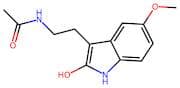
2-Hidroxymelatonina é um derivado da melatonina, um hormônio principalmente envolvido na regulação dos ciclos de sono-vigília. Este composto é caracterizado pela presença de um grupo hidroxila (-OH) na posição 2 do anel indol, o que o distingue da melatonina. Ele exibe propriedades antioxidantes, potencialmente contribuindo para seus efeitos biológicos. A estrutura molecular de 2-Hidroxymelatonina permite que ele interaja com vários alvos biológicos, incluindo receptores de melatonina, que podem influenciar ritmos circadianos e padrões de sono. Além disso, foi estudado por seus potenciais efeitos neuroprotetores e seu papel na modulação do estresse oxidativo. O composto é solúvel em solventes orgânicos e exibe estabilidade em condições fisiológicas, tornando-se um assunto de interesse na pesquisa farmacológica. Sua síntese geralmente envolve modificações químicas da melatonina ou compostos relacionados. No geral, 2-Hidroxymelatonina representa uma área significativa de estudo para entender as implicações mais amplas dos derivados da melatonina na saúde e na doença.
Fórmula:C13H16N2O3
Sinónimos:- Melatonin Impurtiy 4
- Melatonin 2-Hydroxy Impurity
- Acetamide, N-[2-(2-hydroxy-5-methoxy-1H-indol-3-yl)ethyl]-
- 2-HydroxyMelatonin
- N-(2-(2-Hydroxy-5-methoxy-1H-indol-3-yl)ethyl)acetamide
Ordenar por
Pureza (%)
0
100
|
0
|
50
|
90
|
95
|
100
7 produtos.
2-Hydroxy Melatonin (Mixture of Tautomeric Isomers)
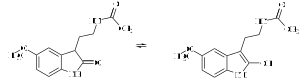
CAS:Fórmula:C13H16N2O3Cor e Forma:White To Off-White SolidPeso molecular:248.28N-(2-(2-Hydroxy-5-methoxy-1H-indol-3-yl)ethyl)acetamide
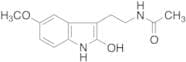
CAS:N-(2-(2-Hydroxy-5-methoxy-1H-indol-3-yl)ethyl)acetamidePureza:95%Peso molecular:248.28g/mol2-Hydroxymelatonin-d4
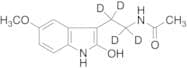
CAS:Produto ControladoFórmula:C13D4H12N2O3Cor e Forma:NeatPeso molecular:252.3022-Hydroxymelatonin
CAS:Melatonin (N-acetyl-5-methoxytryptamine) is a hormone that regulates the sleep and wake cycle. It is produced by the pineal gland in the brain, which synthesizes it from serotonin. Melatonin treatment has been shown to be effective in preventing or reducing the side effects of cancer chemotherapy, including nausea, vomiting, and pain. Melatonin has been shown to have anti-inflammatory and antioxidant properties as well as inhibit enzyme activities, leading to improved mitochondrial function. In addition, melatonin has been shown to protect against oxidative stress through its ability to scavenge free radicals and stimulate antioxidative enzymes such as superoxide dismutase and glutathione peroxidase. Melatonin also enhances apoptosis and can inhibit cell growth in certain types of cancer cells.Fórmula:C13H16N2O3Pureza:Min. 95%Peso molecular:248.28 g/mol