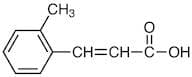
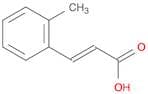
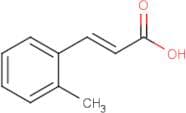
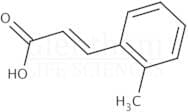
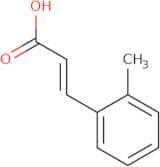
CAS 2373-76-4
:Ácido 2-metilcinâmico
- (2E)-3-(2-Methylphenyl)acrylic acid
- (2E)-3-(2-methylphenyl)prop-2-enoic acid
- 2-Methylcinnamic acid
- 2-Propenoic acid, 3-(2-methylphenyl)-
- 2-propenoic acid, 3-(2-methylphenyl)-, (2E)-
- 3-(2-Methylphenyl)-2-propenoic acid
- 3-(2-Methylphenyl)acrylic acid
- Cinnamic acid, o-methyl-
- NSC 99069
- o-Methylcinnamic acid
- trans-2-Methylcinnamic acid
- 2-Methylbenzeneacrylic acid
- 5-Bromovaniline
- 3-O-TOLYL-ACRYLIC ACID
- 2-methylcinnamic acid, predominantly trans
- SPECS AI-942/25034752
- METHYLCINNAMIC ACID,2-
- 2-METHYLCINNAMIC ACID, 99%, PREDOMINANTL Y TRANS
- TIMTEC-BB SBB003946
- 2-Methylcinnamicacid,98+%
- Ver mais sinónimos
2-Methylcinnamic Acid
CAS:Fórmula:C10H10O2Pureza:>98.0%(GC)(T)Cor e Forma:White to Almost white powder to crystalPeso molecular:162.192-Methylcinnamic Acid, Predominantly trans
CAS:2-Methylcinnamic Acid, Predominantly transPureza:98%Peso molecular:162.19g/mol2-Methylcinnamic acid, predominantly trans
CAS:The 2-methylcinnamic acid is a derivative of cinnamic acid. It is an organic compound that is a colorless liquid at room temperature. The 2-methylcinnamic acid can be synthesized via the Suzuki coupling reaction between 2-chlorocinnamic acid and 4-hydroxycinnamic acid in the presence of a ruthenium complex, a diphosphine ligand, and an acidic co-solvent. This organic compound has been shown to inhibit prostaglandin synthesis by interacting with the prostanoid receptor, a protein located on the surface of cells that binds to inflammatory agents or hormones. These interactions may also lead to the inhibition of cyclooxygenase (COX) enzymes, which are responsible for prostaglandin synthesis. The 2-methylcinnamic acid can also be converted into flavonoids such as quercetin and apigenin through oxidation reactions.
Fórmula:C10H10O2Pureza:Min. 95%Cor e Forma:PowderPeso molecular:162.19 g/mol