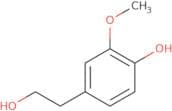
CAS 2380-78-1
:Álcool homovanílico
Descrição:
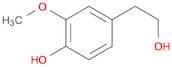
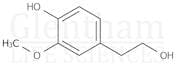
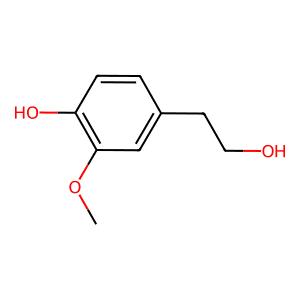
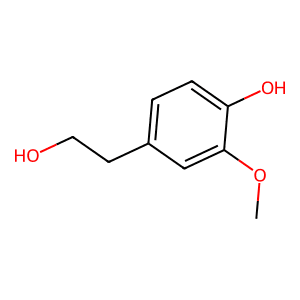
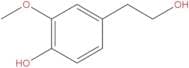
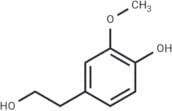
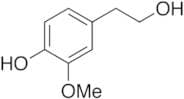
Álcool homovanílico, com o número CAS 2380-78-1, é um composto orgânico caracterizado por sua estrutura fenólica. É um derivado da vanilina, apresentando um grupo hidroxila (-OH) e um grupo metóxi (-OCH3) no anel aromático. Este composto é tipicamente encontrado como um sólido cristalino branco a off-white e é solúvel em água, álcool e outros solventes orgânicos. Álcool homovanílico é conhecido por seu aroma doce, semelhante ao da baunilha, tornando-o de interesse nas indústrias de sabores e fragrâncias. Além disso, tem sido estudado por suas potenciais propriedades antioxidantes e efeitos neuroprotetores, que podem ter implicações em várias aplicações relacionadas à saúde. O composto também é utilizado em pesquisa bioquímica, particularmente em estudos relacionados a sistemas de neurotransmissores, pois pode influenciar o metabolismo da dopamina. No geral, Álcool homovanílico é um composto versátil com aplicações práticas e interesse biológico significativo.
Fórmula:C9H12O3
InChI:InChI=1S/C9H12O3/c1-12-9-6-7(4-5-10)2-3-8(9)11/h2-3,6,10-11H,4-5H2,1H3
Chave InChI:InChIKey=XHUBSJRBOQIZNI-UHFFFAOYSA-N
SMILES:O(C)C1=CC(CCO)=CC=C1O
Sinónimos:- 2-(3-Methoxy-4-hydroxyphenyl)ethanol
- 2-(4-Hydroxy-3-Methoxyphenyl)Ethanol
- 3-Methoxy-4-hydroxyphenethanol
- 3-Methoxy-4-hydroxyphenethyl alcohol
- 4-(2-Hydroxyethyl)-2-Methoxyphenol
- 4-(2-Hydroxyethyl)Guaiacol
- 4-Hydroxy-3-methoxybenzeneethanol
- 4-Hydroxy-3-methoxyphenethyl alcohol
- 4-Hydroxy-3-methoxyphenylethanol
- Ba 2772
- Benzeneethanol, 4-hydroxy-3-methoxy-
- Homovanillic alcohol
- Phenethyl alcohol, 4-hydroxy-3-methoxy-
- Ver mais sinónimos
Ordenar por
Pureza (%)
0
100
|
0
|
50
|
90
|
95
|
100
11 produtos.
Benzeneethanol, 4-hydroxy-3-methoxy-
CAS:Fórmula:C9H12O3Pureza:95%Cor e Forma:SolidPeso molecular:168.18984-(2-Hydroxyethyl)-2-methoxyphenol
CAS:4-(2-Hydroxyethyl)-2-methoxyphenolFórmula:C9H12O3Pureza:99%Cor e Forma: white powderPeso molecular:168.19g/molHomovanillyl alcohol
CAS:Homovanillyl alcohol is a biological metabolite of Hydroxytyrosol.Fórmula:C9H12O3Pureza:99.62%Cor e Forma:Cream To Light Brown ChunksPeso molecular:168.19Vanillylmethanol
CAS:Produto ControladoApplications An odorant found in strawberries, grapes and olive oil. Vanillylmethanol has high scavenging activities and inhibits homocysteine-induced endothelial cell adhesion.
References Ubeda, C. et al.: J. Agr. Food. Chem., 60, 6095 (2012); Barata, A. et al.: J. Agr. Food Chem., 59, 2543 (2011); Manna, C. et al.: J. Agr. Food Chem., 57, 3478 (2009)Fórmula:C9H12O3Cor e Forma:NeatPeso molecular:168.19Homovanillyl alcohol
CAS:Homovanillyl alcohol is a reactive, oxidative byproduct of dopamine that is involved in carcinogenic pathways. It has been shown to be a potential therapeutic target for prostate cancer cells. Homovanillyl alcohol induces oxidative injury by forming reactive oxygen species that damage DNA and cell membranes. Studies have found that homovanillyl alcohol can be used as a model system to study the pathogenic mechanism of Parkinson's disease and other metabolic disorders, such as diabetes mellitus type 2. The toxicological studies have demonstrated that homovanillyl alcohol is not carcinogenic to humans and does not cause skin cancer in mice. However, it has been shown to cause skin cancer in humans when applied directly to the skin. Natural compounds such as hydroxytyrosol and catechins are also capable of preventing the formation of homovanillyl alcohol from dopamine through their anti-oxidant effects.Fórmula:C9H12O3Pureza:Min. 95%Cor e Forma:PowderPeso molecular:168.19 g/mol