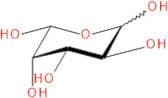
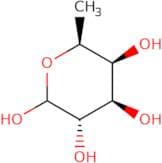
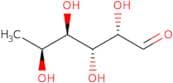
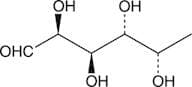
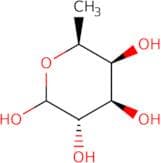
CAS 2438-80-4
:Fucose
- (-)-Fucose
- (-)-L-Fucose
- 6-Deoxy-<span class="text-smallcaps">L</span>-galactose
- 6-Deoxy-L-galactose
- 6-Desoxy-L-β-galaktose
- 6-Desoxygalactose
- 6-deoxy-L-β-galactose
- 6-desoxi-L-β-galactosa
- 6-desoxy-L-β-galactose
- <span class="text-smallcaps">L</span>-(-)-Fucose
- <span class="text-smallcaps">L</span>-Galactomethylose
- <span class="text-smallcaps">L</span>-Galactose, 6-deoxy-
- Fucose, <span class="text-smallcaps">L</span>-
- Fucose, L-
- L-Galactomethylose
- L-Galactose, 6-deoxy-
- 6-deoxy-L-galactopyranose
- L-Galactose, 6-deoxy-
- 6-deoxyhexopyranose
- 6-Deoxy-L-beta-galactose
- 6-deoxy-l-galactos
- L-FUCOSE, 99.6% MIN., TLC
- 6-DEOXY-BETA-GALACTOSE
- L-(-)-FUCOSE:6-DEOXY-L-GALACTOSE
- 6-DESOXY-L-GALACTOSE
- L-(-)-RHODEOSE
- Ver mais sinónimos
L-(-)-Fucose
CAS:Fórmula:C6H12O5Pureza:>97.0%(HPLC)Cor e Forma:White to Almost white powder to crystalPeso molecular:164.16L-(-)-Fucose, 98%
CAS:L-(-)-Fucose finds application in cosmetics, pharmaceuticals and dietary supplements. It is used in the determination of antigen in A and B blood group. It is also used in the selection-mediated leukocyte-endothelial adhesion and host-microbe interactions. It is also used in anti aging creams as weFórmula:C6H12O5Pureza:98%Cor e Forma:White to pale cream, Powder or crystalline powder or lumpsPeso molecular:164.16L-Fucose
CAS:Sugars, chemically pure, other than sucrose, lactose, maltose, glucose and fructose; sugar ethers and sugar esters, and their salts, nesoiFórmula:C6H12O5Cor e Forma:White CrystalsPeso molecular:164.06847L-(-)-Fucose
CAS:L-(-)-FucoseFórmula:C6H12O5Pureza:98% (nmr) (Typical Value in Batch COA)Cor e Forma: white solidPeso molecular:164.16g/molL-(-)-Fucose
CAS:Fórmula:C6H12O5Pureza:≥ 98.0%Cor e Forma:White to almost white crystalline powderPeso molecular:164.16(-)-Fucose
CAS:1.(-)-Fucose (6-Desoxygalactose) can anti-infective, anti-cancer, enhance immunity 2.Fórmula:C6H12O5Pureza:99.62% - 99.87%Cor e Forma:White SolidPeso molecular:164.16L-Fucose
CAS:Produto ControladoApplications L-Fucose was isolated from seaweed.
References Clark, et al.: J. Biol. Chem., 54, 65 (1922),Fórmula:C6H12O5Cor e Forma:WhitePeso molecular:164.16L-Fucose - mycoplasma free, suitable for cell culture
CAS:L-fucose is used in cell culture to supplement the cell culture medium and provide a building block for cellular processes like fucosylation. When cells take up L-fucose they convert it to GDP-L-fucose MG01912 which is then used for adding fucose residues to glycoproteins. This is useful for studying metabolic pathways, correcting fucosylation deficiencies, or enhancing cellular functions.Our material is extensively purified in our Swiss manufacturing site to ensure it is mycoplasma free and low endotoxin.Fórmula:C6H12O5Pureza:Min. 98 Area-%Peso molecular:164.16 g/molL-Fucose
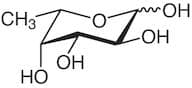
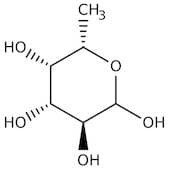
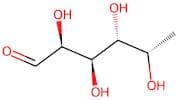
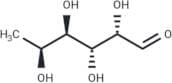
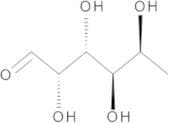
CAS:Fucose (Fuc, 6-deoxy L-galactose) has a methyl group at C6 in place of a hydroxyl group and this gives the molecule a greater degree of hydrophobicity than galactose (Collins, 2006). L-fucose is found in fucoidan, a polysaccharide that occurs in the brown seaweeds (Phaeophyceae) (Percival, 1967). Fucose is also a key component in many mammalian N- and O-linked glycans, glycolipids, blood group substances and Lewis antigens (Becker, 2003). In human milk, neutral (fucosylated) oligosaccharides (HMO) contain fucose at the terminal position (e.g. 2â -fucosyllactose and lactodifucopentaose). They represent 35% to 50% of the total HMO content and many in vitro studies suggest that HMOs directly modulate immune responses, acting either locally on cells of the mucosa-associated lymphoid tissues or systemically to inhibit the expression of inflammatory genes, mainly cytokines (Plaza-Diaz, 2018).
Fórmula:C6H12O5Pureza:Min. 98 Area-%Peso molecular:164.16 g/molL-Fucose - non animal origin
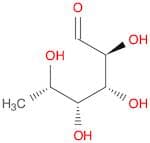
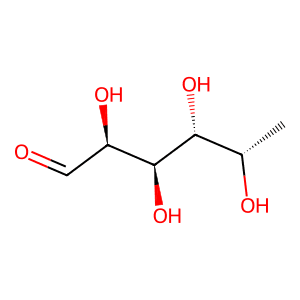
CAS:L-Fucose is an aldohexose that is used as the building block for various glycoproteins and glycolipids. It is found in human serum and human pathogens. L-Fucose can be isolated from the hybridoma cell line by apical chromatography. The analytical method of L-fucose includes body formation, oligosaccharides, and glycan titration calorimetry. Structural analysis of L-fucose includes glycosylation, sugar analysis, and carbohydrate analysis. Fucose can also be used to produce oligosaccharides through enzymatic reactions with other sugars including glucose and galactose. This reaction produces a linkage between fucose and other sugars that are called glycosidic bonds.Fórmula:C6H12O5Pureza:Min. 98 Area-%Cor e Forma:PowderPeso molecular:164.16 g/molL-Fucose extrapure, 99%
CAS:Fórmula:C6H12O5Pureza:min. 99.0%Cor e Forma:White to off-white, Powder, Clear to very slightly hazy, Colourless to Pale yellowPeso molecular:164.16L-Fucose
CAS:L-Fucose is a monosaccharide that is an important component of glycoproteins and glycolipids. L-Fucose is also found in the cell wall of bacteria. The most abundant sources of L-fucose are from the hydrolysis of lactose or sucrose by bacteria, or as a result of intestinal microbial fermentation. L-Fucose has been shown to be involved in the regulation of many metabolic processes, including the glomerular filtration rate and sephadex g-100 binding capacity in the kidney. It has also been shown to improve growth in infant rats with protein malnutrition. The enzyme that catalyzes the conversion of D-arabinose to L-fucose is known as fucokinase.
Fórmula:C6H12O5Pureza:Min. 98.0 Area-%Peso molecular:164.16 g/mol