CAS 2492-75-3
:Ácido 2-oxohexanoico
Descrição:
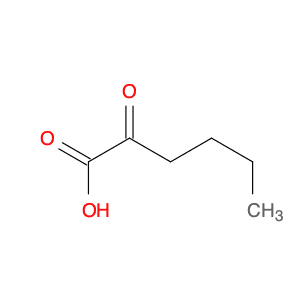
Ácido 2-oxohexanoico, também conhecido como ácido 6-oxohexanoico, é um ácido carboxílico caracterizado pela presença de um grupo cetona e um grupo carboxila em sua estrutura molecular. Apresenta uma cadeia de seis carbonos com um grupo cetona localizado no segundo carbono e um grupo ácido carboxílico no carbono terminal. Este composto é tipicamente um líquido ou sólido incolor a amarelo pálido, dependendo de seu estado e pureza. É solúvel em água e em solventes orgânicos, tornando-o versátil para várias aplicações em síntese orgânica e pesquisa química. Ácido 2-oxohexanoico pode participar de várias reações químicas, incluindo esterificação e condensação, e é frequentemente usado como intermediário na síntese de produtos farmacêuticos, agroquímicos e outros compostos orgânicos. Além disso, pode exibir atividade biológica, o que pode ser de interesse em química medicinal. Dados de segurança devem ser consultados para manuseio, pois pode representar riscos à saúde se ingerido ou inalado.
Fórmula:C6H10O3
InChI:InChI=1S/C6H10O3/c1-2-3-4-5(7)6(8)9/h2-4H2,1H3,(H,8,9)
Chave InChI:InChIKey=XNIHZNNZJHYHLC-UHFFFAOYSA-N
SMILES:C(C(O)=O)(CCCC)=O
Sinónimos:- 2-Ketocaproic Acid
- 2-Ketohexanoic acid
- 2-Oxocaproic acid
- Alpha-Ketocaproic Acid
- Hexanoic Acid, 2-Oxo-
- α-Ketocaproic acid
- α-Ketohexanoic acid
- α-Oxo-n-caproic acid
- α-Oxocaproic acid
- 2-Oxohexanoic acid
- 2-Oxohexanoic acid
Ordenar por
Pureza (%)
0
100
|
0
|
50
|
90
|
95
|
100
5 produtos.
2-Oxohexanoic Acid
CAS:Produto ControladoApplications 2-Oxohexanoic Acid (cas# 2492-75-3) has been useful in a biological study that investigated the impact of glutathione on wines oxidative stability.
References Nikolantonaki, M., et al.: Front. Chem. (Lausanne, Switzerland), 6, 182 (2018)Fórmula:C6H10O3Cor e Forma:NeatPeso molecular:130.142-Oxohexanoic acid
CAS:2-Oxohexanoic acid (2-OHBA) is a fatty acid that is synthesized from the amino acids lysine and methionine. It is involved in mitochondrial metabolism and has been found to be necessary for spermatozoa motility. 2-OHBA has been shown to inhibit the activity of glutamate dehydrogenase, an enzyme that catalyzes the conversion of glutamate to α-ketoglutarate, which is required for energy production. This inhibition leads to a decrease in ATP levels, which may cause a variety of symptoms, including fatigue and weight loss. Furthermore, 2-OHBA inhibits protein synthesis by blocking the incorporation of amino acids into proteins. The inhibition of this process can lead to high ammonia levels in the blood and accumulation of other nitrogenous wastes in tissues such as liver or muscle tissue. Analysis of urine samples has shown that 2-OHBA is excreted unchanged in urine.Fórmula:C6H10O3Pureza:Min. 95%Peso molecular:130.14 g/mol