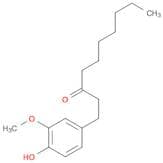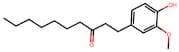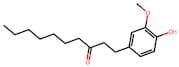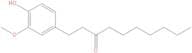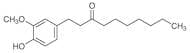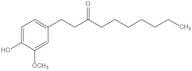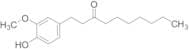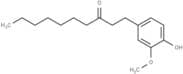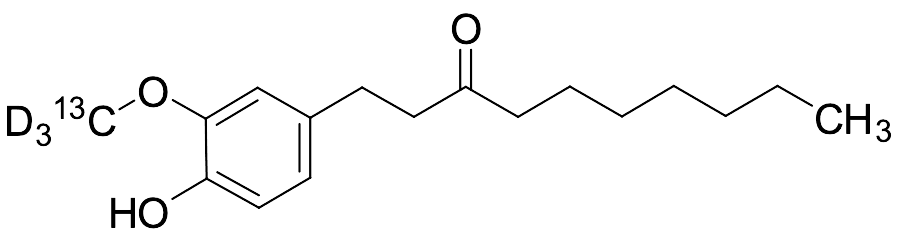
CAS 27113-22-0
:Paradol
Descrição:
Paradol, com o número CAS 27113-22-0, é um composto fenólico que está estruturalmente relacionado ao gingerol, um componente bioativo encontrado no gengibre. É reconhecido principalmente por sua presença em certas especiarias e seus potenciais benefícios à saúde. Paradol exibe um sabor e aroma picantes característicos, contribuindo para seu uso em aplicações culinárias. Quimicamente, é conhecido por suas propriedades antioxidantes, que podem ajudar a combater o estresse oxidativo em sistemas biológicos. Além disso, pesquisas indicaram que Paradol pode possuir efeitos anti-inflamatórios e analgésicos, tornando-o de interesse em estudos farmacológicos. Sua solubilidade em solventes orgânicos e a relativamente baixa solubilidade em água são propriedades físicas notáveis. Paradol também está sendo investigado por seu potencial papel na prevenção do câncer e como agente terapêutico, embora mais estudos sejam necessários para entender completamente seus mecanismos e eficácia. No geral, Paradol representa um composto fascinante com diversas aplicações na ciência dos alimentos e na pesquisa em saúde.
Fórmula:C17H26O3
InChI:InChI=1S/C17H26O3/c1-3-4-5-6-7-8-15(18)11-9-14-10-12-16(19)17(13-14)20-2/h10,12-13,19H,3-9,11H2,1-2H3
Chave InChI:InChIKey=CZNLTCTYLMYLHL-UHFFFAOYSA-N
SMILES:C(CC(CCCCCCC)=O)C1=CC(OC)=C(O)C=C1
Sinónimos:- 1-(4-Hydroxy-3-Methoxyphenyl)Decan-3-One
- 1-(4-Hydroxy-3-methoxyphenyl)-3-decanone
- 3-Decanone, 1-(4-hydroxy-3-methoxyphenyl)-
- 5-Paradol
- 6-Paradol
- Brn 1984119
- Ccris 8519
- Heptyl 4-hydroxy-3-methoxyphenethyl ketone
- Paradol
- [6]-Gingerone
- 1-(4-Hydroxy-3-methoxyphenyl)decan-5-one
- Ver mais sinónimos
Ordenar por
Pureza (%)
0
100
|
0
|
50
|
90
|
95
|
100
13 produtos.
1-(4-hydroxy-3-methoxyphenyl)decan-5-one
CAS:Fórmula:C17H26O3Pureza:99%Cor e Forma:SolidPeso molecular:278.38651-(4-Hydroxy-3-Methoxyphenyl)Decan-3-One
CAS:1-(4-Hydroxy-3-Methoxyphenyl)Decan-3-OnePureza:≥98%Peso molecular:278.39g/molParadol
CAS:Fórmula:C17H26O3Pureza:>95.0%(HPLC)Cor e Forma:White to Light yellow powder to crystalPeso molecular:278.396-paradol
CAS:Ketone with other oxygen functionsFórmula:C17H26O3Pureza:≥ 90.0 % (HPLC)Cor e Forma:PowderPeso molecular:278.39Paradol
CAS:Produto ControladoApplications Paradol is a Gingerol related compound from ginger with antioxidant activity and cancer preventive properties.
References Masuda, Y., et al.: BioFactors, 21, 293 (2004); Shukla, Y., Singh, M.: Food Chem. Toxicol., 45, 683 (2007);Fórmula:C17H26O3Cor e Forma:NeatPeso molecular:278.396-Paradol
CAS:6-Paradol is a natural drug that has been shown to have anti-inflammatory properties. It was found to inhibit the production of prostaglandin E2 (PGE2) and cyclooxygenase-2 (COX-2) in the presence of lipopolysaccharide in human monocytes. 6-Paradol also inhibits the production of inflammatory mediators such as nitric oxide and tumor necrosis factor α. This drug also has an effect on microglia cells, which are immune cells in the central nervous system, as well as on adipose tissue. 6-Paradol can be used for the treatment of diabetic neuropathy and squamous carcinoma.Fórmula:C17H26O3Pureza:Min. 95 Area-%Cor e Forma:PowderPeso molecular:278.39 g/molParadol
CAS:Paradol, a spicy compound in ginger, offers anti-cancer, anti-inflammatory, antioxidant, and neuroprotective benefits.Fórmula:C17H26O3Pureza:98.4% - 98.98%Cor e Forma:SolidPeso molecular:278.39