CAS 2785-78-6
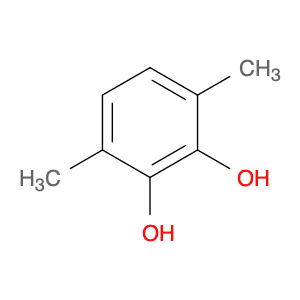
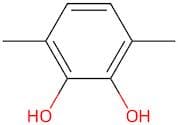
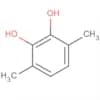
:1,2-Benzenodiol, 3,6-dimetil-
Descrição:
1,2-Benzenodiol, 3,6-dimetil- (CAS 2785-78-6), também conhecido como 3,6-dimetilcatecol, é um composto orgânico caracterizado por sua estrutura aromática com um anel benzênico contendo dois grupos hidroxila (-OH) e dois substituintes metila (-CH₃). A presença de grupos hidroxila confere propriedades fenólicas, tornando-o solúvel em solventes polares e contribuindo para sua reatividade em várias reações químicas, como oxidação e substituição. Este composto geralmente apresenta uma aparência incolor a amarelo pálido e possui um ponto de fusão relativamente baixo. É utilizado em várias aplicações, incluindo como intermediário na síntese orgânica e na produção de certos corantes e produtos farmacêuticos. Além disso, suas propriedades antioxidantes podem ser úteis na preservação de alimentos e em formulações cosméticas. Os dados de segurança indicam que, como muitos compostos fenólicos, deve ser manuseado com cuidado devido a potenciais efeitos irritantes na pele e nas mucosas. No geral, 1,2-Benzenodiol, 3,6-dimetil- é um composto versátil com relevância significativa tanto em contextos industriais quanto de pesquisa.
Fórmula:C8H10O2
Sinónimos:- 3,6-dimethylcatechol
- 3,6-Dimethyl-1,2-benzenediol
- 3,6-diMethyl catechol
- 1,2-Benzenediol, 3,6-dimethyl-
- 3,6-Dimethylpyrocatechol
- 3,6-DIMETHYLBENZENE-1,2-DIOL
Ordenar por
Pureza (%)
0
100
|
0
|
50
|
90
|
95
|
100
5 produtos.
3,6-Dimethylbenzene-1,2-diol
CAS:3,6-Dimethylbenzene-1,2-diol is a phenol derivative widely used in biochemical experiments and drug synthesis research.Fórmula:C8H10O2Pureza:99.09%Cor e Forma:SolidPeso molecular:138.163,6-Dimethylbenzene-1,2-diol
CAS:3,6-Dimethylbenzene-1,2-diol is a bactericidal agent that belongs to the class of amides. It inhibits bacterial growth by binding to water molecules and thus preventing their availability for use in the construction of cell walls. 3,6-Dimethylbenzene-1,2-diol has been shown to be efficient when used as a catalyst for the reaction between 2-aminoterephthalic acid and benzodioxan under mild conditions. This process results in a fluorescent product with an intramolecular hydrogen bond. The catalytic mechanism is thought to involve an active site containing a hydroxyl group that attacks the substrate at the C3 position, followed by a proton transfer from water molecule to form a hydroxyl oxygen intermediate.Fórmula:C8H10O2Pureza:Min. 95%Peso molecular:138.17 g/mol