CymitQuimica logo

CAS 2943-73-9

:

Deciltrietoxisilano

Descrição:
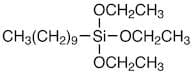
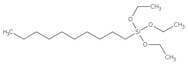
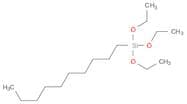
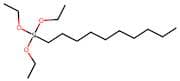
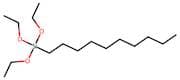
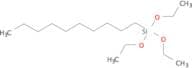
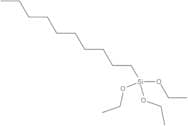
Deciltrietoxisilano, com o número CAS 2943-73-9, é um composto organossilícico caracterizado por sua estrutura de silano, que inclui um grupo decil e três grupos etóxi. Este composto é tipicamente um líquido incolor a amarelo pálido e é conhecido por suas propriedades hidrofóbicas, tornando-o útil como modificador de superfície e agente de acoplamento. Apresenta boa compatibilidade com materiais orgânicos e pode melhorar a adesão entre substratos inorgânicos e polímeros orgânicos. Deciltrietoxisilano é frequentemente empregado em aplicações como revestimentos, selantes e adesivos, onde melhora a repelência à água e a durabilidade. Além disso, pode facilitar a formação de redes de siloxano, contribuindo para a resistência mecânica e a estabilidade térmica dos materiais. Sua reatividade permite que ele se ligue a várias superfícies, incluindo vidro, metais e cerâmicas, tornando-o valioso em indústrias como construção, automotiva e eletrônica. As fichas de dados de segurança devem ser consultadas para diretrizes de manuseio e armazenamento, assim como com qualquer substância química.
Fórmula:C16H36O3Si
InChI:InChI=1S/C16H36O3Si/c1-5-9-10-11-12-13-14-15-16-20(17-6-2,18-7-3)19-8-4/h5-16H2,1-4H3
Chave InChI:InChIKey=BAAAEEDPKUHLID-UHFFFAOYSA-N
SMILES:[Si](CCCCCCCCCC)(OCC)(OCC)OCC
Sinónimos:
  • 1-(Triethoxysilyl)decane
  • Decyltriethoxysilane
  • Kbe 3103
  • Sid 2265.0
  • Silane, decyltriethoxy-
  • Tri(ethoxo)(decyl)silane
  • Triethoxydecylsilane
Ordenar por

Pureza (%)
0
100
|
0
|
50
|
90
|
95
|
100
7 produtos.
  • Decyltriethoxysilane

    CAS:
    Fórmula:C16H36O3Si
    Pureza:>98.0%(GC)
    Cor e Forma:Colorless to Almost colorless clear liquid
    Peso molecular:304.55

    Ref: 3B-D5197

    25ml
    104,00€
  • n-Decyltriethoxysilane, 98%

    CAS:
    <p>n-Decyltriethoxysilane is used as coupling agent and as a chemical additive. It is also used as an intermediate of OLED, pharmaceuticals and in cosmetics. It is employed in many industries like adhesives, coatings, crude oil, glass fibers, filler treatment, polymer modification, printing, elastomers</p>
    Fórmula:C16H36O3Si
    Pureza:98%
    Cor e Forma:Clear colorless, Liquid
    Peso molecular:304.55

    Ref: 02-L16965

    25g
    99,00€
    100g
    A consultar
  • Silane, decyltriethoxy-

    CAS:
    Fórmula:C16H36O3Si
    Pureza:98%
    Cor e Forma:Liquid
    Peso molecular:304.5407

    Ref: IN-DA002YD9

    5g
    25,00€
    25g
    52,00€
    100g
    127,00€
  • N-Decyltriethoxysilane

    CAS:
    N-Decyltriethoxysilane
    Pureza:98%
    Peso molecular:304.54g/mol

    Ref: 54-OR1014339

    1g
    32,00€
    5g
    36,00€
    25g
    66,00€
    100g
    157,00€
    500g
    652,00€
  • N-Decyltriethoxysilane

    CAS:
    N-Decyltriethoxysilane
    Pureza:98%
    Peso molecular:304.54g/mol

    Ref: 54-OR1014340

    1g
    32,00€
    5g
    36,00€
    25g
    66,00€
    100g
    157,00€
    500g
    652,00€
  • n-Decyltriethoxysilane

    CAS:
    <p>S05600 - n-Decyltriethoxysilane</p>
    Fórmula:C16H36O3Si
    Pureza:98%
    Cor e Forma:Liquid
    Peso molecular:304.546

    Ref: 10-S05600

    1g
    24,00€
    5g
    28,00€
    25g
    57,00€
    100g
    179,00€
  • n-DECYLTRIETHOXYSILANE

    CAS:
    <p>Alkyl Silane - Conventional Surface Bonding<br>Aliphatic, fluorinated aliphatic or substituted aromatic hydrocarbon substituents are the hydrophobic entities which enable silanes to induce surface hydrophobicity. The organic substitution of the silane must be non-polar. The hydrophobic effect of the organic substitution can be related to the free energy of transfer of hydrocarbon molecules from an aqueous phase to a homogeneous hydrocarbon phase. A successful hydrophobic coating must eliminate or mitigate hydrogen bonding and shield polar surfaces from interaction with water by creating a non-polar interphase. Although silane and silicone derived coatings are in general the most hydrophobic, they maintain a high degree of permeability to water vapor. This allows coatings to breathe and reduce deterioration at the coating interface associated with entrapped water. Since ions are not transported through non-polar silane and silicone coatings, they offer protection to composite structures ranging from pigmented coatings to rebar reinforced concrete. A selection guide for hydrophobic silanes can be found on pages 22-31 of the Hydrophobicity, Hydrophilicity and Silane Surface Modification brochure.<br>n-Decyltriethoxysilane; Triethoxysilyldecane<br>Trialkoxy silane<br></p>
    Fórmula:C16H36O3Si
    Pureza:97%
    Cor e Forma:Straw Liquid
    Peso molecular:304.54

    Ref: 3H-SID2665.0

    25g
    Descontinuado
    2kg
    Descontinuado
    100g
    Descontinuado
    15kg
    Descontinuado
    Produto descontinuado