CAS 31302-52-0
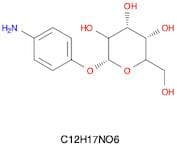
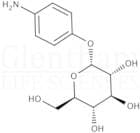
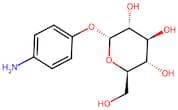
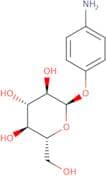
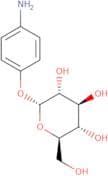
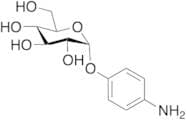
:4-aminofenil-alfa-D-glucopiranosídeo
Descrição:
4-aminofenil-alfa-D-glucopiranosídeo é um composto químico caracterizado pela presença de um grupo amino e uma parte de glucopiranosídeo. Apresenta um anel fenílico substituído por um grupo amino na posição para, o que contribui para sua potencial atividade biológica. A parte de glucopiranosídeo indica que é um glicosídeo, especificamente um alfa-D-glucopiranosídeo, o que significa que a unidade de glicose está em sua forma de pirano e está ligada ao grupo fenílico por meio de uma ligação glicosídica. Este composto é frequentemente estudado por suas aplicações em bioquímica e química medicinal, particularmente no contexto do design e desenvolvimento de medicamentos. Sua solubilidade em água e solventes orgânicos pode variar, influenciando sua biodisponibilidade e interação com sistemas biológicos. A presença de componentes hidrofílicos (glicose) e hidrofóbicos (fenila) permite interações diversas, tornando-o um assunto de interesse na pesquisa relacionada a substratos e inibidores enzimáticos. No geral, 4-aminofenil-alfa-D-glucopiranosídeo exemplifica a interseção da química de carboidratos e compostos aromáticos, mostrando a complexidade das interações moleculares em sistemas biológicos.
Ordenar por
Pureza (%)
0
100
|
0
|
50
|
90
|
95
|
100
6 produtos.
4-Aminophenyl α-D-glucopyranoside
CAS:4-Aminophenyl α-D-glucopyranosideCor e Forma:White SolidPeso molecular:271.27g/mol4-Aminophenyl-α-D-glucopyranoside
CAS:4-Aminophenyl-alpha-D-glucopyranoside is a natural product that has been found to be an antigen. The compound has been shown to have anticancer activity, which may be due to its ability to inhibit the growth of cells and induce apoptosis. 4-Aminophenyl-alpha-D-glucopyranoside also possesses magnetic properties. The chemical structure of this compound is characterized by an acrylate group, which is a small organic molecule with two carbon atoms and one oxygen atom. This compound is synthesized in a preparative manner using methoxy, ethyl bromoacetate, and mesitylene in the presence of irradiation. NMR spectroscopy can be used for the characterization of this compound as well as other compounds with similar structures that are catalytic in nature.Fórmula:C12H17NO6Pureza:Min. 98.0 Area-%Peso molecular:271.27 g/mol4-Aminophenyl a-D-glucopyranoside
CAS:4-Aminophenyl a-D-glucopyranoside is an alkoxycarbonyl analog that can be used in the preparation of antigens. It is a small, water-soluble molecule that can be used to induce antibody production and to identify antigenic determinants. 4-Aminophenyl a-D-glucopyranoside has been shown to react with glutamicum and corynebacterium cells in vitro. The compound binds to the bacterial cell surface by reacting with amino groups, inducing the production of acid molecules, which leads to bacterial death. 4-Aminophenyl a-D-glucopyranoside also reacts with methoxy residues on the ribosomal RNA molecule and corynebacterium DNA molecules. This allows it to be used as an expression vector for proteins and nucleic acids in Corynebacterium glutamicum (a bacterium commonly found in soil). SpectroscFórmula:C12H17NO6Pureza:Min. 95%Cor e Forma:PowderPeso molecular:271.27 g/mol4-Aminophenyl a-D-Glucopyranoside
CAS:Produto ControladoApplications 4-Aminophenyl α-D-Glucopyranoside is a glycoside derivative of 4-Aminophenol (A618920); a nephrotoxic metabolite of Acetaminophen (A161220) and Phenacetin (P294580) (1).
References (1) Watanabe, et al.: Drug Metab. Dispos., 38, 1532 (2010)Fórmula:C12H17NO6Cor e Forma:NeatPeso molecular:271.27