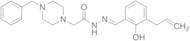
CAS 315183-21-2
:Composto ativador de procaspase 1
- 1-Piperazineacetic acid, 4-(phenylmethyl)-, 2-[[2-hydroxy-3-(2-propen-1-yl)phenyl]methylene]hydrazide
- 1-Piperazineacetic acid, 4-(phenylmethyl)-, [[2-hydroxy-3-(2-propenyl)phenyl]methylene]hydrazide
- Pac-1
- Pac1
- Procaspase activating compound 1
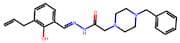
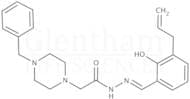
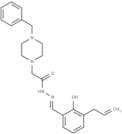
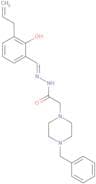
4-(Phenylmethyl)-1-Piperazineacetic Acid-2-[[2-Hydroxy-3-(2-Allyl-1-Yl)Phenyl] Methylene] Hydrazide
CAS:4-(Phenylmethyl)-1-Piperazineacetic Acid-2-[[2-Hydroxy-3-(2-Allyl-1-Yl)Phenyl] Methylene] HydrazidePureza:98%Peso molecular:392.49g/molPAC-1
CAS:PAC-1 (Procaspase activating compound 1) has been used in trials studying the treatment of Lymphoma, Melanoma, Solid Tumors, Breast Cancer and Thoracic Cancers.
Fórmula:C23H28N4O2Pureza:96.78% - 99.77%Cor e Forma:SolidPeso molecular:392.49PAC 1
CAS:PAC 1 is a small-molecule apoptosis inducer, derived from synthetic sources, with a unique mode of action targeting the apoptotic pathways in cancer cells. PAC 1 functions by selectively activating procaspase-3, an inactive precursor of the caspase enzymes, which play a crucial role in the execution phase of cell apoptosis. By facilitating the conversion of procaspase-3 to its active form, PAC 1 enhances the apoptotic response in cancer cells, promoting cell death and offering potential therapeutic advantages.Fórmula:C23H28N4O2Pureza:Min. 98 Area-%Cor e Forma:White PowderPeso molecular:392.49 g/molPAC-1
CAS:Produto ControladoApplications PAC-1 is a caspase 3 activator. Caspase activation is a key strategy in cancer therapy. Caspase 3 is a key executioner caspase and direct effector of apoptosis. Hallmark of many cancers is the circumvention of signal in the activation of executioner caspases and loss of apoptotic response. EC50 for caspase 3 activation = 0.33 μM and caspase 7= 4.5 μM. The IC50 for apoptosis induction = 0.92 μM. Elevated caspase 3 level in cancerous cell lines and tissues allows PAC-1 to selectively induce apoptosis in tissues.
Not a dangerous good if item is equal to or less than 1g/ml and there is less than 100g/ml in the package
References Slee, E., et al.: J. Biol. Chem., 276, 7320 (2001), Pop, C., et al.: Biochemistry, 42, 12311 (2003), Li, L., et al.: Science, 305, 1471 (2004), Green, D., et al.: J. Clin. Invest., 115, 2610 (2005), Satoh, T., et al.: Clin. Cancer Res., 15, 3872 (2009),Fórmula:C23H28N4O2Cor e Forma:NeatPeso molecular:392.49
![4-(Phenylmethyl)-1-Piperazineacetic Acid-2-[[2-Hydroxy-3-(2-Allyl-1-Yl)Phenyl] Methylene] Hydrazide](/_next/image/?url=https%3A%2Fstatic.cymitquimica.com%2Fproducts%2F54%2Fthumb%2FOR1023769.jpg&w=3840&q=75)