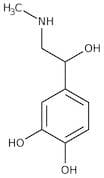
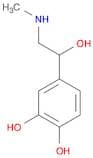
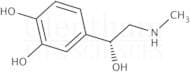
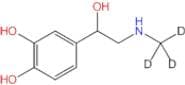
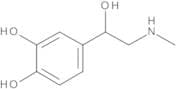
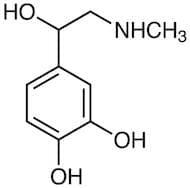
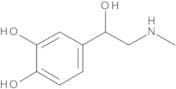
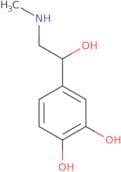
CAS 329-65-7
:(±)-Adrenalina
- (.+-.)-Adrenaline
- (.+-.)-Epinephrine
- 1,2-Benzenediol, 4-[1-hydroxy-2-(methylamino)ethyl]-
- 1-(3,4-Dihydroxy)phenyl-2-methylaminoethanol
- 1-(3,4-Dihydroxyphenyl)-2-(methylamino)ethanol
- 2-(Methylamino)-1-(3,4-dihydroxyphenyl)ethanol
- 2-Hydroxy-4-[1-hydroxy-2-(methylazaniumyl)ethyl]phenolate
- 3,4-Dihydroxy-1-[1-hydroxy-2-(methylamino)-ethyl]benzene
- 4-[1-Hydroxy-2-(methylamino)ethyl]-1,2-benzenediol
- <span class="text-smallcaps">DL</span>-Adrenaline
- Benzyl alcohol, 3,4-dihydroxy-α-[(methylamino)methyl]-, (.+-.)-
- DL-Adrenaline
- DL-Epinephrine
- Epirenamine
- Racepinefrin
- Racepinefrina
- Racepinefrine
- Ver mais sinónimos
2-(Methylamino)-1-(3,4-dihydroxyphenyl)ethanol
CAS:Fórmula:C9H13NO3Pureza:95%Cor e Forma:SolidPeso molecular:183.2044rac-Epinephrine (rac-Adrenaline, Dipivefrine EP Impurity A)
CAS:Fórmula:C9H13NO3Peso molecular:183.21DL-Adrenaline
CAS:Fórmula:C9H13NO3Pureza:>98.0%(T)Cor e Forma:Light yellow to Brown powder to crystalPeso molecular:183.21rac Epinephrine
CAS:Applications Endogenous catcholamine with combined α-and β-agonist activity. Principal sympathomimetic hormone produced by the adrenal medulla. Bronchodilator; cardiostimulant; mydriatic; antiglaucoma.
Not a dangerous good if item is equal to or less than 1g/ml and there is less than 100g/ml in the package
References Cucinotta, V., et al.: J. Pharm. Biomed. Anal., 37, 1009 (2005), Marin-Zamora, M., et al.: J. Agric. Food Chem., 55, 4569 (2007), Kao, B., et al.: J. Perinatol., 28, 205 (2008),Fórmula:C9H13NO3Cor e Forma:Light Brown To BrownPeso molecular:183.2D,L-Epinephrine
CAS:Produto ControladoEpinephrine is a catecholamine that is used as a drug to treat cardiac arrest. It functions by binding to beta-adrenergic receptors in the heart and blood vessels, which leads to increased heart rate, increased contractility of the heart muscle, and increased blood flow to the brain. Epinephrine also has been shown to decrease renal transplant rejection, promote wound healing, and protect against bacterial infection. The thermodynamic data for epinephrine was determined using multi-walled carbon nanotubes (MWCNTs) with fatty acids at acidic pH values. This prodrug prevents oxidation of tyrosinase and diphenolase activity in vitro. Epinephrine nebulized with hydrochloric acid can be used for corneal epithelium preservation before surgery.
Fórmula:C9H13NO3Pureza:Min 98%Peso molecular:183.2 g/mol