CAS 33507-63-0
:Substância P
Descrição:
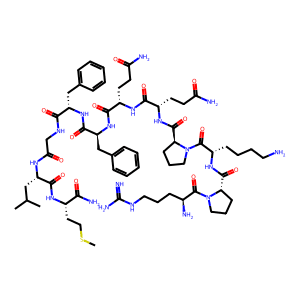
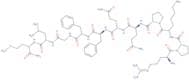
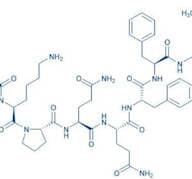
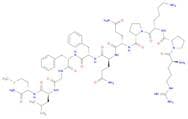
Substância P é um neuropeptídeo que funciona principalmente como um neurotransmissor e neuromodulador nos sistemas nervoso central e periférico. É composto por onze aminoácidos e faz parte da família de peptídeos tachiquinina. Caracteristicamente, Substância P está envolvido na transmissão de sinais de dor e desempenha um papel significativo nas respostas inflamatórias, estresse e ansiedade. Ele se liga ao receptor de neuroquinina-1 (NK1), que está amplamente distribuído no cérebro e em outros tecidos, influenciando vários processos fisiológicos. Além de seu papel na percepção da dor, Substância P está implicado na regulação do humor, ansiedade e resposta imunológica. O peptídeo é tipicamente encontrado em altas concentrações em áreas do cérebro associadas à regulação da dor e das emoções. Devido à sua participação em várias condições patofisiológicas, Substância P tem sido um alvo para intervenções terapêuticas no manejo da dor e em transtornos psiquiátricos. Seu número CAS, 33507-63-0, é usado para identificação em bancos de dados químicos e contextos regulatórios.
- 2: PN: JP2005049164 SEQID: 2 claimed protein
- 21: PN: WO0181408 SEQID: 44 claimed protein
- 36: PN: WO2007058336 SEQID: 36 claimed protein
- 44: PN: WO2005016244 PAGE: 68 claimed protein
- 690: PN: WO2004005342 PAGE: 46 claimed protein
- L-Methioninamide, L-arginyl-L-prolyl-L-lysyl-L-prolyl-L-glutaminyl-L-glutaminyl-L-phenylalanyl-L-phenylalanylglycyl-L-leucyl-
- Neurokinin P
- Substance P (1-11)
- Substance P (peptide)
- Substance P (smooth-muscle stimulant)
- Substanz P
- Ver mais sinónimos
Ordenar por
Pureza (%)
0
100
|
0
|
50
|
90
|
95
|
100
9 produtos.
Substance P
CAS:For cellular and molecular biology applications
Fórmula:C63H98N18O13SCor e Forma:Lyophilized Powder, WhitePeso molecular:1347.65Substance P
CAS:Substance P (Neurokinin P) (SP) is an undecapeptide (a peptide composed of a chain of 11 amino acid residues) member of the tachykinin neuropeptide family.Fórmula:C63H98N18O13SPureza:98% - 99.51%Cor e Forma:White PowderPeso molecular:1347.63Ref: TM-TP1087
1mg54,00€5mg110,00€10mg170,00€1mL*10mM (DMSO)281,00€25mg360,00€50mg535,00€100mg765,00€2-[[2-[[2-[[2-[[2-[[5-Amino-2-[[5-amino-2-[[1-[6-amino-2-[[1-[2-amino-5-(diaminomethylideneamino)pentanoyl]pyrrolidine-2-carbonyl]am ino]hexanoyl]pyrrolidine-2-carbonyl]amino]-5-oxopentanoyl]amino]-5-oxopentanoyl]amino]-3-phenylpropanoyl]amino]-3-phenylpr
CAS:Custom research peptide; min purity 95%. For different specs please use the Peptide Quote ToolFórmula:C63H98N18O13SPeso molecular:1,348.65 g/molSubstance P (Human, Bovine, Rat, Mouse)
CAS:Substance P is a member of the tachykinin neuropeptide family which is produced in the central nervous system (CNS) and acts through its specific receptor neurokinin 1 receptor (NK-1R). NK-1R is present in neurons and on glial cell types. Substance P is involved in: pain perceptions as a neurotransmitter; gut motility; increased inflammation in the lungs, gastrointestinal tract and the skin and neuroinflammation. Interestingly the levels of Substance P are raised in inflammatory bowel diseases and through its involvement in cytokine release, it contributes to asthma pathology. These diverse selection of functions makes substance P a target for therapeutic research. This product is available as a 0.5 mg vial.Fórmula:C63H98N18O13SPureza:Min. 95%Peso molecular:1,347.6 g/molSubstance P
CAS:Substance P is a protein that belongs to the tachykinin family of neuropeptides. It is a powerful activator of the inflammatory response, and also inhibits cell growth in cancer cells. There has been some evidence that Substance P may be useful in treating Alzheimer's disease, due to its ability to inhibit the proliferation of certain brain cells. The levels of substance P are increased in patients with Alzheimer's, and it has been hypothesized that this increase may be related to the progression of the disease.
Fórmula:C63H98N18O13SPureza:Min. 95%Peso molecular:1,347.63 g/molSubstance P
CAS:Substance P (SP), a neuropeptide discovered already in 1931, is closely related to neurokinin A. SP acts as neurotransmitter and as neuromodulator.Fórmula:C63H98N18O13SPureza:≥ 98%Cor e Forma:White LyophilisatePeso molecular:1347.65