CAS 39319-11-4
:Fosfina, (4-etenvinilfenil)difinil-, polímero com dietenilbenzeno e etenilbenzeno
Descrição:
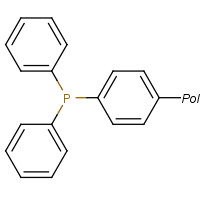
A substância química conhecida como "Fosfina, (4-etenvinilfenil)difinil-, polímero com dietenilbenzeno e etenilbenzeno," com número CAS 39319-11-4, é um tipo de polímero que incorpora funcionalidades de fosfina dentro de sua estrutura. Este polímero é caracterizado por sua disposição complexa de grupos fenila e substituintes etenila (vinila), que contribuem para suas propriedades físicas e químicas únicas. Tipicamente, tais polímeros exibem boa estabilidade térmica e podem possuir diferentes graus de rigidez e flexibilidade dependendo da disposição específica das unidades de monômero. A presença de grupos de fosfina pode conferir reatividade específica, tornando o polímero útil em aplicações como catálise ou como um ligante em química de coordenação. Além disso, a estrutura do polímero pode influenciar sua solubilidade, resistência mecânica e propriedades ópticas, tornando-o adequado para várias aplicações industriais, incluindo revestimentos, adesivos e materiais eletrônicos. No entanto, informações detalhadas sobre segurança e manuseio devem ser consultadas devido aos perigos potenciais associados aos derivados de fosfina.
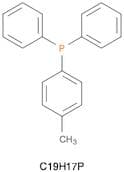
Fórmula:(C20H17P·C10H10·C8H8)x
Sinónimos:- Benzene, diethenyl-, polymer with ethenylbenzene and (4-ethenylphenyl)diphenylphosphine
- (4-Ethenylphenyl)diphenylphosphine-diethenylbenzene-ethenylbenzene copolymer
- Phosphine, (4-ethenylphenyl)diphenyl-, polymer with diethenylbenzene and ethenylbenzene
- Benzene, ethenyl-, polymer with diethenylbenzene and (4-ethenylphenyl)diphenylphosphine
- Diphenyl(4-vinylphenyl)phosphine-divinylbenzene-styrene copolymer
- TRIPHENYLPHOSPHINE POLYSTYRENE
- MACROPOROUS POLYMER SUPPORTED TRIPHENYLPHOSPHINE
- Triphenylphosphine, polymer supported1.4-2.0mmol/g on polystyrene 200-400 mesh2% DVB loading
- Triphenylphosphine, polymer-supported, 1.4 to 2.0mmol/g on polystyrene
- Triphenylphosphine, polymer-bound 100-200 mesh, extent of labeling: ~1.6 mmol/g loading
- PL-TPP MP-RESIN
- 4-Diphenylphosphino polystyrene resin, cross-linked with 2% DVB
- TriphenylphosphineResin1%DvbMesh,1-1.5Mmol/G
- TRIPHENYLPHOSPHINE POL. BOUND, 200-400 M ESH, ~3 MMOL/G
- POLYMER-BOUND TRIPHENYLPHOSPHINE
- -C6H4P(C6H5)2
- Triphenylphosphine resin, 1% crosslinked with DVB
- TRIPHENYLPHOSPHINE, POLYMER-SUPPORTED
- TRIPHENYLPHOSPHINE NOVAGEL
- POLYSTYRENE-PPH2
- Triphenylphosphine resin(1.0-1.5 meq/g, 100-200 mesh)
- TRIPHENYLPHOSPHINE RESIN, 1% CROSSL.WITH DVB, 1.2-1.5 MMOL/G, 200-400 MESH
- DIPHENYLPHOSPHINOBENZOYL NOVAGEL(TM) AM RESIN
- diphenylphosphinated
- Triphenylphosphine polystyrene (200-400 mesh, 1.0-1.5 mmol
- TRIPHENYLPHOSPHINE POL. BOUND, 100-200 M ESH, ~1.6 MMOL/G
- DIPHENYLPHOSPHINO-POLYSTYRENE
- POLYMER SUPPORTED TRIPHENYLPHOSPHINE
- Triphenylphosphine resin, 1% crossl. with DVB, 1.2-1.5 mmol/g, 100-200 mesh
- Triphenylphosphine, polymer-bound 100-200 mesh, extent of labeling: ~3 mmol/g triphenylphosphine loading
- 4-Diphenylphosphino Polystyrene Resin cross-linked with 2% DVB (200-400mesh) (1.0-2.0mmol/g)
- Triphenylphosphine, polyMer-bound 100-200 Mesh, extent of labeling: ~3.0 MMol/g loading, 2 % cross-linked with divinylbenzene
- TRIPHENYLPHOSPHINE POLYMER BOUND
- TRIPHENYLPHOSPHINE NOVAGEL(TM)
- PL-TPP RESIN
- COPOLYMER OF STYRENE AND DIVINYLBENZENE, DIPHENYLPHOSPHINATED
- Triphenylphosphine polystyrene (100-200 mesh, 0.8-1.6 mmol
- TRIPHENYLPHOSPHINE PS RESIN
- TRIPHENYLPHOSPHINE PS
- TRIPHENYLPHOSPHINE RESIN
- 4-DIPHENYLPHOSPHINO POLYSTYRENE RESIN
- Triphenylphosphine resin, Crosslinked with 1% DVB, 1.2-1.5 mmol/g, 100-200 mesh
- POLYSTYRENE CROSSLINKED WITH DIVINYL-BENZENE, DIPHENYLPHOSPHINATED
- Triphenylphosphine resin, 1% crosslinked with DVB, 1.0-1.5mmol/g
- 4-DIPHENYLPHOSPHINO POLYSTYRENE RESIN, CROSS-LINKED WITH 2% DVB: (1.0-2.0MMOLP/G), 200-400MESH
- Ver mais sinónimos
Ordenar por
Pureza (%)
0
100
|
0
|
50
|
90
|
95
|
100
7 produtos.
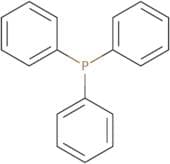
Triphenylphosphine, polymer bound
CAS:Triphenylphosphine, polymer boundPureza:100-200 mesh, extent of labeling: ~1.6 mmol/g loadCor e Forma:SolidPeso molecular:261.28g/molTriphenylphosphine, polymer bound, 1.4-2.0 mmol/g on polystyrene, 200-400 mesh, 1% cross linked with DVB
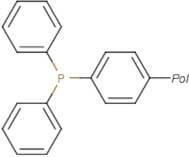
CAS:Triphenylphosphine, polymer bound, 1.4-2.0 mmol/g on polystyrene, 200-400 mesh, 1% cross linked with DVBFórmula:C18H14PPolPureza:≥95%Cor e Forma: cream to off white resin beads solidPeso molecular:261.27752g/molTriphenylphosphine, polymer supported 1.4-2.0mmol/g on polystyrene 200-400 mesh 1% DVB loading
CAS:Fórmula:C18H14PCor e Forma:SolidPeso molecular:261.284Triphenylphosphine, polymer bound, 1.4-2.0 mmol/g on polystyrene, 200-400 mesh, 2% cross linked with DVB
CAS:Triphenylphosphine, polymer bound, 1.4-2.0 mmol/g on polystyrene, 200-400 mesh, 2% cross linked with DVBPureza:≥95%Triphenylphosphine, polymer supported 1.4-2.0mmol/g on polystyrene 200-400 mesh 2% DVB loading
CAS:Produto ControladoFórmula:(C20H17P·C10H10·C8H8)xCor e Forma:MixturePeso molecular:262.29Triphenylphosphine resin
CAS:Triphenylphosphine resin is a solid catalyst that is used in organic synthesis. It is obtained by the reaction of triphenylphosphine and trifluoroacetic acid with fatty acids. Triphenylphosphine resin can be used to synthesize compounds, such as pharmaceuticals, plastics, and pesticides. This catalyst has been shown to produce light emission when it reacts with diphenyl sulfoxide in an acidic environment. The light emission indicates that the reaction proceeds via a radical chain mechanism. Triphenylphosphine resin also has transport properties and can be used to study reactions involving mitochondrial membranes with potential. In addition, this catalyst has been shown to react with hydrochloric acid and sodium carbonate to generate nuclear DNA without harming mitochondrial DNA or proteins. The structural analysis of this compound shows that it consists of biphenyl-type molecules connected through phosphorous atoms.br>br>NMR spectroscopic data for triphenylphosphine resinFórmula:(C20H17P)m•(C10H10)n•(C8H8)xPureza:Min. 95%Cor e Forma:Powder