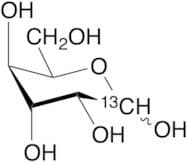
CAS 4205-23-6
:D-Gulose
Descrição:
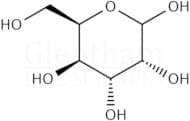
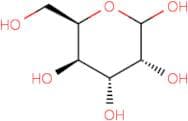
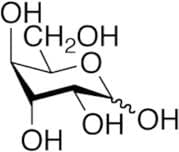
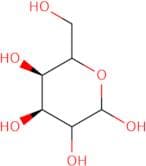
D-Gulose é um açúcar que ocorre naturalmente e é uma aldohexose, que é um tipo de monossacarídeo. É um epímero de D-mano e D-galactose, diferindo na configuração em torno de um carbono específico. D-Gulose é tipicamente encontrado em quantidades traço em certas frutas e está envolvido em várias vias metabólicas. Sua fórmula molecular é C6H12O6, e existe em formas de pirano e furano, sendo a forma de pirano mais prevalente em solução. D-Gulose é caracterizado por seu sabor doce e é solúvel em água, tornando-o relevante em aplicações e pesquisas bioquímicas. Pode participar de reações de glicosilação e é de interesse no estudo do metabolismo de carboidratos e potenciais aplicações terapêuticas. Além disso, D-Gulose pode ser utilizado na síntese de glicosídeos e outros carboidratos complexos. Seu número CAS, 4205-23-6, é um identificador único que facilita a identificação e o estudo deste composto na literatura científica e bancos de dados.
Fórmula:C6H12O6
InChI:InChI=1S/C6H12O6/c7-1-3(9)5(11)6(12)4(10)2-8/h1,3-6,8-12H,2H2/t3-,4+,5-,6-/m0/s1
Chave InChI:InChIKey=GZCGUPFRVQAUEE-FSIIMWSLSA-N
SMILES:[C@@H]([C@H]([C@H](C=O)O)O)([C@@H](CO)O)O
Sinónimos:- <span class="text-smallcaps">D</span>-Gulose
- D-gulopyranose
- Gulose, <span class="text-smallcaps">D</span>-
- alpha-D-gulopyranose
- beta-D-gulopyranose
- Gulose, D-
- D-Gulose
Ordenar por
Pureza (%)
0
100
|
0
|
50
|
90
|
95
|
100
6 produtos.
D-Gulose
CAS:D-GulosePureza:By hplc: 99.9% (Typical Value in Batch COA)Cor e Forma: white powderPeso molecular:180.16g/molD-Gulose
CAS:Applications D-Glucose is a aldohexose sugar that is very rare in nature but has been found in archaea, bacteria and other eukaryotes. Gulose is the C-3 Epimer of galactose (G155250).
References Sun, Y.X., et al.: Biosci. Biotech. Biochem., 70, 598 (2006); Bhuiyan, S.H., et al.: J. Biosci. Bioengin., 88, 567 (1999);Fórmula:C6H12O6Cor e Forma:Off White SolidPeso molecular:180.1559D-Gulose
CAS:D-Gulose is a sugar that has been shown to have inhibitory properties on blood glucose levels. It also has insulin-like effects and can be used as an alternative to insulin injections in patients with Type 1 diabetes. D-Gulose is metabolized by the liver into 5-deoxy-D-gluconic acid and then into glucose, which can then be used for cellular energy production. The rate constant for this process was determined in experiments using rat liver slices. D-Gulose may also have potent angiogenic effects, as it increased the proliferation of pluripotent cells and caused significant increases in growth factor β1 expression. D-Gulose may also have potential anti-cancer effects, as it inhibited nitrate reductase activity in tumor cells and decreased xanthine oxidase activity.Fórmula:C6H12O6Pureza:Min. 99 Area-%Cor e Forma:White PowderPeso molecular:180.16 g/molD-Gulose-1-13C
CAS:Produto ControladoApplications Isotope Labelled analogue of D-Glucose is a aldohexose sugar that is very rare in nature but has been found in archaea, bacteria and other eukaryotes. Gulose is the C-3 Epimer of galactose (G155250).
References Sun, Y.X., et al.: Biosci. Biotech. Biochem., 70, 598 (2006); Bhuiyan, S.H., et al.: J. Biosci. Bioengin., 88, 567 (1999);Fórmula:CC5H12O6Cor e Forma:NeatPeso molecular:181.149