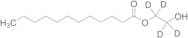
CAS 4219-48-1
:2-Hidroxietil dodecanoato
- 2-Hydroxyethyl Dodecanoate
- Ai3-00825
- Dodecanoic acid, 2-hydroxyethyl ester
- Emcol EL 50
- Ethylene glycol monododecanoate
- Ethylene glycol, monolaurate
- Lauric acid, 2-hydroxyethyl ester
- NSC 406158
- 2-Hydroxyethyl laurate
2-Hydroxyethyl laurate
CAS:1-Lauroyl ethylene glycol is a monoclonal antibody that binds to the fatty acid component of cell membranes. It has been shown to induce rapid lysis of Staphylococcus aureus cells in the presence of plasma glucose, chloride, and fatty acids. Monolaurate is formed as a byproduct during this process. 1-Lauroyl ethylene glycol also has the potential to be used as an adjuvant for vaccines, due to its ability to induce an immune response against antigens in mice. The monoclonal antibody can be used as a carrier for hydroxylated drugs and solid dispersions such as antibiotics. 1-Lauroyl ethylene glycol is soluble at low pH levels, making it suitable for oral administration.Fórmula:C14H28O3Pureza:Min. 95%Cor e Forma:PowderPeso molecular:244.37 g/mol1-Lauroyl ethylene glycol
CAS:1-Lauroyl ethylene glycol is a chemical with CAS No. 4219-48-1 that is used as a building block for the synthesis of complex compounds, such as pharmaceuticals, pesticides, and agrochemicals. It is also a reagent in organic synthesis reactions. 1-Lauroyl ethylene glycol reacts with alcohols to form esters, or with chloroformates to form epoxides. This chemical has been shown to be useful as a scaffold for the synthesis of complex molecules, such as pharmaceuticals and pesticides. 1-Lauroyl ethylene glycol can be used in research chemicals and speciality chemicals such as high quality solvents and intermediates.
Fórmula:C14H28O3Pureza:Min. 95 Area-%Peso molecular:244.37 g/molEthylene Glycol Monolaurate-d4
CAS:Produto ControladoApplications Ethylene Glycol Monolaurate-d4 is a deuterated analog of Ethylene Glycol Monolaurate (E917585), a reactant in the synthesis of neuritogenic gentiside derivatives.
References Wang, Guangfa, et al.: Chem. & Pharma. Bul., 64(2), 161-170 (2016)Fórmula:C14D4H24O3Cor e Forma:NeatPeso molecular:248.395