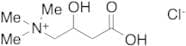
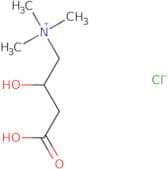
CAS 461-05-2
:Cloreto de carnitina
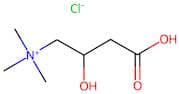
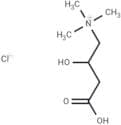
- (2S)-3-carboxy-2-hydroxy-N,N,N-trimethylpropan-1-aminium
- (3-Carboxy-2-hydroxypropyl)trimethylammonium chloride
- (3-Carboxy-2-hydroxypropyl)trimethylazanium chloride
- (3R)-3-hydroxy-4-(trimethylammonio)butanoate
- (Carnitine chloride
- (±)-Carnitine hydrochloride
- 1-Propanaminium, 3-carboxy-2-hydroxy-N,N,N-trimethyl-, chloride
- 1-Propanaminium, 3-carboxy-2-hydroxy-N,N,N-trimethyl-, chloride (1:1)
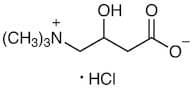
- 3-Hydroxy-4-(trimethylammonio)butanoate hydrochloride
- 3-carboxy-2-hydroxy-N,N,N-trimethylpropan-1-aminium
- 3-carboxy-2-hydroxy-N,N,N-trimethylpropan-1-aminium chloride
- <span class="text-smallcaps">DL</span>-Carnitine chloride
- <span class="text-smallcaps">DL</span>-Carnitine hydrochloride
- Ammonium, (3-carboxy-2-hydroxypropyl)trimethyl-, chloride, (±)-
- Aplegin
- Bicarnesine
- DL-Bicarnesine Hydrochloride
- DL-Carnitine HCl
- Monocamin
- N-(3-carboxy-2-hydroxypropyl)-N,N,N-trimethylammonium chloride
- Ver mais sinónimos
DL-Carnitine hydrochloride, 98+%
CAS:This Thermo Scientific Chemicals brand product was originally part of the Alfa Aesar product portfolio. Some documentation and label information may refer to the legacy brand. The original Alfa Aesar product / item code or SKU reference has not changed as a part of the brand transition to Thermo Sci
Fórmula:C7H16ClNO3Pureza:98+%Cor e Forma:White to pale cream, Crystals or powder or crystalline powderPeso molecular:197.661-Propanaminium, 3-carboxy-2-hydroxy-N,N,N-trimethyl-, chloride
CAS:Fórmula:C7H16ClNO3Pureza:97%Cor e Forma:SolidPeso molecular:197.6598DL-Carnitine hydrochloride
CAS:Fórmula:C7H15NO3·HClPureza:≥ 98.5%Cor e Forma:White crystalline powderPeso molecular:197.66DL-Carnitine Chloride
CAS:Fórmula:C7H16NO3·ClCor e Forma:White To Off-White SolidPeso molecular:162.21 35.45DL-Carnitine Hydrochloride
CAS:Fórmula:C7H15NO3·HClPureza:>98.0%(T)Cor e Forma:White powder to crystalPeso molecular:197.66(±)-Carnitine chloride
CAS:(±)-Carnitine chloride (Monocamin) is a quaternary ammonium compound biosynthesized from the amino acids lysine and methionine.Fórmula:C7H15NO3·HClPureza:99.56%Cor e Forma:Crystalline Solid With Slight Fishy SmellPeso molecular:197.66D,L-Carnitine Chloride
CAS:Stability Hygroscopic
Applications Vitamin (enzyme cofactor). Essential cofactor of fatty acid metabolism; required for the transport of fatty acids through the inner mitochondrial membrane. Synthesized primarily in the liver and kidney; highest concentrations found in heart and skeletal muscle. Dietary sources include red meat, dairy products, beans, avocado.
References Mitchell, M.E., et al.: Am. J. Clin. Nutr., 31, 293 (1978), Lango, R., et al.: Cardiovasc. Res., 51, 21 (2001), Vaz, F.M., et al.: Biochem. J., et al.: 361, 417 (2002), Karlic, H., et al.: Nutrition, 20, 709 (2004),Fórmula:C7H16NO3·ClCor e Forma:Off-WhitePeso molecular:197.66DL-Carnitine hydrochloride
CAS:DL-Carnitine hydrochloride is a prodrug of the amino acid carnitine, which is synthesized by the liver. It is used for the treatment of congestive heart failure and primary carnitine deficiency. DL-Carnitine hydrochloride can be used to prevent fatigue during physical activity by increasing adenosine triphosphate (ATP) production in cells. This drug also increases fatty acid oxidation and facilitates the transport of long-chain fatty acids into mitochondria for β-oxidation. DL-Carnitine hydrochloride stimulates the breakdown of triglycerides by activating lipoprotein lipase, which is an enzyme that breaks down fat in blood vessels. The drug also inhibits glycosidic bond formation and hydroxyl group polymerization, which are steps in the synthesis of glycogen, a form of sugar stored in muscle cells.Fórmula:C7H16ClNO3Pureza:Min 98%Cor e Forma:White Off-White PowderPeso molecular:197.66 g/mol