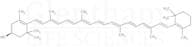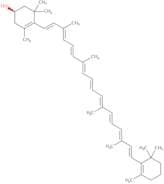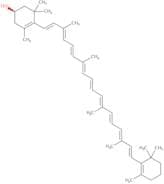
CAS 472-70-8
:Criptoxantina
- (1S)-3,5,5-trimethyl-4-[(1E,3E,5E,7E,9E,11E,13E,15E,17E)-3,7,12,16-tetramethyl-18-(2,6,6-trimethylcyclohexen-1-yl)octadeca-1,3,5,7,9,11,13,15,17-nonaenyl]cyclohex-3-en-1-ol
- (3R)-Cryptoxanthin
- (3R)-beta,beta-caroten-3-ol
- (3R)-β,β-Caroten-3-ol
- (3R)-β-Cryptoxanthin
- 3-Hydroxy-β-carotene
- Caricaxanthin
- Crp 015
- Cryptoxanthin, all-trans-
- Cryptoxanthine
- Cryptoxanthol
- Cryptoxanthol, all-trans-
- E 161c
- Kryptoxanthin
- Neo-β-cryptoxanthin
- Neocryptoxanthin, all-trans-
- Neocryptoxanthol, all-trans-
- Paprika carotene
- Xanthrophyll 1
- all-trans-Cryptoxanthin
- all-trans-β-Cryptoxanthin
- beta-Cryptoxanthin
- trans-Cryptoxanthin
- trans-β-Crytoxanthin
- β,β-Caroten-3-ol, (3R)-
- β-Caroten-3-ol, (R)-all-trans-
- β-Cryptoxanthin
- β-Cryptoxanthin, all-trans-
- Hydroxy-β-carotene
- beta-Cryptoxanthin - 1%
- all-trans-beta-Cryptoxanthin
- beta-Caroten-3-ol
- CRYPTOXANTHIN, b-(SH)
- β-caroten-3-ol
- cryptoxanthin
- all-trans-Neocryptoxanthin
- Zeaxanthin Impurity 21
- Caricaxanthin, Hydroxy-β-carotene
- all-trans-Neocrypto
- B-CRYPTOXANTHIN WITH TLC
- CRYPTOXANTHIN, B-
- BETA-CRIPTOXANTHIN
- BETA-CRYPTOXANTHINE
- TRANS-BETA-CRYPTOXANTHIN
- Ver mais sinónimos
β-Cryptoxanthin
CAS:beta-Cryptoxanthin analytical standard provided with UV assay for quantitative titration.Fórmula:C40H56OPureza:(HPLC) ≥95%Cor e Forma:PowderPeso molecular:552.89β-Cryptoxanthin
CAS:β-Cryptoxanthin is isolated from Satsuma mandarin orange with an anti-stress effect. It is an oxygenated carotenoid and an antioxidant.Fórmula:C40H56OPureza:98%Cor e Forma:SolidPeso molecular:552.87beta-Cryptoxanthin - 95%
CAS:Beta-Cryptoxanthin - 95% is a high-purity carotenoid product, which is a naturally occurring pigment found in various fruits and vegetables, such as papayas, tangerines, and red peppers. This compound is integral to the human diet and serves as a precursor to vitamin A, contributing to its provitamin A activity.
Fórmula:C40H56OPureza:Min. 95 Area-%Cor e Forma:Red PowderPeso molecular:552.87 g/molRef: 4Z-C-400001
Produto descontinuadoβ-Cryptoxanthin - 1%
CAS:Beta-cryptoxanthin is a type of carotenoid that is biosynthesized by plants. Beta-cryptoxanthin is found in oranges, tangerines, and other citrus fruits. It has been shown to increase the metabolic rate and body mass index in mice. Beta-cryptoxanthin also has antioxidant properties that are comparable to vitamin C and E. The biological properties of beta-cryptoxanthin have been studied in vitro using k562 cells and 3t3-l1 preadipocytes. These cells were treated with dehydroascorbic acid (DHA), a metabolite of beta-cryptoxanthin, which increased the production of colony stimulating factor 2 (CSF2) and inhibited the activity of p21 protein kinase. This study suggests that beta-cryptoxanthin may be useful for treating inflammatory diseases such as rheumatoid arthritis or cancer.
Fórmula:C40H56OPureza:Min. 95%Peso molecular:552.87 g/mol