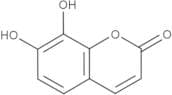
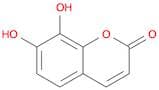
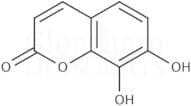
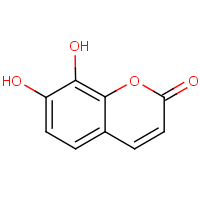
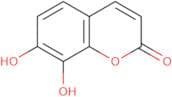
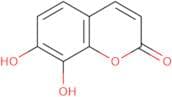
CAS 486-35-1
:Dafnetina
- 2H-1-Benzopyran-2-one, 7,8-dihydroxy-
- 2H-1-benzopyran-2-one, 4,8-dihydroxy-
- 4,8-Dihydroxy-2H-chromen-2-one
- 7,8-Dihydroxy-2H-1-benzopyran-2-one
- 7,8-Dihydroxycoumarin
- 7,8-dihydroxy-2H-benzopyran-2-one
- 7,8-dihydroxy-2H-chromen-2-one
- Coumarin, 7,8-dihydroxy-
- Daphnetol
- NSC 633563
- Ruixiangsu
- Daphnetin
- Daphenetin
- Daphnetin,7,8-Dihydroxycoumarin
- DAPHNETIN(P)
- AKOS 213-37
- 7,8-dihydroxy-coumari
- 7,8-DIHYDROXY-CHROMEN-2-ONE
- 7,8-dihydroxy-2h-1-benzopyran-2-on
- 7,8-DIHYDROXYCOUMARIN (DAPHNETIN)
- Ver mais sinónimos
Daphnetin
CAS:Daphnetin analytical standard provided with chromatographic purity, to be used as reference material for qualitative determination.Fórmula:C9H6O4Pureza:(HPLC) ≥95%Cor e Forma:PowderPeso molecular:178.152H-1-Benzopyran-2-one, 7,8-dihydroxy-
CAS:Fórmula:C9H6O4Pureza:95%Cor e Forma:SolidPeso molecular:178.14157,8-Dihydroxycoumarin (Daphnetin)
CAS:Fórmula:C9H6O4Pureza:(HPLC) ≥ 90.0%Cor e Forma:Off-white to light yellow or pink powderPeso molecular:178.14Daphnetin
CAS:Fórmula:C9H6O4Pureza:>90.0%(HPLC)Cor e Forma:White to Light yellow to Light red powder to crystalPeso molecular:178.14Daphnetin
CAS:Daphnetin (7,8-Dihydroxycoumarin), a natural coumarin derivative, is a protein kinase inhibitor with inhibitory for EGFR (IC50: 7.67 μM), PKA (IC50: 9.33 μM),
Fórmula:C9H6O4Pureza:97.47% - 99.8%Cor e Forma:SolidPeso molecular:178.147,8-Dihydroxycoumarin
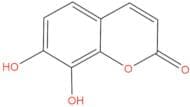
CAS:7,8-Dihydroxycoumarin is a naturally occurring coumarin, which is derived from plants and certain fungi. It possesses a distinct chemical structure characterized by a benzopyrone core with hydroxyl groups at the 7th and 8th positions, contributing to its distinct biochemical properties. The mode of action of 7,8-Dihydroxycoumarin is largely attributed to its ability to act as a potent antioxidant, scavenging free radicals and chelating metal ions, thus mitigating oxidative stress at the cellular level.Fórmula:C9H6O4Pureza:Min. 95%Cor e Forma:PowderPeso molecular:178.14 g/mol7,8-Dihydroxycoumarin, tech grade - 40%
CAS:7,8-Dihydroxycoumarin (7,8-DHC) is a natural compound that has been shown to inhibit the expression of the P-glycoprotein (Pgp) gene and protein. 7,8-DHC binds to the response element in the Pgp gene promoter and inhibits transcriptional activity. This inhibition of transcription prevents the production of new Pgp proteins, which leads to an increase in drug resistance. 7,8-DHC also has been shown to bind to bcl-2 protein in vitro and prevent its release from mitochondria. This prevents apoptosis by inhibiting mitochondrial membrane permeability. Coumarin derivatives have been shown as potential therapeutic agents for bowel diseases such as ulcerative colitis and Crohn's disease. Daphnetin, a coumarin derivative found in dandelion roots, has shown promise as a treatment for colitis in mice models.
Fórmula:C9H6O4Pureza:(%) Min. 40%Cor e Forma:PowderPeso molecular:178.14 g/mol