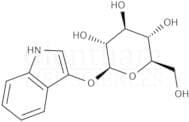
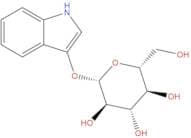
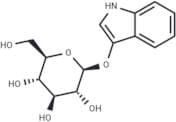
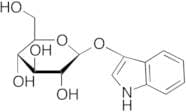
CAS 487-60-5
:Indoxil-β-D-glicosídeo
Descrição:
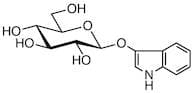
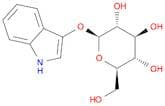
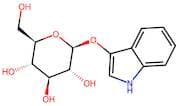
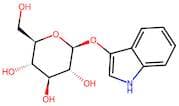
Indoxil-β-D-glicosídeo é um composto químico caracterizado por sua estrutura, que consiste em um moiety de indoxila ligado a um β-D-glicosídeo. Este composto é tipicamente um sólido cristalino branco a off-white que é solúvel em água e solventes orgânicos, refletindo sua natureza glicosídica. É conhecido por seu papel como precursor em várias vias bioquímicas, particularmente na biossíntese de índigo, um corante bem conhecido. Indoxil-β-D-glicosídeo pode sofrer hidrólise para liberar indoxila, que pode então oxidar para formar índigo em condições apropriadas. O composto é frequentemente utilizado em pesquisas e aplicações analíticas, particularmente em estudos relacionados à bioquímica vegetal e reações enzimáticas. Sua estabilidade e reatividade podem ser influenciadas por fatores como pH e temperatura, tornando-o um assunto interessante para investigação adicional em processos sintéticos e naturais. Os dados de segurança devem ser consultados antes de manusear, assim como com qualquer substância química, para garantir que as precauções adequadas sejam tomadas.
Fórmula:C14H17NO6
InChI:InChI=1S/C14H17NO6/c16-6-10-11(17)12(18)13(19)14(21-10)20-9-5-15-8-4-2-1-3-7(8)9/h1-5,10-19H,6H2/t10-,11-,12+,13-,14-/m1/s1
Chave InChI:InChIKey=XVARCVCWNFACQC-RKQHYHRCSA-N
SMILES:O(C=1C=2C(NC1)=CC=CC2)[C@@H]3O[C@H](CO)[C@@H](O)[C@H](O)[C@H]3O
Sinónimos:- (2S,3S,4R,5S,6R)-2-(hydroxymethyl)-6-(1H-indol-3-yloxy)tetrahydropyran-3,4,5-triol
- 1H-Indol-3-yl β-<span class="text-smallcaps">D</span>-glucopyranoside
- 1H-indol-3-yl D-glucopyranoside
- 1H-indol-3-yl beta-D-glucopyranoside
- 1H-indol-3-yl hydrogen sulfate
- 3-(Glucosyloxy)indole
- 3-Indoxyl-beta-D-glucoside
- Indican
- Indican (glucoside)
- Indole, 3-(β-<span class="text-smallcaps">D</span>-glucopyranosyloxy)-
- Indoxyl-β-<span class="text-smallcaps">D</span>-glucoside
- NSC 87517
- Uroxanthin
- β-<span class="text-smallcaps">D</span>-Glucopyranoside, 1H-indol-3-yl
- β-D-Glucopyranoside, 1H-indol-3-yl
- Indole, 3-(β-D-glucopyranosyloxy)-
- Ver mais sinónimos
Ordenar por
Pureza (%)
0
100
|
0
|
50
|
90
|
95
|
100
11 produtos.
Indican (Plant Indican)
CAS:Fórmula:C14H17NO6Pureza:>98.0%(HPLC)Cor e Forma:White to Light yellow to Light orange powder to crystalPeso molecular:295.293-Indolyl-b-D-glucopyranoside
CAS:Fórmula:C14H17NO6Pureza:97%Cor e Forma:SolidPeso molecular:295.28793-Indolyl-β-D-glucopyranoside
CAS:3-Indolyl-β-D-glucopyranosideFórmula:C14H17NO6Pureza:97%Cor e Forma: white to off-white powderPeso molecular:295.28788g/mol3-Indolyl b-D-glucopyranoside
CAS:Fórmula:C14H17NO6Pureza:≥ 97.0%Cor e Forma:White to off-white powderPeso molecular:295.293-Indoxyl-β-D-glucopyranoside
CAS:M04115 - 3-Indoxyl-beta-D-glucopyranoside
Fórmula:C14H17NO6Pureza:98%Cor e Forma:SolidPeso molecular:295.291Indican
CAS:Indican (Indoxyl-β-D-glucoside) is a natural protective compound that is used to protect the liver.Fórmula:C14H17NO6Pureza:99.78% - 99.92%Cor e Forma:White To Off-White Crystalline PowderPeso molecular:295.29Indoxyl-β-D-glucoside
CAS:Produto ControladoFórmula:C14H17NO6Cor e Forma:White To GreyPeso molecular:295.293-Indoxyl-beta-D-glucopyranoside anhydrous
CAS:The maunfacturing of blue jeans started 150 years ago as workwear, and are found nowadays in almost every wardrobe. Their renowned indigo color tone is truly unique; nevertheless, the high demand for the dye poses serious sustainability and environmental problems connected with its manufacturing process. Recently, a group of scientists presented an alternative indigo dyeing method inspired by the indoxyl glucoconjugate present in the plant P.tinctorium. The researchers proposed as an alternative approach a biocatalytic process using recombinant E.coli to access water soluble β-gluco-indoxyl (indican). At the point of coloring, indican gets hydrolyzed by β-glucosidase enzymes forming indoxyl, which suddenly undergoes oxidation to leucoindigo and further crystallizes to indigo giving the typical blue denim its signature character.Fórmula:C14H17NO6Pureza:Min. 99.0 Area-%Peso molecular:295.29 g/mol