CAS 497-23-4
:2(5H)-Furanona
Descrição:
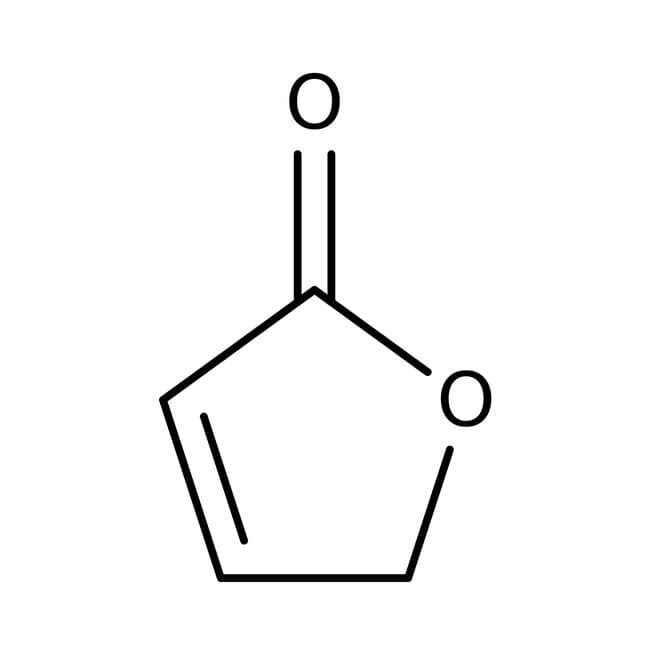
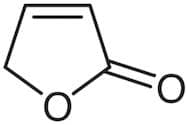
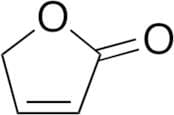
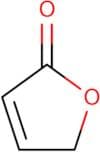
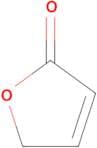
2(5H)-Furanona, também conhecido como 2-pirona, é um composto cíclico caracterizado por um anel de lactona de seis membros contendo átomos de oxigênio e carbono. Apresenta uma ligação dupla entre os átomos de carbono adjacentes ao oxigênio, contribuindo para sua reatividade e estabilidade. Este composto é tipicamente incolor a amarelo pálido e tem um odor doce e frutado, frequentemente associado a vários sabores e fragrâncias naturais. É solúvel em solventes orgânicos e exibe solubilidade moderada em água. 2(5H)-Furanona é conhecido por seu papel na indústria alimentícia, onde é utilizado como agente aromatizante, e também tem aplicações na síntese de produtos farmacêuticos e agroquímicos. O composto pode passar por várias reações químicas, incluindo hidrólise e oxidação, tornando-se um intermediário versátil na síntese orgânica. Além disso, foi estudado por suas potenciais atividades biológicas, incluindo propriedades antimicrobianas e antioxidantes. No geral, 2(5H)-Furanona é um composto importante tanto em contextos industriais quanto de pesquisa devido à sua estrutura química única e propriedades funcionais.
Fórmula:C4H4O2
InChI:InChI=1S/C4H4O2/c5-4-2-1-3-6-4/h1-2H,3H2
Chave InChI:InChIKey=VIHAEDVKXSOUAT-UHFFFAOYSA-N
SMILES:O=C1C=CCO1
Sinónimos:- 2(5H)-Furanone
- 2,5-Dihydrofuranone
- 2-Buten-1,4-olide
- 2-Buten-4-olide
- 2-Butenoic acid, 4-hydroxy-, γ-lactone
- 2-Oxo-2,5-dihydrofuran
- 2H-Furan-5-one
- 4-Hydroxy-2-butenoic acid lactone
- 4-Hydroxy-2-butenoic acid γ-lactone
- 5-Oxo-2,5-dihydrofuran-3-yl ester
- 5H-Furan-2-one
- Cratone
- Crotonic acid, 4-hydroxy-, γ-lactone
- Furan-2(5H)-on
- Isocrotonolactone
- Nsc 197009
- Nsc 51296
- furan-2(5H)-ona
- furan-2(5H)-one
- furanne-2(5H)-one
- g-Crotonolactone
- Δ<sup>α,β</sup>-Butenolide
- Δα,β-Butenolide
- α,β-Crotonolactone
- γ-Crotolactone
- Ver mais sinónimos
Ordenar por
Pureza (%)
0
100
|
0
|
50
|
90
|
95
|
100
10 produtos.
2(5H)-Furanone, 96%
CAS:2(5H)-Furanone is employed in the preparation of 5-substituted 2(5H) furanones (gamma-butenolides) catalyzed by bifunctional aminothiourea and aminosquaramide organocatalysts through direct aldol reaction with aromatic aldehydes. Further, it is used in the synthesis of lignans by Michael addition reFórmula:C4H4O2Pureza:96%Cor e Forma:Clear colorless to yellow, LiquidPeso molecular:84.07Furan-2(5H)-one
CAS:Furan-2(5H)-oneFórmula:C4H4O2Pureza:97%Cor e Forma: faint yellow to light yellow liquidPeso molecular:84.07g/molγ-Crotonolactone
CAS:Fórmula:C4H4O2Pureza:>93.0%(GC)Cor e Forma:Colorless to Light orange to Yellow clear liquidPeso molecular:84.072-Furanone
CAS:Stability Moisture Sensitive
Applications 2-Furanone is a heterocyclic organic compound that is used widely in the synthetic preparation of pharmaceutical goods.
References Kim, H.K., et al.: Plant. Pathol. J., 28, 259 (2012); Nam, S., et al.: J. Agr. Food. Chem., 60, 9097 (2012); Durchschein, K., et al.: Eur. J. Org. Chem., 2012, 4963 (2012);Fórmula:C4H4O2Cor e Forma:NeatPeso molecular:84.072(5H)-Furanone
CAS:2(5H)-Furanone is a naturally occurring compound that has been found to have hypoglycemic effects. Studies have shown that 2(5H)-furanone inhibits the activity of cox-2, an enzyme involved in the synthesis of prostaglandins, which are inflammatory compounds. This chemical may be useful as an anti-inflammatory agent and for the treatment of bowel diseases. 2(5H)-Furanone also has antimicrobial properties and has been shown to inhibit the growth of animal cells that are resistant to anticancer drugs. It binds to cell nuclei and disrupts DNA synthesis by competing with basic proteins for binding sites on DNA strands. The chemical structure of 2(5H)-furanone is very similar to butenolide, a natural plant compound used in traditional Chinese medicine; both compounds have been shown to inhibit COX-2 activity.Fórmula:C4H4O2Pureza:Min. 95%Cor e Forma:Clear LiquidPeso molecular:84.07 g/mol