CAS 520-26-3
:Hesperidina
Descrição:
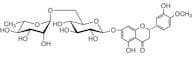
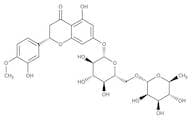
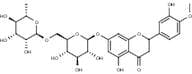
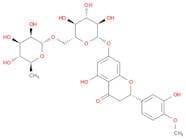
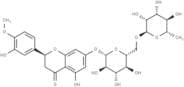
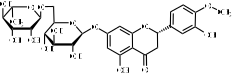
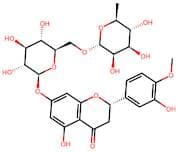
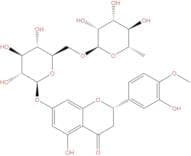
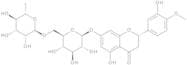
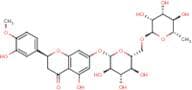
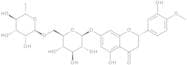
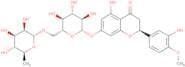
Hesperidina é um glicosídeo flavonoide encontrado principalmente em frutas cítricas, particularmente nas cascas de laranjas e limões. É conhecido por suas propriedades antioxidantes e potenciais benefícios à saúde, incluindo efeitos anti-inflamatórios e protetores vasculares. A estrutura química de Hesperidina consiste em uma espinha dorsal de flavanona, especificamente hesperetina, ligada a um grupo de açúcar rutinose. Este composto é frequentemente estudado por seu papel na promoção da saúde cardiovascular e na melhoria da circulação. Hesperidina também é reconhecido por sua capacidade de aumentar a absorção de outros nutrientes e pode contribuir para os benefícios gerais à saúde associados ao consumo de cítricos. Em termos de solubilidade, Hesperidina é geralmente solúvel em água e álcool, tornando-o adequado para várias formulações em suplementos dietéticos e alimentos funcionais. Seu número CAS, 520-26-3, é um identificador único que facilita a identificação e o estudo deste composto na literatura científica e em contextos regulatórios. No geral, Hesperidina é um composto bioativo significativo com várias aplicações em saúde e nutrição.
Fórmula:C28H34O15
InChI:InChI=1S/C28H34O15/c1-10-21(32)23(34)25(36)27(40-10)39-9-19-22(33)24(35)26(37)28(43-19)41-12-6-14(30)20-15(31)8-17(42-18(20)7-12)11-3-4-16(38-2)13(29)5-11/h3-7,10,17,19,21-30,32-37H,8-9H2,1-2H3/t10-,17-,19+,21-,22+,23+,24-,25+,26+,27+,28+/m0/s1
Chave InChI:InChIKey=QUQPHWDTPGMPEX-QJBIFVCTSA-N
SMILES:O=C1C=2C(O[C@@H](C1)C3=CC(O)=C(OC)C=C3)=CC(O[C@@H]4O[C@H](CO[C@H]5[C@H](O)[C@H](O)[C@@H](O)[C@H](C)O5)[C@@H](O)[C@H](O)[C@H]4O)=CC2O
Sinónimos:- (2S)-5-hydroxy-2-(3-hydroxy-4-methoxyphenyl)-4-oxo-3,4-dihydro-2H-chromen-7-yl 6-O-(6-deoxy-alpha-L-erythro-hexopyranosyl)-beta-D-threo-hexopyranoside
- (2S)-5-hydroxy-2-(3-hydroxy-4-methoxyphenyl)-4-oxo-3,4-dihydro-2H-chromen-7-yl 6-O-(6-deoxy-alpha-L-mannopyranosyl)-beta-D-glucopyranoside
- (2S)-5-hydroxy-2-(3-hydroxy-4-methoxyphenyl)-4-oxo-3,4-dihydro-2H-chromen-7-yl 6-O-(6-deoxy-beta-L-mannopyranosyl)-beta-D-glucopyranoside
- (2S)-7-[[6-O-(6-Deoxy-α-<span class="text-smallcaps">L</smallcap>-mannopyranosyl)-β-<smallcap>D</span>-glucopyranosyl]oxy]-2,3-dihydro-5-hydroxy-2-(3-hydroxy-4-methoxyphenyl)-4H-1-benzopyran-4-one
- (2S)-Hesperidin
- (S)-7-[[6-O-(6-Deoxy-alpha-L-mannopyranosyl)-beta-D-glucopyranosyl]oxy]-2,3-dihydro-5-hydroxy-2-(3-hydroxy-4-methoxyphenyl)-4H-1-benzopyran-4-one
- 4H-1-Benzopyran-4-one, 7-[[6-O-(6-deoxy-α-<span class="text-smallcaps">L</smallcap>-mannopyranosyl)-β-<smallcap>D</span>-glucopyranosyl]oxy]-2,3-dihydro-5-hydroxy-2-(3-hydroxy-4-methoxyphenyl)-, (2S)-
- 4H-1-Benzopyran-4-one, 7-[[6-O-(6-deoxy-α-<span class="text-smallcaps">L</smallcap>-mannopyranosyl)-β-<smallcap>D</span>-glucopyranosyl]oxy]-2,3-dihydro-5-hydroxy-2-(3-hydroxy-4-methoxyphenyl)-, (S)-
- 4H-1-Benzopyran-4-one, 7-[[6-O-(6-deoxy-α-L-mannopyranosyl)-β-D-glucopyranosyl]oxy]-2,3-dihydro-5-hydroxy-2-(3-hydroxy-4-methoxyphenyl)-, (2S)-
- 4H-1-Benzopyran-4-one, 7-[[6-O-(6-deoxy-α-L-mannopyranosyl)-β-D-glucopyranosyl]oxy]-2,3-dihydro-5-hydroxy-2-(3-hydroxy-4-methoxyphenyl)-, (S)-
- 5-Hydroxy-2-(3-Hydroxy-4-Methoxy-Phenyl)-7-[3,4,5-Trihydroxy-6-[(3,4,5 -Trihydroxy-6-Methyl-Oxan-2-Yl)Oxymethyl]Oxan-2-Yl]Oxy-Chroman-4-One
- 5-hydroxy-2-(3-hydroxy-4-methoxyphenyl)-4-oxo-3,4-dihydro-2H-chromen-7-yl 6-O-(6-deoxyhexopyranosyl)hexopyranoside
- 7-[[6-O-(6-deoxy-.alpha.-L-mannopyranosyl)-.be ta.-D-glucopyranosyl ]oxy]-2,3-dihydro-5-hydroxy-2-(3-hydroxy-4-methox yphenyl)-, (S)-, 4H-1-Benzopyran-4-one, 7-[[6-O- (6-deoxy-.alpha.-L-mannopyranosyl-.bet a.-D-glucopyranosyl] oxy]-2,3-dihydro-5-hydr
- 7-[[6-O-(6-deoxy-α-L-mannopyranosyl)-β-D-glucopyranosyl]oxy]-2,3-dihydro-5-hydroxy-2-(3-hydroxy-4-methoxyphenyl)-4H-1-benzopyran-4-one
- Atripliside B
- Cirantin
- Flavanone, 3',5,7-trihydroxy-4'-methoxy-, 7-(6-O-α-L-rhamnosyl-D-glucoside)
- Flavanone, 3′,5,7-trihydroxy-4′-methoxy-, 7-(6-O-α-<span class="text-smallcaps">L</smallcap>-rhamnosyl-<smallcap>D</span>-glucoside)
- Glucopyranoside
- Hesperetin 7-O-rutinoside
- Hesperetin 7-[6-O- (6-deoxy-.alpha.-L-mannopyranosyl)]-.beta.-D-gluco pyranosid e)
- Hesperetin 7-rhamnoglucoside
- Hesperetin 7-rutinoside
- Hesperidin
- Hesperidina
- Hesperidine
- Hesperidoside
- Hesperitin 7-O-rutinoside
- Hesperitin-7-rhamnoglucoside
- Nsc 44184
- Nsc44184
- S)-(-)-Hesperidine
- Usaf cf-3
- Vitamin P
- hesperetin-7[6-O-(6-deoxy-.alpha.-L-mannopyranosyl)]-beta-D-
- (2S)-7-[[6-O-(6-Deoxy-α-L-mannopyranosyl)-β-D-glucopyranosyl]oxy]-2,3-dihydro-5-hydroxy-2-(3-hydroxy-4-methoxyphenyl)-4H-1-benzopyran-4-one
- Ver mais sinónimos
Ordenar por
Pureza (%)
0
100
|
0
|
50
|
90
|
95
|
100
Hesperidin
CAS:Fórmula:C28H34O15Pureza:>90.0%(T)(HPLC)Cor e Forma:White to Light yellow powder to crystalPeso molecular:610.57Hesperidin, 95%
CAS:Acts as an antioxidantFórmula:C28H34O15Pureza:95%Cor e Forma:White to pale yellow, PowderPeso molecular:610.57Hesperidin
CAS:Hesperidin analytical standard provided with w/w absolute assay, to be used for quantitative titration.Fórmula:C28H34O15Pureza:(HPLC) ≥98%Cor e Forma:PowderPeso molecular:610.57Hesperidin
CAS:Other glycosides, natural or reproduced by synthesis, and their salts, ethers, esters and other derivativesFórmula:C28H34O15Cor e Forma:Beige PowderPeso molecular:610.18977(2S)-5-hydroxy-2-(3-hydroxy-4-methoxyphenyl)-7-{[(2S,3R,4S,5S,6R)-3,4,5-trihydroxy-6-({[(2R,3R,4R,5R,6S)-3,4,5-trihydroxy-6-methyloxan-2-yl]oxy}methyl)oxan-2-yl]oxy}-3,4-dihydro-2H-1-benzopyran-4-one
CAS:Fórmula:C28H34O15Pureza:97%Cor e Forma:SolidPeso molecular:610.5606Hesperidin
CAS:Hesperidin (Cirantin), a citrus-fruit flavanone glycoside, boasts antioxidant, anti-inflammatory, anti-carcinogenic, and cardiovascular benefits.Fórmula:C28H34O15Pureza:97.74% - 97.75%Cor e Forma:Fine Brownish Powder Solid PowderPeso molecular:610.56Hesperidin (Diosmin EP Impurity B)
CAS:Fórmula:C28H34O15Cor e Forma:White To Off-White SolidPeso molecular:610.57Hesperidin
CAS:Fórmula:C28H34O15Pureza:≥ 90.0%Cor e Forma:Off-white to yellow or brown powderPeso molecular:610.56Hesperidin
CAS:Hesperidin, a bioflavonoid, is an abundant and inexpensive by-product of Citrus cultivation, has antioxidant, anti-inflammatory, hypolipidemic, vasoprotective and anticarcinogenic and cholesterol lowering actions; can improves the health of capillaries by reducing the capillary permeability; can inhibit following enzymes: phospholipase A2, lipoxygenase, HMG-CoA reductase and cyclo-oxygenase.Fórmula:C28H34O15Pureza:95%~99%Cor e Forma:PowderPeso molecular:610.565Hesperidin
CAS:Natural glycosideFórmula:C28H34O15Pureza:≥ 90.0 % (HPLC)Cor e Forma:PowderPeso molecular:610.57Hesperidine
CAS:Produto ControladoImpurity Diosmin EP Impurity B
Applications Hesperidine (Diosmin EP Impurity B) is a flavanone found in citrus fruits, also regarded as Vitamin P.
References Ananth, V., et al.: J. Pharm. Res., 2, 1739 (2009), Cejudo B., et al.: J. Agric. Food Chem., 58, 11814 (2010),Fórmula:C28H34O15Cor e Forma:Light YellowPeso molecular:610.56S-Hesperidin
CAS:Please enquire for more information about S-Hesperidin including the price, delivery time and more detailed product information at the technical inquiry form on this pageFórmula:C28H34O15Peso molecular:610.56 g/molHesperidin (natural)
CAS:Hesperidin is a bioflavonoid compound, which is naturally sourced from citrus fruits, primarily found in the peels of oranges and lemons. Its mode of action involves acting as a potent antioxidant by scavenging free radicals and reducing oxidative stress. Hesperidin also exhibits anti-inflammatory effects by modulating various signaling pathways and inhibiting the release of pro-inflammatory cytokines.In scientific applications, hesperidin is extensively studied for its potential therapeutic benefits. Its antioxidant properties make it a candidate for mitigating oxidative damage in various tissues, while its anti-inflammatory effects are explored in the context of chronic inflammatory conditions. Research has shown potential cardiovascular benefits, including the improvement of endothelial function and lipid profiles. Additionally, hesperidin is investigated for its neuroprotective effects and potential in managing metabolic disorders. These diverse applications highlight the significance of hesperidin in pharmacological research, aiming to leverage its natural properties for health benefits.Fórmula:C28H34O15Pureza:Min. 90 Area-%Cor e Forma:Off-White PowderPeso molecular:610.56 g/mol