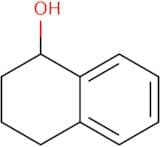
CAS 529-33-9
:1-Tetralol
Descrição:
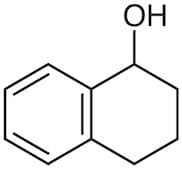
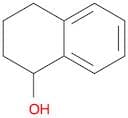
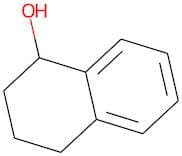
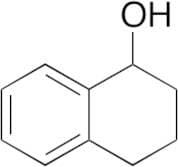
1-Tetralol, com o número CAS 529-33-9, é um composto orgânico que pertence à classe dos álcoois. É caracterizado por uma estrutura bicíclica, especificamente uma estrutura de tetralina, que consiste em um anel aromático de seis membros fundido a um anel de cinco membros. A presença de um grupo hidroxila (-OH) no átomo de carbono adjacente ao sistema de anéis fundidos define sua classificação como um álcool. 1-Tetralol é tipicamente um líquido incolor a amarelo pálido com um odor característico. É solúvel em solventes orgânicos e apresenta solubilidade limitada em água devido à sua estrutura hidrocarbônica hidrofóbica. O composto é de interesse em várias aplicações químicas, incluindo como um intermediário na síntese orgânica e na produção de fragrâncias e produtos farmacêuticos. Além disso, pode exibir atividade biológica leve, tornando-se um objeto de estudo em química medicinal. Os dados de segurança indicam que, como muitos solventes orgânicos, deve ser manuseado com cuidado para evitar inalação ou contato com a pele.
Fórmula:C10H12O
InChI:InChI=1/C10H12O/c11-10-7-3-5-8-4-1-2-6-9(8)10/h1-2,4,6,10-11H,3,5,7H2/t10-/m0/s1
Chave InChI:InChIKey=JAAJQSRLGAYGKZ-UHFFFAOYSA-N
SMILES:OC1C=2C(CCC1)=CC=CC2
Sinónimos:- (1S)-1,2,3,4-tetrahydronaphthalen-1-ol
- (RS)-1-Hydroxytetralin
- (±)-1-Tetralol
- (±)-α-Tetralol
- 1,2,3,4-Tetrahydro-1-naphthalenol
- 1,2,3,4-Tetrahydronaphthalen-1-Ol
- 1-Hydroxy-1,2,3,4-tetrahydronaphthalene
- 1-Hydroxytetralin
- 1-Naphthalenol, 1,2,3,4-tetrahydro-
- 1-Naphthol, 1,2,3,4-tetrahydro-
- NSC 5172
- alpha-Tetralol
- 1,2,3,4-tetrahydro-1-naphtho
- Tetrahydro-1-naphthol
- 1,2,3,4-tetrahydro-1-naphthaleno
- 1,2,3,4-tetrahydro-1-napthol
- 1,2,3,4-Tetrahydro-alpha-naphthol
- 1,2,3,4-Tetrahydro-a-naphthol
- 1,2,3,4-TETRAHYDRO-1-NAPHTHOL
- (R)-1-Hydroxy-1,2,3,4-tetrahydronaphthalene
- Tetralin-1-ol
- (1R)-Tetralin-1-ol
- (1R)-1,2,3,4-Tetrahydro-1-naphthol
- Ver mais sinónimos
Ordenar por
Pureza (%)
0
100
|
0
|
50
|
90
|
95
|
100
7 produtos.
1,2,3,4-Tetrahydro-1-naphthol
CAS:Fórmula:C10H12OPureza:>95.0%(GC)Cor e Forma:White or Colorless to Light yellow powder to lump to clear liquidPeso molecular:148.211,2,3,4-Tetrahydronaphthalen-1-ol
CAS:Fórmula:C10H12OPureza:97%Cor e Forma:LiquidPeso molecular:148.20171-Hydroxy-1,2,3,4-tetrahydronaphthalene
CAS:1-Hydroxy-1,2,3,4-tetrahydronaphthalene
Fórmula:C10H12OPureza:97%Cor e Forma: light yellow/orange low melting solidPeso molecular:148.20g/mol1,2,3,4-Tetrahydro-1-napthol
CAS:Produto ControladoApplications 1,2,3,4-Tetrahydro-1-napthol is a chemical reagent used as a catalyst in hydrogenation reactions.
References Fujita, K. et al.: Org. Lett., 9, 109 (2007); Habibi, M. et al.: Tetrahedron Lett., 42, 2851 (2001); Ohkuma, T. et al.: J. Am. Chem. Soc., 117, 2675 (1995);Fórmula:C10H20OCor e Forma:NeatPeso molecular:148.2α-Tetralol
CAS:α-Tetralol is a fatty acid that is broken down by the body into butyric acid, which has been shown to have anti-depressive effects. α-Tetralol can be used in iontophoresis, where it is applied to the skin and reacts with water on the surface of the skin. This reaction causes a small electric current to flow from an anode to a cathode. The kinetic energy of this current produces a chemical reaction at the interface between α-tetralol and water. This reaction rate depends on the concentration of α-tetralol, temperature, and pH. It also depends on whether or not there are other molecules present in solution that can react with α-tetralol, such as naphthalene or fatty acid esters.Fórmula:C10H12OPureza:Min. 95%Cor e Forma:Clear LiquidPeso molecular:148.2 g/mol1,2,3,4-Tetrahydronaphthalen-1-ol
CAS:Fórmula:C10H12OPureza:97%Cor e Forma:Solid, CrystallinePeso molecular:148.205