CAS 53291-89-7
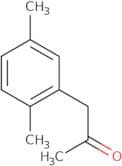
:2,5-Dimetilfenilacetona
Descrição:
2,5-Dimetilfenilacetona, com o número CAS 53291-89-7, é um composto orgânico que pertence à classe das cetonas. Apresenta um grupo fenila substituído por dois grupos metila nas posições 2 e 5, juntamente com um grupo funcional de acetona. Este composto é tipicamente um líquido incolor a amarelo pálido com um odor característico. É conhecido por seu uso na síntese orgânica e como um potencial intermediário na produção de vários produtos farmacêuticos e fragrâncias. A presença do grupo funcional de cetona contribui para sua reatividade, permitindo que participe de várias reações químicas, como adições nucleofílicas. Além disso, 2,5-Dimetilfenilacetona é relativamente estável em condições padrão, mas deve ser manuseado com cuidado devido aos potenciais riscos à saúde associados às cetonas. Sua solubilidade em solventes orgânicos o torna útil em várias aplicações, embora seja menos solúvel em água. Protocolos adequados de armazenamento e manuseio devem ser seguidos para garantir a segurança e manter sua integridade.
Fórmula:C11H14O
InChI:InChI=1/C11H14O/c1-8-4-5-9(2)11(6-8)7-10(3)12/h4-6H,7H2,1-3H3
SMILES:Cc1ccc(C)c(c1)CC(=O)C
Sinónimos:- 1-(2,5-Dimethylphenyl)Propan-2-One
Ordenar por
Pureza (%)
0
100
|
0
|
50
|
90
|
95
|
100
3 produtos.
(2,5-Dimethylphenyl)acetone
CAS:2,5-Dimethylphenyl)acetone is an analogue of amphetamine that has been shown to have similar binding and uptake properties in the brain. This drug was synthesized for use in positron emission tomography (PET) studies on the distribution of amphetamine analogues in the human brain. It is also used as a radioligand for studies on cerebral uptake of amphetamines. 2,5-Dimethylphenyl)acetone itself has no significant central nervous system activity. However, it can be used to determine whether other drugs are able to cross the blood-brain barrier and enter the brain. Radiofluorination with iodine-123, which emits positrons during decay, yields a compound that binds to amines such as dopamine and norepinephrine receptors in the brain. The presence of these amines can then be detected using PET imaging techniques.END>Fórmula:C11H14OPureza:Min. 96 Area-%Cor e Forma:Clear LiquidPeso molecular:162.23 g/mol