CAS 5398-36-7
:Etil 2-amino-4-tiazolcarboxilato
Descrição:
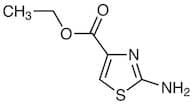
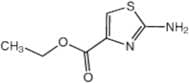
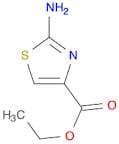
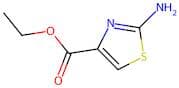
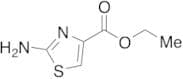
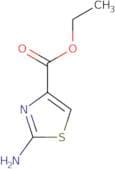
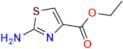
Etil 2-amino-4-tiazolcarboxilato é um composto orgânico caracterizado por seu anel de tiazol, que é uma estrutura heterocíclica de cinco membros contendo enxofre e nitrogênio. Este composto apresenta um grupo funcional de éster etílico, contribuindo para sua reatividade e solubilidade em solventes orgânicos. A presença do grupo amino (-NH2) aumenta seu potencial para formar ligações de hidrogênio, tornando-o um intermediário versátil na síntese orgânica. Etil 2-amino-4-tiazolcarboxilato é frequentemente utilizado na síntese de vários fármacos e agroquímicos devido à sua atividade biológica, particularmente no desenvolvimento de agentes antimicrobianos e anti-inflamatórios. Sua estrutura molecular permite várias reações de substituição, tornando-o um bloco de construção valioso na química medicinal. Além disso, é importante manusear este composto com cuidado, pois pode representar riscos à saúde se ingerido ou inalado, e os protocolos de segurança adequados devem ser seguidos durante seu uso em ambientes de laboratório.
Fórmula:C6H8N2O2S
InChI:InChI=1S/C6H8N2O2S/c1-2-10-5(9)4-3-11-6(7)8-4/h3H,2H2,1H3,(H2,7,8)
Chave InChI:InChIKey=XHFUVBWCMLLKOZ-UHFFFAOYSA-N
SMILES:C(OCC)(=O)C1=CSC(N)=N1
Sinónimos:- 2-Amino-1,3-Thiazole-4-Carboxylate
- 2-Amino-1,3-thiazole-4-carboxylic acid ethyl ester
- 2-Amino-4-(ethoxycarbonyl)-1,3-thiazole
- 2-Amino-4-Thiazolecarboxylic acid ethyl ester
- 2-Amino-4-ethoxycarbonylthiazole
- 2-Aminothiazol-4-carboxylic acid ethyl ester
- 2-Aminothiazole-4-carboxylic Acid Ethyl Ester
- 2-Imino-2,3-dihydro-thiazole-4-carboxylic acid ethyl ester
- 4-Thiazolecarboxylic acid, 2-amino-, ethyl ester
- Ethyl 2-amino-1,3-thiazole-4-carboxylate
- Ethyl 2-amino-4-thiazolecarboxylate
- NSC 43547
- Ver mais sinónimos
Ordenar por
Pureza (%)
0
100
|
0
|
50
|
90
|
95
|
100
8 produtos.
Ethyl 2-Aminothiazole-4-carboxylate
CAS:Fórmula:C6H8N2O2SPureza:>98.0%(GC)(T)Cor e Forma:White to Orange to Green powder to crystalPeso molecular:172.20Ethyl 2-aminothiazole-4-carboxylate, 98%
CAS:This Thermo Scientific Chemicals brand product was originally part of the Alfa Aesar product portfolio. Some documentation and label information may refer to the legacy brand. The original Alfa Aesar product / item code or SKU reference has not changed as a part of the brand transition to Thermo SciFórmula:C6H8N2O2SPureza:98%Cor e Forma:Powder, Pale cream to cream to pale yellowPeso molecular:172.20Ethyl 2-aminothiazole-4-carboxylate
CAS:Fórmula:C6H8N2O2SPureza:97%Cor e Forma:SolidPeso molecular:172.2049Ref: IN-DA003Q38
5kgA consultar10kgA consultar25kgA consultar1g21,00€25g24,00€5g25,00€10g25,00€100g61,00€500g186,00€Ethyl 2-amino-1,3-thiazole-4-carboxylate
CAS:Ethyl 2-amino-1,3-thiazole-4-carboxylateFórmula:C6H8N2O2SPureza:≥95%Cor e Forma: yellow powderPeso molecular:172.20g/molEthyl 2-aminothiazole-4-carboxylate
CAS:Fórmula:C6H8N2O2SPureza:97%Cor e Forma:SolidPeso molecular:172.2Ethyl 2-Amino-1,3-thiazole-4-carboxylate
CAS:Produto ControladoFórmula:C6H8N2O2SCor e Forma:NeatPeso molecular:172.2Ethyl 2-amino-thiazole-4-carboxylate
CAS:Ethyl 2-amino-thiazole-4-carboxylate (ETAC) is an inhibitor of protein synthesis. It binds to the dna and inhibits transcription, leading to cell death by inhibiting the production of proteins vital for cell division. ETAC has been shown to have cytotoxic activity against cancer cells and hemolytic activity. It also has a strong fluorescence probe property, which may be used in cancer diagnosis. ETAC can inhibit protein synthesis in cells that are resistant to other antimicrobial agents and platinum-based chemotherapy, making it a potential treatment for these infections. The pharmacokinetic properties of ETAC are not well studied but it is excreted through urine, suggesting that it is hydrophilic and may be metabolized with glucuronidation or sulfation. The molecular modeling study suggests that the hydrogen bond between ETAC and the dna phosphate group may explain its inhibitory effects on DNA synthesis.Fórmula:C6H8N2O2SPureza:Min. 99.0 Area-%Peso molecular:172.21 g/mol