CAS 55720-22-4
:Ácido 5-acenaftenoico
Descrição:
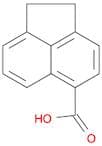
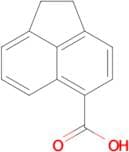
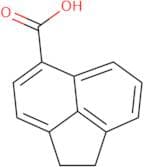
Ácido 5-acenaftenoico é um composto orgânico caracterizado por sua estrutura bicíclica, que inclui um grupo acenafeno. Este composto apresenta um grupo funcional ácido carboxílico (-COOH) ligado à posição 5 do sistema de anéis de acenafeno. Normalmente é um sólido à temperatura ambiente e pode exibir solubilidade moderada em solventes orgânicos, enquanto é menos solúvel em água devido à sua estrutura aromática hidrofóbica. A presença do grupo ácido carboxílico confere propriedades ácidas, permitindo que participe de várias reações químicas, como esterificação e amidação. Além disso, Ácido 5-acenaftenoico pode servir como um bloco de construção na síntese orgânica e pode ter aplicações em ciência de materiais e farmacêutica. Sua estrutura única e grupo funcional o tornam um assunto de interesse na pesquisa relacionada à química orgânica e ao desenvolvimento de materiais. Dados de segurança devem ser consultados para manuseio e armazenamento, como com qualquer substância química.
Fórmula:C13H10O2
InChI:InChI=1/C13H10O2/c14-13(15)11-7-6-9-5-4-8-2-1-3-10(11)12(8)9/h1-3,6-7H,4-5H2,(H,14,15)
SMILES:c1cc2CCc3ccc(c(c1)c23)C(=O)O
Sinónimos:- 5-Acenaphthylenecarboxylic acid, 1,2-dihydro-
- Nsc 137409
- 1,2-Dihydroacenaphthylene-5-Carboxylic Acid
Ordenar por
Pureza (%)
0
100
|
0
|
50
|
90
|
95
|
100
3 produtos.
1,2-Dihydroacenaphthylene-5-carboxylic acid
CAS:Fórmula:C13H10O2Pureza:97%Cor e Forma:SolidPeso molecular:198.21735-Acenaphthenecarboxylic acid
CAS:5-Acenaphthenecarboxylic acid is a xylene derivative that has been characterized as an organometallic compound. The cyclopentane ring is the central feature of this molecule and it can be used in the synthesis of other organic compounds. 5-Acenaphthenecarboxylic acid is toxic to humans and animals and has been shown to induce liver tumors in rats. It also has been shown to inhibit the growth of some bacteria, including Mycobacterium tuberculosis, which causes tuberculosis. 5-Acenaphthenecarboxylic acid inhibits protein synthesis by binding to ribosomes and interfering with the biosynthesis of proteins. This binding prevents formation of a complex with the enzyme cell wall synthesis that is required for cell wall biosynthesis, inhibiting protein synthesis and cell division.Fórmula:C13H10O2Pureza:Min. 95%Cor e Forma:PowderPeso molecular:198.22 g/mol