CAS 58888-87-2
:Ácido 3-etilpentanoico
Descrição:
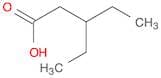
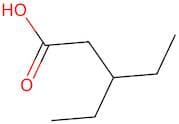
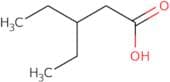
Ácido 3-etilpentanoico é um ácido carboxílico de cadeia ramificada caracterizado por sua estrutura de cinco carbonos com um grupo etila ligado ao terceiro carbono. Este composto tem a fórmula molecular C7H14O2 e apresenta um grupo funcional carboxila (-COOH), que confere propriedades ácidas. Normalmente é um líquido incolor a amarelo pálido com um odor distinto. A presença do grupo etila contribui para suas características hidrofóbicas, enquanto o grupo ácido carboxílico permite a formação de ligações de hidrogênio, influenciando sua solubilidade em solventes polares. Ácido 3-etilpentanoico é conhecido por suas aplicações em síntese orgânica e como intermediário na produção de vários compostos químicos. Seu ponto de ebulição e ponto de fusão são influenciados pela estrutura molecular, e geralmente é estável em condições padrão. Assim como muitos ácidos carboxílicos, pode passar por reações típicas como esterificação e neutralização. Devem ser tomadas precauções de segurança ao manusear esta substância, pois pode causar irritação na pele e nos olhos.
Fórmula:C7H14O2
InChI:InChI=1S/C7H14O2/c1-3-6(4-2)5-7(8)9/h6H,3-5H2,1-2H3,(H,8,9)
Chave InChI:InChIKey=ATUUSOSLBXVJKL-UHFFFAOYSA-N
SMILES:C(CC(O)=O)(CC)CC
Sinónimos:- Pentanoic Acid, 3-Ethyl-
- 3-Ethylpentanoic acid
Ordenar por
Pureza (%)
0
100
|
0
|
50
|
90
|
95
|
100
5 produtos.
3-Ethylpentanoic acid
CAS:<p>3-Ethylpentanoic acid is a fatty acid that is naturally found in the human body and can be synthesized by the body from other fatty acids. 3-Ethylpentanoic acid has been shown to inhibit histone deacetylase (HDAC) activity, which may be a possible mechanism for its antitumor effects. HDAC inhibitors are being studied as potential anticancer drugs. 3-Ethylpentanoic acid also inhibits the enzymatic activity of fatty acid synthase, thereby preventing the production of branched-chain fatty acids that are toxic to the liver. In addition, 3-ethylpentanoic acid has been shown to have pharmacokinetic properties in rats and mice with high levels of enzymes that convert it into a more hydrophobic form, which may lead to better absorption from the gastrointestinal tract and decreased metabolism by enzymes in the liver.</p>Fórmula:C7H14O2Pureza:Min. 95%Peso molecular:130.18 g/mol