CAS 59382-59-1
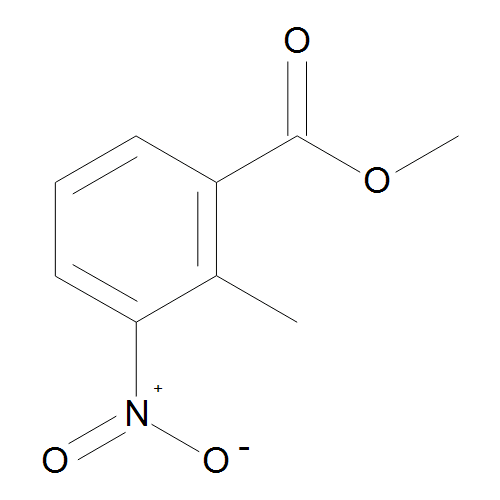
:metil 2-metil-3-nitrobenzoato
Descrição:
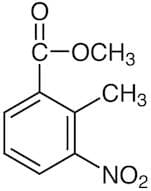
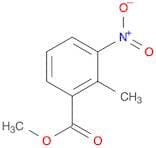
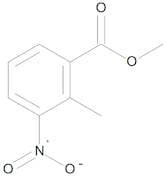
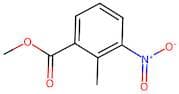
metil 2-metil-3-nitrobenzoato, com o número CAS 59382-59-1, é um composto orgânico que pertence à classe dos benzoatos. Apresenta um grupo funcional de éster metílico, que é derivado do ácido benzoico, e contém tanto um grupo nitro quanto um substituinte metílico no anel aromático. Este composto geralmente aparece como um líquido ou sólido de amarelo pálido a marrom claro, dependendo de sua pureza e forma. É caracterizado por seu odor aromático e é solúvel em solventes orgânicos como etanol e acetona, mas tem solubilidade limitada em água. metil 2-metil-3-nitrobenzoato é frequentemente utilizado na síntese orgânica e pode servir como um intermediário na produção de vários fármacos e agroquímicos. Seu grupo nitro contribui para sua reatividade, tornando-o um bloco de construção útil na síntese de moléculas mais complexas. Devem ser tomadas precauções de segurança ao manusear este composto, pois compostos nitro podem ser perigosos e podem representar riscos ambientais.
Fórmula:C9H9NO4
InChI:InChI=1/C9H9NO4/c1-6-7(9(11)14-2)4-3-5-8(6)10(12)13/h3-5H,1-2H3
SMILES:Cc1c(cccc1N(=O)=O)C(=O)OC
Sinónimos:- 2-Methyl-3-nitrobenzoic acid methyl ester
- Methyl 2-Methyl-3-Nitrobenzenecarboxylate
- Methyl 3-Nitro-2-Methyl benzoate
- 2-Methyl-3-Nitromethyl Benzoate
- 2-Methyl-3-methyl nitrobenzene
- Methyl-2-Methyl-3-Nitrobenzoate
Ordenar por
Pureza (%)
0
100
|
0
|
50
|
90
|
95
|
100
11 produtos.
Methyl 2-Methyl-3-nitrobenzoate
CAS:Fórmula:C9H9NO4Pureza:>98.0%(GC)Cor e Forma:White to Brown powder to crystalPeso molecular:195.17Methyl 2-methyl-3-nitrobenzoate, 97%
CAS:Methyl 2-methyl-3-nitrobenzoate may be used in the synthesis of methyl indole-4-carboxylate, 5-aminoisoquinolin-1(2H)-one, 5-nitroisocoumarin and [2-(4-fluorophenyl)-1H-indol-4-yl]-1-pyrrolidinylmethanone. It may also be used in the preparation of substituted nitrostyrene benzoic acids, via reactionFórmula:C9H9NO4Pureza:97%Peso molecular:195.17Methyl 2-methyl-3-nitrobenzoate
CAS:Fórmula:C9H9NO4Pureza:97%Cor e Forma:SolidPeso molecular:195.1721Methyl 2-Methyl-3-nitrobenzoate
CAS:Produto ControladoFórmula:C9H9NO4Cor e Forma:NeatPeso molecular:195.17Methyl 2-methyl-3-nitrobenzoate
CAS:Methyl 2-methyl-3-nitrobenzoatePureza:98%Peso molecular:195.17g/molMethyl 2-methyl-3-nitrobenzoate
CAS:Methyl 2-methyl-3-nitrobenzoate is a synthetic drug that has potent antitumor activity and inhibits tumor growth in a variety of animal models. It acts by inhibiting protein synthesis and inducing apoptosis, as well as by inhibiting the production of TNF-α. Methyl 2-methyl-3-nitrobenzoate is an alkylating agent that reacts with DNA, RNA, and other cell components to form crosslinks between them. This prevents the cells from dividing or repairing themselves. The inhibition of protein synthesis may be due to methyl 2-methyl-3-nitrobenzoate's ability to react with amide groups on proteins.Fórmula:C9H9NO4Pureza:Min. 95%Cor e Forma:PowderPeso molecular:195.17 g/molMethyl 2-methyl-3-nitrobenzoate
CAS:Fórmula:C9H9NO4Pureza:97%Cor e Forma:Solid, Pale yellow - Greyish yellow red crystal powderPeso molecular:195.174Methyl 2-Methyl-3-nitrobenzoate
CAS:Produto ControladoApplications Methyl 2-methyl-3-nitrobenzoate is used as a reagent to synthesize Lenalidomide (L328000). Lenalidomide is a compound that exhibits antimyeloma, anticancer and immunomodulatory activity and is used to treat patients with B-cell malignancies.
References Balaev, A., et al.: Pharm. Chem. J., 46, 676 (2013); Chanan-Khan, A. & Cheson, B.: J. Clin. Oncol., 26, 1544 (2008); Dredge, K., et al.: Microvasc. Res., 69, 56, 69 (2005); Palumbo, A., et al.: J. Clin. Oncol., 25, 4459 (2007)Fórmula:C9H9NO4Cor e Forma:NeatPeso molecular:195.17