CAS 597-31-9
:Hidroxipivalaldeído
- 2,2-Dimethyl-3-Hydroxypropanal
- 2,2-Dimethyl-3-Hydroxypropionaldehyde
- 2-(Hydroxymethyl)-2-methylpropanal
- 2-(Hydroxymethyl)isobutyraldehyde
- 3-Hydroxy-2,2-Dimethylpropanal
- 3-Hydroxy-2,2-Dimethylpropionaldehyde
- 3-Hydroxypivalaldehyde
- Hydracrylaldehyde, 2,2-dimethyl-
- Hydroxypivalaldehyde
- Hydroxypivaldehyde
- Pentaaldol
- Pentaldol
- Propanal, 3-hydroxy-2,2-dimethyl-
- Ver mais sinónimos
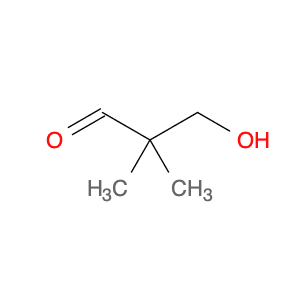
3-Hydroxy-2,2-dimethylpropanal
CAS:3-Hydroxy-2,2-dimethylpropanal
Fórmula:C5H10O2Pureza:97%,mixture of isomersCor e Forma: white solidPeso molecular:102.13g/mol3-Hydroxy-2,2-dimethylpropanal
CAS:Produto ControladoApplications 3-Hydroxy-2,2-dimethylpropanal is used to prepare 4,1-benzoxazepines as squalene synthase inhibitors and their inhibition of cholesterol synthesis. It is also used to prepare chiral cyanohydrins.
References Miki, T., et al.: J. Med. Chem., 45, 4571 (2002); Ognyanov, V., et al.: J. Am. Chem. Soc., 113, 6992 (1991)Fórmula:C5H10O2Cor e Forma:NeatPeso molecular:102.133-Hydroxy-2,2-dimethylpropanal
CAS:3-Hydroxy-2,2-dimethylpropanal is a condensation product of formaldehyde and glycol. It is the simplest of the three aldehydes that are produced by this reaction. The catalyst for this reaction is usually dibutyltin oxide, which can be replaced with calcium chloride or sodium carbonate. 3-Hydroxy-2,2-dimethylpropanal reacts with neopentyl glycol to form a dimer and glycol ester. This reaction mechanism has been studied extensively using solution kinetics.
Fórmula:C5H10O2Pureza:(%) Min. 95%Cor e Forma:White PowderPeso molecular:102.13 g/mol3-Hydroxy-2,2-dimethylpropanal
CAS:Fórmula:C5H10O2Pureza:95.0%Cor e Forma:SolidPeso molecular:102.133