CAS 6027-13-0
:L-Homocisteína
Descrição:
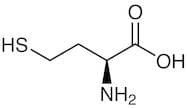
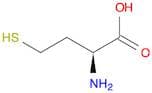
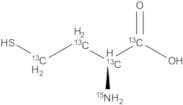
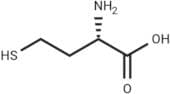
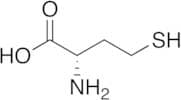
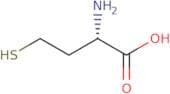
L-Homocisteína é um aminoácido não proteico que desempenha um papel crucial no metabolismo de aminoácidos contendo enxofre, particularmente metionina e cisteína. É classificado como um aminoácido contendo tiol devido à presença de um grupo sulfidrila (-SH). L-Homocisteína é tipicamente encontrado no corpo como um intermediário na via de transulfuração e está envolvido na síntese de cisteína a partir de metionina. Níveis elevados de homocisteína no sangue têm sido associados a vários problemas de saúde, incluindo doenças cardiovasculares e distúrbios neurológicos, tornando-se um biomarcador importante em ambientes clínicos. O composto é solúvel em água e exibe uma natureza polar devido aos seus grupos funcionais amino e carboxila. L-Homocisteína pode existir em diferentes formas, incluindo suas formas oxidadas, que podem participar ainda mais em reações bioquímicas. Seu metabolismo está intimamente ligado às vitaminas B6, B12 e ácido fólico, que são essenciais para sua conversão em outros metabolitos. No geral, L-Homocisteína é significativo tanto em vias metabólicas quanto em avaliações de saúde.
Fórmula:C4H9NO2S
InChI:InChI=1/C4H9NO2S/c5-3(1-2-8)4(6)7/h3,8H,1-2,5H2,(H,6,7)/t3-/m0/s1
Chave InChI:InChIKey=FFFHZYDWPBMWHY-VKHMYHEASA-N
SMILES:[C@H](CCS)(C(O)=O)N
Sinónimos:- (S)-2-Amino-4-mercaptobutanoic acid
- (S)-Homocysteine
- 2-Amino-4-mercapto-<span class="text-smallcaps">L</span>-butyric acid
- 2-Amino-4-mercapto-L-butyric acid
- 2-Amino-4-mercaptobutyric acid
- <span class="text-smallcaps">L</span>-Homocysteine
- Butanoic acid, 2-amino-4-mercapto-, (S)-
- Butyric acid, 2-amino-4-mercapto-, <span class="text-smallcaps">L</span>-
- Butyric acid, 2-amino-4-mercapto-, L-
- Homocysteine
- L-Homocystein
- L-homocisteina
- Nsc 43117
- 2-Amino-4-mercaptobutyric acid (VAN)
- L-Homocysteine
- NSC 118376
- Butyric acid, 2-amino-4-mercapto-
- Butyric acid, 2-amino-4-mercapto-, L- (8CI)
- Butanoic acid, 2-amino-4-mercapto- (VAN)
- Butyric acid, 2-amino-4-mercapto- (8CI)
- Homocysteine (VAN)
- (S)-2-Amino-4-mercaptobutyric acid
- H-Hcys-OH
- (S)-Homocysteine, (S)-2-Amino-4-mercaptobutanoic acid
- Butyric acid, 2-amino-4-(methylthio)-, L-
- S-Methyl-L-homocysteine
- Ver mais sinónimos
Ordenar por
Pureza (%)
0
100
|
0
|
50
|
90
|
95
|
100
9 produtos.
L-Homocysteine
CAS:Fórmula:C4H9NO2SPureza:>98.0%(T)Cor e Forma:White to Light yellow powder to crystalPeso molecular:135.18L-Homocysteine
CAS:Fórmula:C4H9NO2SPureza:≥ 97.0%Cor e Forma:White to off-white powderPeso molecular:135.18L-Homocysteine
CAS:L-HomocysteinePureza:100.0% (perchloric acid titration) (Typical Value in Batch COA)Cor e Forma: white powderPeso molecular:135.18g/molL-Homocysteine
CAS:L-Homocysteine is a biological thiol associated with various diseases and conditions. It serves as a marker for atherosclerosis.Fórmula:C4H9NO2SPureza:99.91%Cor e Forma:SolidPeso molecular:135.19L-Homocysteine
CAS:Produto ControladoStability Air Sensitive
Applications L-Homocysteine is the hydrolysis product of adenosine (A280400), a purine nucleoside. Metabolic fate of L-Homocysteine is converted back to L-Methionine( M260440) via tetrahydrofolate.
References Liu, X.D., et al.: Org. BIomolec. Chem., 11, 4258 (2013); Chen, C.S., et al.: Nueroendocrinol., 97, 232 (2013);Fórmula:C4H9NO2SCor e Forma:NeatPeso molecular:135.1848L-Homocysteine
CAS:L-Homocysteine is a versatile building block that can be used in synthesis as a reagent, and is also useful for research. CAS No. 6027-13-0. L-Homocysteine has the ability to react with many different compounds to form novel structures. It is used in the synthesis of drugs, agricultural chemicals, and other fine chemicals. L-Homocysteine is also a useful scaffold for the chemical reactions involved in organic synthesis. This chemical is an intermediate that can be converted into other compounds such as L-cysteine, which are used as a reaction component or as a precursor for pharmaceuticals and other products.Fórmula:C4H9NO2SPeso molecular:135.19 g/mol