CAS 6149-45-7
:Ácido butanoico, 3-hidroxi-3-metil-, éster metílico
Descrição:
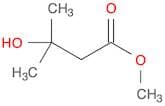
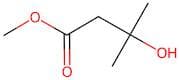
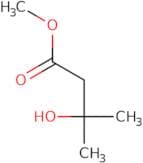
Ácido butanoico, 3-hidroxi-3-metil-, éster metílico, também conhecido como metilo 3-hidroxí-3-metilbutanoato, é um composto orgânico caracterizado por seu grupo funcional éster derivado do ácido butanoico. Apresenta uma estrutura ramificada com um grupo hidroxila e um grupo metila ligados ao terceiro carbono da cadeia do ácido butanoico. Este composto normalmente aparece como um líquido incolor a amarelo pálido com um odor frutado, tornando-o relevante em aplicações de sabor e fragrância. É solúvel em solventes orgânicos e exibe solubilidade moderada em água devido à presença do grupo hidroxila. O composto é conhecido por seu uso potencial na síntese de vários produtos químicos e como um intermediário em reações orgânicas. Além disso, pode ter aplicações na produção de polímeros biodegradáveis e como agente aromatizante na indústria alimentícia. Os dados de segurança indicam que, como muitos ésteres, deve ser manuseado com cuidado, pois pode causar irritação ao contato com a pele ou os olhos.
Fórmula:C6H12O3
Sinónimos:- 4-Bromo-2,18-diaminopyridine
- Methyl 3-hydroxy-3-methylbutanoate
- 3-Hydroxy-3-methylbutanoic acid methyl ester
- Butanoic acid, 3-hydroxy-3-methyl-, methyl ester
- methyl β-hydroxy-β-methylbutyrate
Ordenar por
Pureza (%)
0
100
|
0
|
50
|
90
|
95
|
100
4 produtos.
3-Hydroxy-3-methylbutanoic acid methyl ester
CAS:Fórmula:C6H12O3Pureza:95%Cor e Forma:LiquidPeso molecular:132.1577Methyl 3-Hydroxy-3-Methylbutanoate
CAS:Methyl 3-Hydroxy-3-MethylbutanoatePureza:98%Peso molecular:132.15g/molMethyl 3-hydroxy-3-methylbutanoate
CAS:Methyl 3-hydroxy-3-methylbutanoate is a reactive compound that can be used as a building block in organic synthesis. It is used to synthesize a variety of compounds, including pharmaceuticals and agrochemicals. Methyl 3-hydroxy-3-methylbutanoate has been shown to react with methoxy groups to form methyl hydroxy groups. This reaction is catalyzed by the protonation of the oxygen atom on the reactant's oxygen atom, which leads to a cyclic transition state. Kinetic studies have been performed and show that the rate of this reaction increases with an increase in temperature. The kinetic parameters for this reaction are not currently known, but it has been shown that the nucleophilic attack on the carbon atom adjacent to the leaving group occurs from primary alcohols and alkyl halides.Fórmula:C6H12O3Pureza:Min. 95%Peso molecular:132.16 g/mol