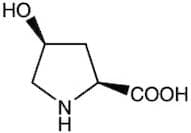
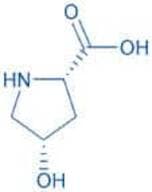
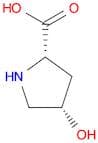
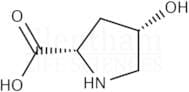
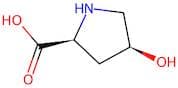
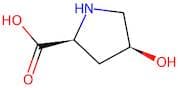
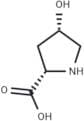
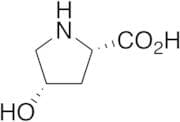
CAS 618-27-9
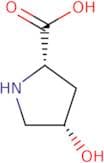
:cis-4-Hidroxi-L-prolina
- (2S,4S)-(-)-4-Hydroxy-2-pyrrolinecarboxylic acid
- (2S,4S)-4-Hydroxyproline
- (2S,4S)-4-hydroxypyrrolidine-2-carboxylic acid
- (4S)-4-Hydroxy-<span class="text-smallcaps">L</span>-proline
- (S)-allo-Hydroxyproline
- 4(S)-Hydroxy-2(S)-pyrrolidinecarboxylic acid
- 4-cis-Hydroxy-<span class="text-smallcaps">L</span>-proline
- <span class="text-smallcaps">L</span>-Allohydroxyproline
- <span class="text-smallcaps">L</span>-Proline, 4-hydroxy-, (4S)-
- <span class="text-smallcaps">L</span>-Proline, 4-hydroxy-, cis-
- <span class="text-smallcaps">L</span>-Proline, allo-hydroxy-
- <span class="text-smallcaps">L</span>-allo-4-Hydroxyproline
- <span class="text-smallcaps">L</span>-allo-Hydroxyproline
- <span class="text-smallcaps">L</span>-cis-4-Hydroxyproline
- H-Cis-Hyp-OH
- NSC 206274
- Proline, 4-allo-hydroxy-
- Proline, 4-allo-hydroxy-, <span class="text-smallcaps">L</span>-
- allo-4-Hydroxyproline
- allo-<span class="text-smallcaps">L</span>-Hydroxyproline
- allo-Hydroxy-<span class="text-smallcaps">L</span>-proline
- cis-4-Hydroxy-<span class="text-smallcaps">L</span>-proline
- cis-4-Hydroxyproline
- cis-Hydroxyproline
- L-Proline, 4-hydroxy-, cis-
- L-Proline, 4-hydroxy-, (4S)-
- (4S)-4-Hydroxy-L-proline
- Ver mais sinónimos
cis-4-Hydroxy-L-proline
CAS:Fórmula:C5H9NO3Pureza:>97.0%(T)(HPLC)Cor e Forma:White to Light yellow powder to crystalinePeso molecular:131.13cis-4-Hydroxy-L-proline, 99%
CAS:cis-4-Hydroxy-L-proline (CHP) is a proline analog that inhibits collagen synthesis and has been used as an anticancer compound. CHP blocked myotube formation and expression of sarcomeric myosin heavy chain in C2C12 murine skeletal muscle cells. CHP inhibited proliferation of murine Panc02 pancreaticFórmula:C5H9NO3Pureza:99%Cor e Forma:White to cream or pale yellow, PowderPeso molecular:131.13H-cis-Hyp-OH
CAS:cis-L-Hydroxyproline inhibits the synthesis and extracellular deposition of collagen. The growth inhibition of pancreatic cancer cells induced by the Hyp isomer could be due to endoplasmatic reticulum stress.Fórmula:C5H9NO3Pureza:> 99%Cor e Forma:White PowderPeso molecular:131.13(2S,4S)-4-hydroxypyrrolidine-2-carboxylic acid
CAS:Fórmula:C5H9NO3Pureza:97%Cor e Forma:SolidPeso molecular:131.1299(2S,4S)-(-)-4-Hydroxypyrrolidine-2-carboxylic acid
CAS:(2S,4S)-(-)-4-Hydroxypyrrolidine-2-carboxylic acidFórmula:C5H9NO3Pureza:98%Cor e Forma: white solidPeso molecular:131.12985g/molcis-4-Hydroxy-L-proline
CAS:cis-4-Hydroxy-L-proline hinders collagen synthesis, extracellular deposition, and fibroblast growth.Fórmula:C5H9NO3Pureza:99.88%Cor e Forma:SolidPeso molecular:131.13cis-4-Hydroxy-L-proline
CAS:Applications Hydroxyprolines are valuable chiral building blocks for organic synthesis of pharmaceuticals. Several microorganisms producing proline trans-4- and cis-3-hydroxylase were discovered and these enzymes were applied to the industrial production of trans-4- and cis-3-hydroxy-L-proline.
References Lawrence, C., et al.: Biochem. J., 313, 185 (1996), Mori, H., et al.: J. Bacteriol., 179, 5677 (1997), Clifton, I., et al.: Eur. J. Biochem., 268, 6625 (2001),Fórmula:C5H9NO3Cor e Forma:Off White Crystalline PowderPeso molecular:131.13cis-4-Hydroxy-L-proline
CAS:Cis-4-Hydroxy-L-proline is a bound form of proline that is formed by the condensation of two molecules of glyoxylate. It is a basic structure and an intermediate in the synthesis of collagen, which is a protein found in connective tissue. Cis-4-Hydoxy-L-proline has been shown to be an active form of proline for the treatment of primary sclerosing cholangitis, as it can decrease bile acid levels. This compound has also been used as an analytical method for determining collagen content in biological samples. The polymerase chain reaction technique uses cis-4-Hydroxy-L-proline as a matrix effect to amplify DNA sequences. Cis-4-Hydroxy-L-proline has also been shown to have optimum concentrations at 3mM and 0.5mM in model systems.br>Fórmula:C5H9NO3Pureza:Min. 95%Cor e Forma:White PowderPeso molecular:131.13 g/mol(2S,4S)-4-Hydroxypyrrolidine-2-carboxylic acid
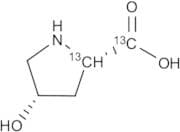
CAS:Fórmula:C5H9NO3Pureza:97%Cor e Forma:Solid, White powderPeso molecular:131.131cis-4-Hydroxy-L-proline-13C215N
CAS:Produto ControladoFórmula:C2C3H915NO3Cor e Forma:NeatPeso molecular:134.109cis-4-Hydroxy-L-proline-d3 (Major)
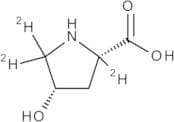
CAS:Produto ControladoStability Hygroscopic
Applications cis-4-Hydroxy-L-proline-d3 is deuterium labelled cis-4-Hydroxy-L-proline (H952375). Hydroxyprolines are valuable chiral building blocks for organic synthesis of pharmaceuticals. Several microorganisms producing proline trans-4- and cis-3-hydroxylase were discovered and these enzymes were applied to the industrial production of trans-4- and cis-3-hydroxy-L-proline.
References Lawrence, C., et al.: Biochem. J., 313, 185 (1996); Mori, H., et al.: J. Bacteriol., 179, 5677 (1997); Clifton, I., et al.: Eur. J. Biochem., 268, 6625 (2001)Fórmula:C5D3H6NO3Cor e Forma:NeatPeso molecular:134.15